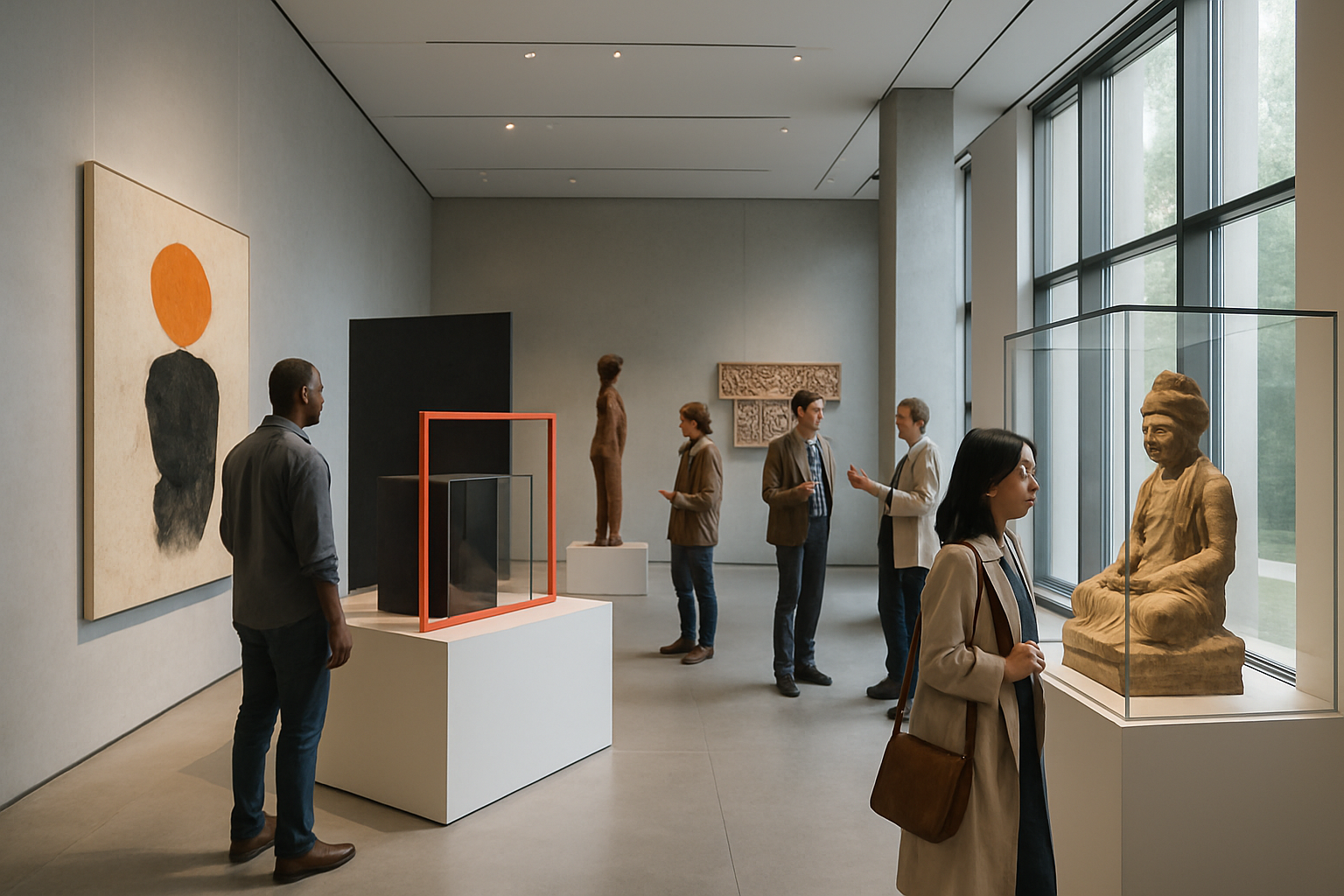
European cultural institutions are launching an unprecedented wave of innovative programming that combines traditional heritage preservation with cutting-edge digital technology, featuring world-renowned artists and comprehensive cultural access initiatives.
Three major developments across Finland, Greece, and Malta demonstrate how cultural institutions are reimagining their role in 2026, from opera houses embracing diverse musical genres to archaeological sites pioneering unified digital access systems, and art biennales securing international contemporary art heavyweights.
Finland's Musical Innovation Hub Opens
Finland's cultural landscape will be transformed this autumn with the opening of Fuuga, Turku's ambitious new music hall that represents a €90 million investment in cultural infrastructure. The venue, scheduled to open with renowned opera singer Karita Mattila, signals a dramatic departure from traditional classical programming.
Approximately half of Fuuga's inaugural programming will feature non-classical genres, including popular Finnish artists such as Robin Packalen, alongside jazz and iskelmä (Finnish schlager) performances. This strategic programming decision reflects a broader European trend toward cultural democratization, where prestigious venues actively court diverse audiences rather than maintaining exclusively classical repertoires.
The venue's operators have explicitly stated their intention to make the €90 million facility a "meeting place for Turku residents," emphasizing community engagement over elite cultural consumption. This approach aligns with contemporary cultural policy across Northern Europe, where public investment in arts infrastructure increasingly demands broad public accessibility and community benefit.
Greece Launches Digital Heritage Revolution
Greece's Ministry of Culture has unveiled the most comprehensive digital heritage initiative in European history, creating unified electronic ticketing access to 108 archaeological sites and museums through a single platform called "Hellenic Heritage." The system consolidates previously fragmented ticketing systems while providing integrated information services and cultural programming details.
The digital ecosystem extends beyond simple e-commerce to encompass comprehensive cultural education resources, virtual tour capabilities, and enhanced visitor services. This represents a fundamental shift from site-by-site management to coordinated national cultural presentation, positioning Greece as a leader in heritage technology integration.
The initiative addresses long-standing challenges in Greek cultural tourism, where visitors previously navigated complex, site-specific booking systems. The unified approach not only improves user experience but enables sophisticated data collection for cultural policy development and visitor flow management across Greece's extensive archaeological network.
Malta Secures Contemporary Art Heavyweight
The Malta Biennale 2026 has announced Italian contemporary art provocateur Maurizio Cattelan as its headline artist, marking a significant coup for the Mediterranean island's growing international cultural profile. Cattelan, whose controversial works include the gold toilet "America" (2016) and the duct-taped banana "Comedian" (2019), represents precisely the kind of internationally recognized talent that smaller nations struggle to attract.
The biennale opens to the public on March 14, 2026, following preview events from March 11-13 and an official opening on March 10. Cattelan's participation signals Malta's successful positioning within global contemporary art circuits, leveraging its EU membership and Mediterranean location to compete with established art capitals.
His inclusion particularly significant given his reputation for site-specific installations that engage critically with local contexts. Malta's complex history—from Neolithic temples to British colonial legacy to EU integration—provides rich material for an artist known for satirical interventions in institutional and political spaces.
Building on Global Cultural Renaissance
These developments continue a remarkable pattern of cultural renaissance documented across multiple continents throughout early 2026. From Qatar's comprehensive Afghan heritage exhibition to Rwanda's emergence as a creative innovation hub, cultural institutions worldwide are demonstrating unprecedented international cooperation and technological innovation.
The European initiatives particularly notable for their integration of traditional heritage preservation with contemporary artistic expression. Finland's genre-mixing approach, Greece's technological unification, and Malta's international contemporary art programming represent three distinct but complementary strategies for cultural institution modernization.
"This represents a fundamental transformation in how cultural institutions understand their public mission,"
— Cultural Policy Expert, European Cultural Foundation
Technology as Cultural Democratization Tool
The Greek digital heritage platform exemplifies how technology serves cultural democratization rather than replacement of physical experience. Unlike previous digitization efforts focused primarily on archival preservation, the Hellenic Heritage system emphasizes improved access to physical sites while providing educational context that enhances rather than substitutes for direct cultural encounter.
This approach reflects lessons learned from pandemic-era virtual cultural programming, where institutions discovered that digital tools work most effectively as bridges to physical cultural engagement rather than replacements for it. The unified ticketing system reduces barriers to cultural participation while maintaining the irreplaceable value of direct heritage site experience.
International Cooperation and Competition
Malta's success in securing Cattelan demonstrates how smaller nations can compete effectively in global cultural markets through strategic programming and international relationship building. The artist's participation likely results from careful diplomatic and cultural relationship cultivation rather than simply financial considerations.
This reflects broader patterns in 2026's cultural renaissance, where international artistic collaboration increasingly drives programming decisions. Cultural institutions are recognizing that global visibility requires internationally recognizable programming, while maintaining local cultural identity and community service missions.
Economic and Social Implications
The combined €90 million investment in Finland's Fuuga, Greece's comprehensive digital infrastructure development, and Malta's international biennale programming represent significant public and private cultural sector investments during a period of economic uncertainty. These commitments suggest confidence in culture's economic returns through tourism, international prestige, and community development.
Finland's emphasis on community engagement, Greece's accessibility improvements, and Malta's international positioning each address different aspects of contemporary cultural policy challenges: local relevance, democratic access, and global competitiveness. Together, they illustrate how cultural institutions are evolving to meet multiple, sometimes competing, public expectations.
Future Cultural Landscape
These initiatives occur within the context of a broader global cultural renaissance characterized by increased international cooperation, technological integration, and emphasis on both heritage preservation and contemporary artistic expression. The European developments suggest a maturing approach to cultural policy that balances tradition with innovation, local service with international ambition.
The success of these initiatives will likely influence cultural programming across Europe and beyond, particularly in their approaches to audience development, technology integration, and international artistic collaboration. They represent a template for cultural institutions seeking to remain relevant and impactful in an increasingly connected and rapidly changing global cultural landscape.