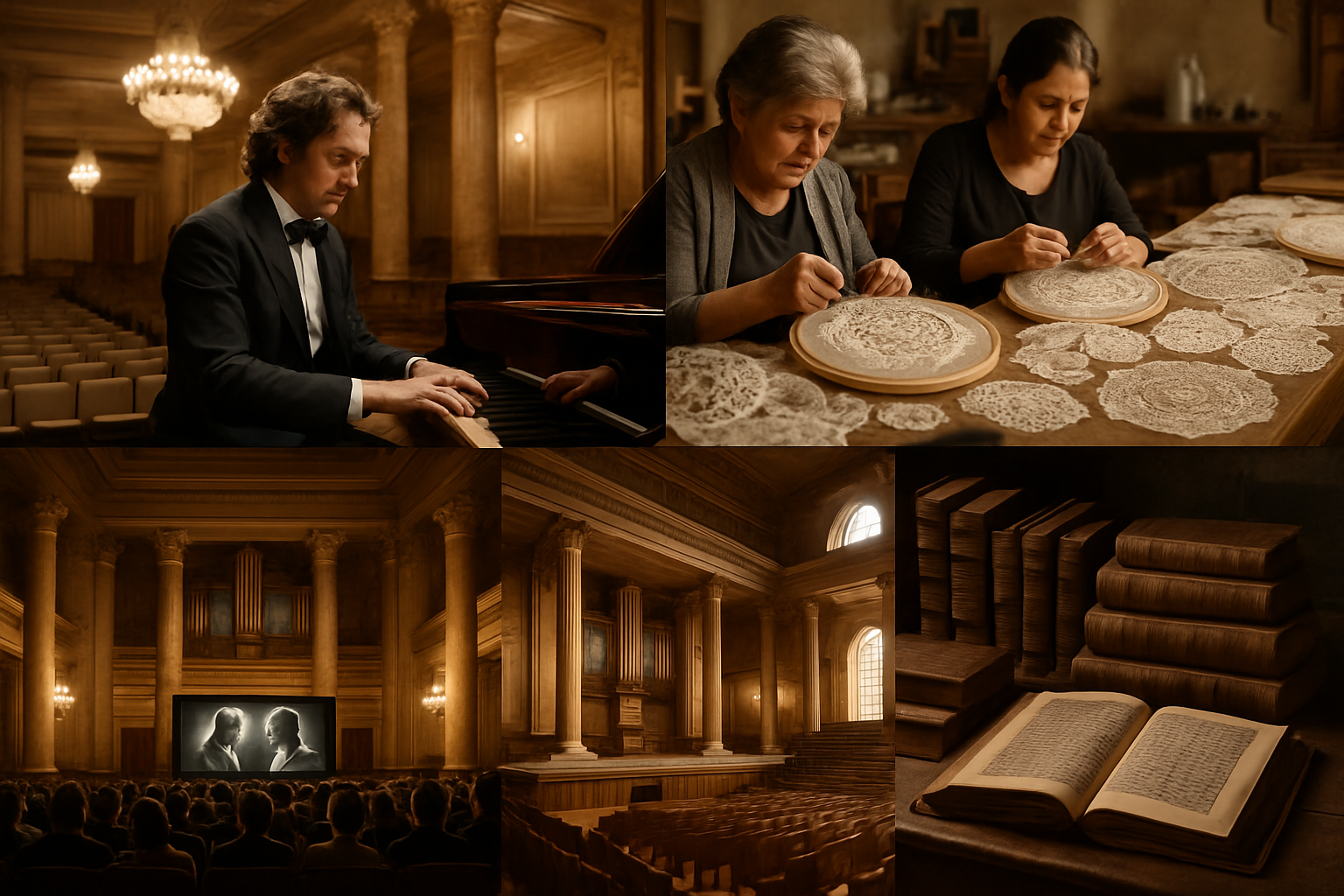
A remarkable cultural renaissance is flourishing across Europe as artists, scholars, and cultural institutions unite traditional heritage preservation with contemporary innovation, creating a sophisticated ecosystem that bridges centuries of artistic tradition with 21st-century accessibility and global reach.
From the launch of the Armenian Needlelace Initiative in San Francisco to Stockholm's grand centennial celebrations, April 2026 has witnessed an unprecedented coordination of cultural activities that demonstrates how authentic artistic expression can achieve international resonance while maintaining deep community roots.
Traditional Arts Find New Life Through Digital Innovation
The Armenian Needlelace Initiative, launched March 20, 2026, by artists and scholars Deborah Valoma and Elise Youssoufian, represents a pioneering approach to heritage preservation. This first comprehensive website supporting Armenian needlelace traditions encourages learning and making while fostering connections across a global network of practitioners, researchers, curators, and enthusiasts.
The initiative comes at a time when Armenian needlework is experiencing a surge of interest among makers, families, and communities worldwide. Through online resources and upcoming calls for participation, the project creates a digital hub that amplifies traditional knowledge without replacing the intimate, hands-on nature of the craft itself.
"Technology serves as a bridge between past and future, enabling us to preserve ancient techniques while connecting artists across continents,"
— Cultural Heritage Expert
This sophisticated integration of digital platforms with traditional practices reflects a broader pattern emerging across European cultural initiatives, where innovation enhances rather than replaces authentic cultural expression.
Musical Excellence and Institutional Milestones
In Estonia, the cultural landscape achieved a significant milestone as composer Pärt Uusberg won the first Arvo Pärt Center scholarship dedicated to creative artists in Estonian music. This inaugural award signals Estonia's commitment to nurturing contemporary talent while honoring the legacy of one of the world's most celebrated contemporary composers.
Meanwhile, Stockholm's Konserthuset embarked on a year-long centennial celebration, beginning April 7, 2026. The concert hall's managing director Susanne Rydén emphasized the venue's continued vitality despite its age, noting how the institution has adapted to serve contemporary audiences while preserving its historic character and acoustic excellence.
The celebration represents more than mere nostalgia; it exemplifies how cultural institutions can maintain relevance through thoughtful programming that honors tradition while embracing innovation. The venue's commitment to accessibility and community engagement has made it a template for sustainable cultural infrastructure development.
Literary Heritage Faces Complex Challenges
The literary world experienced both celebration and loss during this period. Gabriel Rosenstock, the Irish writer and poet who wrote primarily in Irish and won numerous awards throughout his career, passed away at age 76. Born in County Limerick, Rosenstock's work represented the vitality of Irish-language literature and its capacity to address contemporary themes through traditional linguistic forms.
In Slovakia, the literary community mourned the death of Viera Hegerová at age 92, a legendary translator from Russian who rendered dozens of book titles into Slovak. Her passing represents the loss of a bridge between linguistic cultures, highlighting the crucial but often underrecognized role of literary translators in maintaining cultural connections across national boundaries.
These losses underscore the urgency of documenting and preserving the knowledge held by elder practitioners of traditional arts while continuing to train new generations of cultural stewards.
Cultural Tourism and Economic Impact
Portugal's cultural programming demonstrated the economic potential of authentic heritage celebration. The Festival de Literatura Infantojuvenil de Valongo (April 13-19) features 70 hours of activities with 30 invited guests and honors José Jorge Letria as the featured author. This comprehensive programming approach generates sustainable revenue through cultural tourism while serving genuine educational and community development objectives.
Similarly, Lisbon's Festas de Abril showcases a diverse lineup including performances celebrating Portuguese language diversity, concerts by Vizinhos, and humor from Herman José. These festivals represent sophisticated cultural programming that attracts international visitors while serving authentic community celebration purposes.
International Recognition and Diplomatic Success
The period also highlighted culture's role in international relations. Azerbaijan's National Library hosted a book exhibition honoring a theater scholar, demonstrating how cultural programming can strengthen diplomatic relationships while advancing scholarly recognition.
In Bosnia and Herzegovina, the cultural community reflected on the contributions of academic Rusmir Mahmutćehajić, a regular member of the European Academy of Sciences and Arts whose work established Bosnia not merely as a geographic space but as a "sacred historical covenant" rich with layered cultural significance.
Technology-Heritage Synthesis
Across these initiatives, a sophisticated pattern emerges where digital tools enhance rather than replace traditional cultural practices. The Armenian Needlelace Initiative demonstrates how online platforms can create global communities around traditional crafts, while concert halls use advanced acoustics and documentation systems to preserve and share performances with worldwide audiences.
This approach contrasts sharply with earlier fears that digitization would diminish cultural authenticity. Instead, April 2026 provides evidence that thoughtful technology integration can extend cultural reach while maintaining community ownership and spiritual significance.
Challenges and Adaptive Strategies
Despite these successes, cultural institutions face significant challenges. Climate change threatens outdoor programming and affects traditional construction materials used in historic buildings. Economic pressures impact youth participation in traditional arts, while digital entertainment competes for attention with cultural forms that require sustained engagement and community involvement.
Successful communities are developing adaptive strategies that respect traditions while embracing helpful innovations. These include contingency planning for weather-related disruptions, international resource sharing that enables smaller communities to access expertise, and cultural preservation evolution from defensive conservation toward proactive community development.
Template for Sustainable Cultural Development
The April 2026 cultural renaissance establishes practical precedents for 21st-century cultural stewardship. Success factors consistently include authentic representation emerging from communities themselves, strategic technology integration that enhances traditional practices, economic sustainability through cultural tourism and educational partnerships, and international cooperation that maintains local distinctiveness while fostering global understanding.
These developments represent more than temporary cultural programming; they demonstrate culture's capacity to serve as fundamental infrastructure for community development, international cooperation, and human flourishing. Nations investing in authentic cultural programming report competitive advantages in tourism, enhanced international relationships, and strengthened community resilience.
Future Implications
As communities worldwide recognize culture as strategic infrastructure equivalent to transportation and communication systems, the April 2026 renaissance provides compelling evidence that thoughtful cultural investment creates lasting positive impacts. The synthesis of tradition and innovation demonstrated across Armenia, Estonia, Ireland, Portugal, Slovakia, Sweden, and other nations offers templates for cultural development that honor the past while embracing future possibilities.
The success of diverse initiatives—from needlework preservation to concert hall celebrations to literary commemorations—demonstrates humanity's remarkable capacity for cultural resilience, creative adaptation, and international cooperation. These achievements ensure that cultural treasures continue enriching global civilization while honoring distinctive local traditions and identities in an increasingly interconnected world.