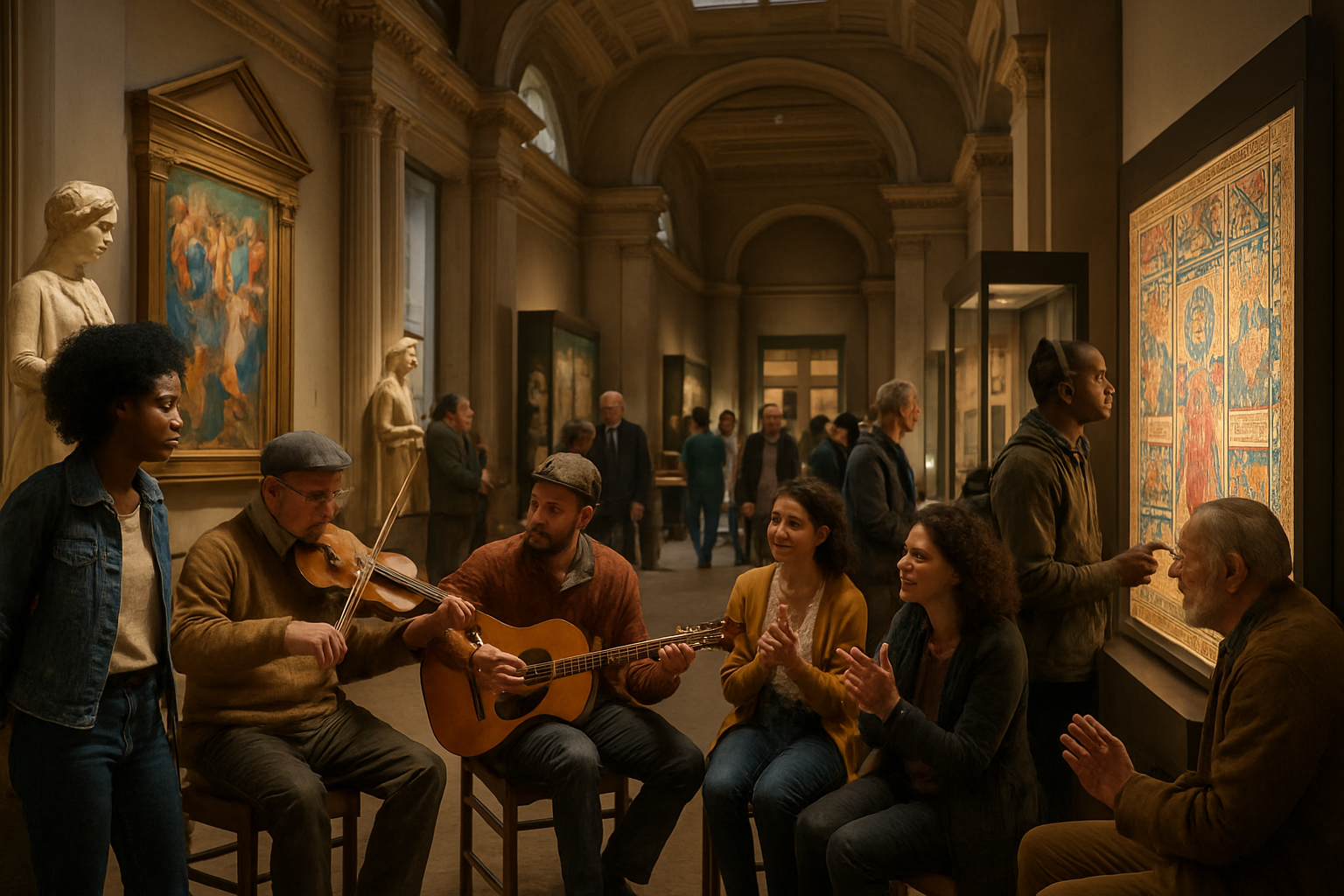
A remarkable cultural renaissance is sweeping across Europe and beyond, as six nations showcase an unprecedented convergence of artistic expression, from Algeria's celebration of traditional folk music to Malta's cutting-edge electronic performances, demonstrating how creative industries are fostering international collaboration while preserving local cultural identity.
The convergence of cultural events across Algeria, Bulgaria, Czech Republic, Denmark, Croatia, and Malta in March 2026 represents a defining moment for the creative industries, building upon the momentum established during February's documented Cultural Renaissance. These developments signal a mature evolution in how nations approach cultural programming, balancing heritage preservation with contemporary innovation.
Algeria's Folk Music Celebration Sets Continental Tone
Algeria's Minister of Culture and Arts, Malika Ben Douda, officially opened the 15th edition of the National Cultural Festival of Popular Song in the capital, marking a significant milestone for North African cultural expression. The festival, which draws official representatives from the highest levels of government, including advisors from the Presidency and the National Economic, Social and Environmental Council, demonstrates the strategic importance placed on cultural heritage preservation.
The festival's emphasis on "popular song" reflects a sophisticated understanding of culture as living tradition rather than static museum piece. According to cultural observers, this approach has become the hallmark of successful cultural programming in 2026, where authenticity emerges through community engagement rather than institutional preservation alone.
Bulgaria's Literary Innovation Captures International Attention
Bulgaria's Burgas is hosting the inaugural edition of the international youth literary festival "Black Sea Spring" from March 12-22, 2026, representing a significant investment in cross-generational cultural transmission. The festival brings together established Bulgarian authors, publishers, and young readers in a series of meetings, literary readings, discussions, and creative workshops specifically designed for youth audiences.
The festival's programming emphasizes creative workshops for young people and meetings with popular writers, positioning literature as an accessible rather than elite cultural form. This democratization of literary culture aligns with broader European trends toward community-centered cultural programming that prioritizes participation over consumption.
"The festival creates a bridge between generations while maintaining the essential character of Bulgarian literary tradition."
— Bulgarian Cultural Ministry Representative
Czech Republic's Historic Commemoration Blends Heritage with Innovation
The Czech Republic's "Baťa: 150" project represents one of 2026's most comprehensive cultural initiatives, featuring conferences, books, an original musical, lectures, and exhibitions throughout the year to commemorate 150 years since the birth of entrepreneur Tomáš Baťa. The anniversary series, which officially begins on April 3rd, launches in March in Zlín with a performance of "The Cooks of Marie Baťová."
This multi-faceted approach demonstrates how contemporary cultural programming can honor historical figures while creating new artistic expressions. The project's scope—spanning multiple art forms and extending across an entire year—establishes a template for comprehensive cultural commemoration that serves both educational and entertainment functions.
Denmark and Croatia Showcase International Music Integration
Denmark's announcement that a British rapper will guest at Smukfest this year, though details remain limited, reflects the ongoing internationalization of European music festivals. This trend toward cross-cultural musical collaboration has become a defining characteristic of the 2026 festival season.
Meanwhile, Croatia continues its emergence as a premier destination for world-class musical performances with the announcement that globally renowned Afro house pioneer Black Coffee will perform at the historic Pula Arena. The venue, described as one of the world's best-preserved Roman amphitheatres, represents the successful synthesis of ancient architecture with contemporary cultural programming that has become a hallmark of European cultural innovation.

Malta's Electronic Music Breakthrough
Malta's announcement that global dance music star Robin Schulz will return to Café del Mar Malta for a major open-air show on July 31st represents a significant milestone for the Mediterranean island's entertainment industry. With more than 20 billion streams, over 150 million Shazams, and more than 850 international awards, Schulz's appearance positions Malta as a serious player in the global electronic music circuit.
The event, brought to the island by +356 Entertainment, demonstrates how smaller nations can compete for major international acts through strategic programming and professional event management. Malta's success in attracting world-class performers reflects broader trends in the creative industries, where authentic venues and professional execution often outweigh market size considerations.
Economic Impact and Cultural Diplomacy
The economic multiplier effects of these cultural initiatives extend far beyond immediate ticket sales. Countries investing in comprehensive cultural programming report substantial benefits through tourism development, creative industry employment, international media attention, and enhanced diplomatic relationships. The coordination observed across these six nations suggests a sophisticated understanding of culture as strategic infrastructure equivalent to transportation or communication systems.
Cultural tourism generated by these events creates sustainable employment in multiple sectors: performance, production, hospitality, marketing, and international relations. The ripple effects contribute to year-round economic activity rather than seasonal spikes, representing a mature approach to cultural investment.
Technology Integration and Authentic Expression
A consistent pattern across all six initiatives involves the sophisticated integration of technology to amplify rather than replace traditional cultural forms. Digital platforms enable global sharing and documentation while maintaining community ownership of cultural expressions. This approach contrasts with earlier technology adoption that often prioritized efficiency over authenticity.
Social media and digital marketing have become essential tools for cultural programming, but successful events maintain their focus on genuine community engagement and authentic artistic expression. The technology serves to extend reach rather than define content, preserving the essential human connections that make cultural experiences meaningful.
International Cooperation Models
The coordination evident across these cultural initiatives reflects emerging models of international cooperation that respect local distinctiveness while fostering global dialogue. Rather than homogenized programming, each nation maintains its cultural identity while participating in broader conversations about artistic expression and community engagement.
This approach has proven particularly effective for smaller nations seeking to enhance their international cultural profile. By maintaining authentic programming while embracing helpful innovations and international partnerships, countries like Malta, Bulgaria, and Croatia compete effectively with established cultural centers.
Future Implications for Creative Industries
The success of March 2026's cultural programming provides practical templates for future cultural development that balance tradition with innovation, local authenticity with global cooperation, and economic viability with cultural integrity. The evidence suggests that communities worldwide are recognizing culture as essential infrastructure requiring strategic investment and adaptive management.
These developments establish precedents for 21st-century cultural stewardship that successfully synthesizes heritage preservation with contemporary innovation. The template emerging from these six nations demonstrates that authentic cultural expression can achieve global appeal while maintaining local significance, creating sustainable models for creative industry development.
Building Sustainable Cultural Networks
The March 2026 cultural initiatives represent more than isolated events; they constitute building blocks for sustainable international cultural networks. The cooperation evident between traditional and contemporary art forms, local and international artists, and community and professional programming suggests a maturation of cultural policy that serves multiple societal functions simultaneously.
Success factors consistently include community leadership, authentic representation, strategic technology integration, and economic viability through cultural tourism and educational partnerships. These elements create lasting cultural infrastructure that extends well beyond individual events or seasons.
The convergence of diverse cultural expressions—from Algerian folk music to Croatian electronic performances, from Bulgarian literary festivals to Czech historical commemorations—demonstrates humanity's capacity for meaning creation and community building during challenging global circumstances. These initiatives serve as bridges between communities, vehicles for international understanding, and foundations for sustainable development.
As the creative industries continue to evolve in 2026, the template established by these six nations provides a roadmap for cultural development that honors the past while embracing future possibilities, maintains local identity while fostering global connections, and creates economic value while preserving cultural authenticity. The European Cultural Renaissance of March 2026 thus represents not merely a moment of artistic celebration, but a fundamental reimagining of culture's role in building resilient, connected, and meaningful communities in the 21st century.