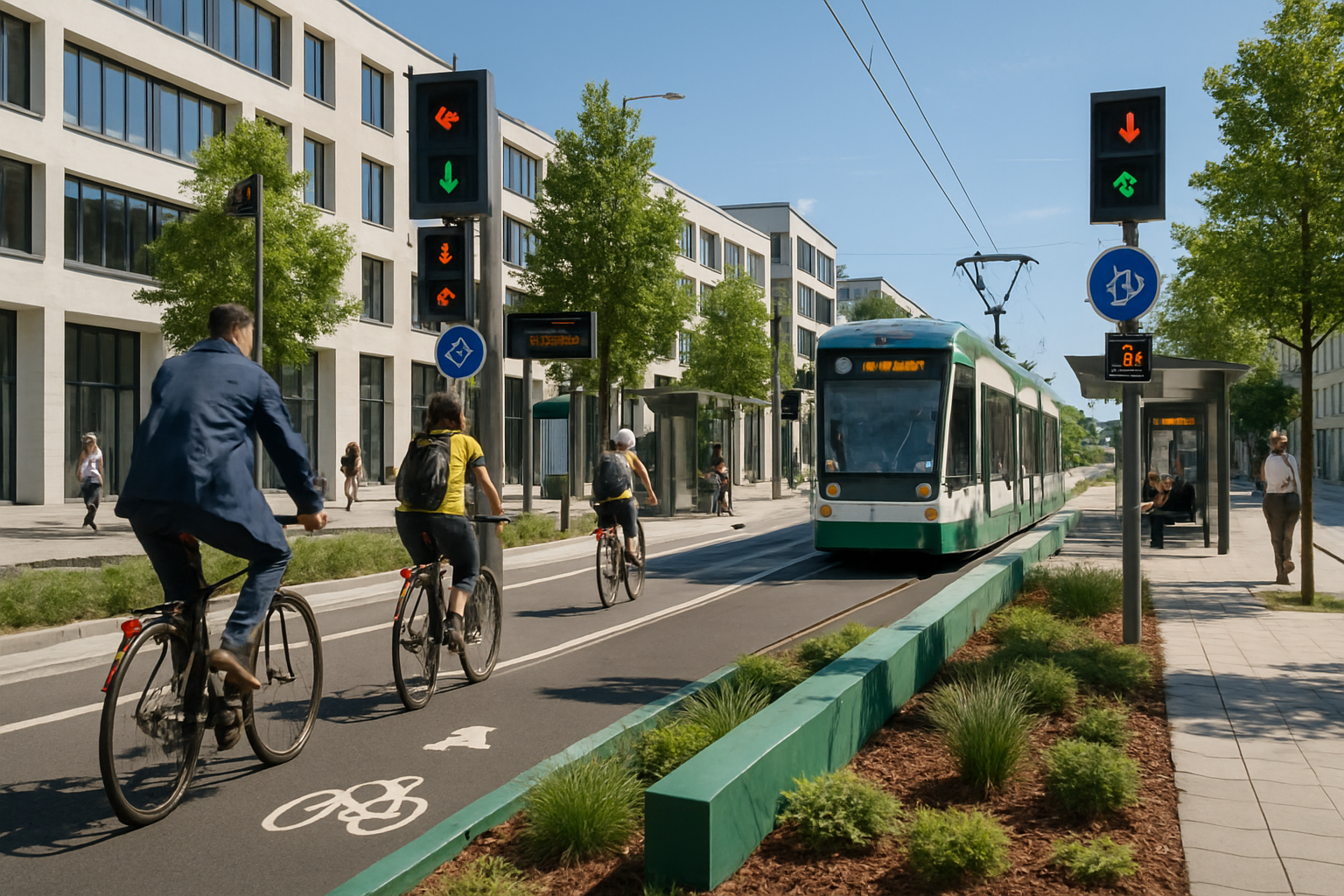
Cities across Europe are undertaking their most ambitious urban transformation in generations, redesigning streets and infrastructure to accommodate the explosive growth in bicycle transportation as climate concerns and economic pressures drive millions toward sustainable mobility options.
The revolution spans from Utrecht's world's largest bicycle parking garage to Vienna's comprehensive Ringstraße redesign, marking a fundamental shift in how European cities prioritize transportation infrastructure. This represents more than incremental change—it's a complete reimagining of urban spaces that have been dominated by automobiles for over half a century.
The Austrian Model: From Railways to Cycling Networks
Austria is emerging as a leading example of systematic cycling infrastructure development. Vienna has approved new zoning and development plans for pedestrian-cycling connections along the Verbindungsbahn railway, creating protective zones and social infrastructure that represent a dramatic shift toward sustainable non-motorized urban transportation networks.
Minister Yuriko Backes officiated the groundbreaking ceremony for a comprehensive cycling path connecting Lellingen-Fouhren, part of a broader Luxembourg cycling network development that will run from January 2026 through August 2027. This project exemplifies how European nations are integrating cycling infrastructure into their broader sustainable transportation strategies.
"This infrastructure transformation represents the most significant shift in urban mobility since the post-war automobile boom," explained urban planning expert Dr. Erik Mittendorff from Vienna's Technical University. "We're not just adding bike lanes—we're fundamentally restructuring how cities function."
— Dr. Erik Mittendorff, Urban Planning Expert, Vienna Technical University
Netherlands Sets Global Standards
The Netherlands continues to lead global cycling infrastructure innovation, with Utrecht's bicycle parking garage serving 12,500 bicycles—the world's largest facility of its kind. The three-story underground complex includes real-time space monitoring, automated retrieval systems, and integrated connections to train platforms, demonstrating how cycling infrastructure can seamlessly integrate with public transportation networks.
Dutch municipalities are implementing sophisticated technology integration including GPS tracking, predictive maintenance systems, and mobile applications that guide cyclists to available parking spaces and optimal routes. This digital integration represents a new standard for smart cycling infrastructure that other European cities are rapidly adopting.
France's Seine Transformation
Paris has transformed the historic Seine riverbanks into dedicated cycling corridors as part of Mayor Anne Hidalgo's comprehensive urban mobility strategy. The project converted traditional automobile infrastructure into green cycling paths with dedicated lanes separated from pedestrian areas, creating safe corridors that connect major tourist destinations and residential neighborhoods.
The initiative demonstrates how cycling infrastructure can enhance rather than compromise urban heritage, with careful design integration that preserves historic character while enabling modern sustainable transportation options. Similar transformations are underway in Lyon, Marseille, and other French metropolitan areas.
Technology Integration Revolution
Modern European cycling infrastructure incorporates sophisticated technology from the design phase: real-time monitoring, predictive maintenance, digital payments, and environmental optimization as standard requirements rather than optional additions. Smart traffic signals adapt to cycling traffic patterns, while mobile applications provide route optimization and safety alerts.
Estonia's Tallinn demonstrates this integration through its conversion of dilapidated tramway stretches into green cycling corridors that include digital monitoring systems and renewable energy-powered lighting. The project leverages Estonia's 88% renewable electricity usage and represents urban environmental transformation that other cities are studying for replication.
Economic and Environmental Impact
The cycling infrastructure revolution generates substantial economic multiplier effects beyond construction employment. Reduced logistics costs, enhanced market access, and improved business productivity support broader European Union connectivity objectives while contributing significantly to continental emissions reduction strategies.
Studies from Copenhagen, which achieved complete bus electrification in March 2026, show that integrated cycling infrastructure reduces urban transportation costs by up to 30% while improving air quality measures across metropolitan areas. These benefits extend to reduced healthcare costs, increased property values along cycling corridors, and enhanced tourism revenue.
Overcoming Implementation Challenges
Cities face significant challenges including material cost inflation affecting infrastructure projects globally, skilled labor shortages, and coordination complexity when integrating cycling infrastructure with existing transportation networks. The global semiconductor shortage has driven memory chip prices sixfold higher, affecting smart traffic control systems essential for modern cycling infrastructure.
However, European cities are developing innovative solutions through international cooperation, knowledge sharing, and coordinated procurement addressing supply chain disruptions. The European Union's structural funds increasingly prioritize climate-conscious transportation projects that demonstrate measurable environmental benefits alongside connectivity improvements.
Climate Adaptation Imperative
This infrastructure transformation occurs during unprecedented climate urgency, with January 2026 marking the 18th consecutive month that global temperatures exceeded 1.5°C above pre-industrial levels. Cycling infrastructure development has evolved from environmental preference to climate adaptation necessity, with cities recognizing that sustainable transportation infrastructure is essential for meeting European climate targets.
Weather-resistant materials, backup power systems, and flood management features are now standard requirements for cycling infrastructure design, ensuring systems function reliably under conditions that exceed traditional climate patterns. Projects are designed for future rather than historical environmental conditions.
Regional Integration and Future Expansion
The success of cycling infrastructure development demonstrates the importance of regional cooperation, with projects like Luxembourg's Greater Region cooperation and Estonia's participation in Rail Baltica contributing to continental integration through improved connectivity. Economic impacts extend beyond construction through reduced logistics costs, enhanced competitiveness, and permanent employment in maintenance and technology services.
Plans for expansion include connecting national cycling networks across European borders, creating integrated cycling corridors that enable multi-country bicycle tourism and commuting. The initiative represents a fundamental shift toward viewing cycling infrastructure as strategic regional integration infrastructure rather than local transportation amenities.
Global Template for Urban Transformation
European cities are establishing templates that influence global urban development strategies, with Australian, Canadian, and Asian cities implementing "European-style" cycling infrastructure based on proven models from Utrecht, Vienna, and Copenhagen. The combination of environmental urgency, technological advancement, and international cooperation creates development precedents that prioritize sustainability alongside economic growth.
Success factors consistently include sustained political commitment transcending electoral cycles, transparent governance, comprehensive stakeholder engagement, and adaptive management that responds to changing community needs and technological opportunities. The window for effective implementation remains open, but requires coordinated international action recognizing cycling infrastructure as essential for prosperous, sustainable urban development.
As European cities demonstrate that comprehensive cycling infrastructure transformation is achievable through strategic planning and international cooperation, the cycling infrastructure revolution represents a decisive moment in 21st-century urban development—one that could determine whether cities remain accessible to diverse populations while meeting climate adaptation requirements essential for long-term urban sustainability.