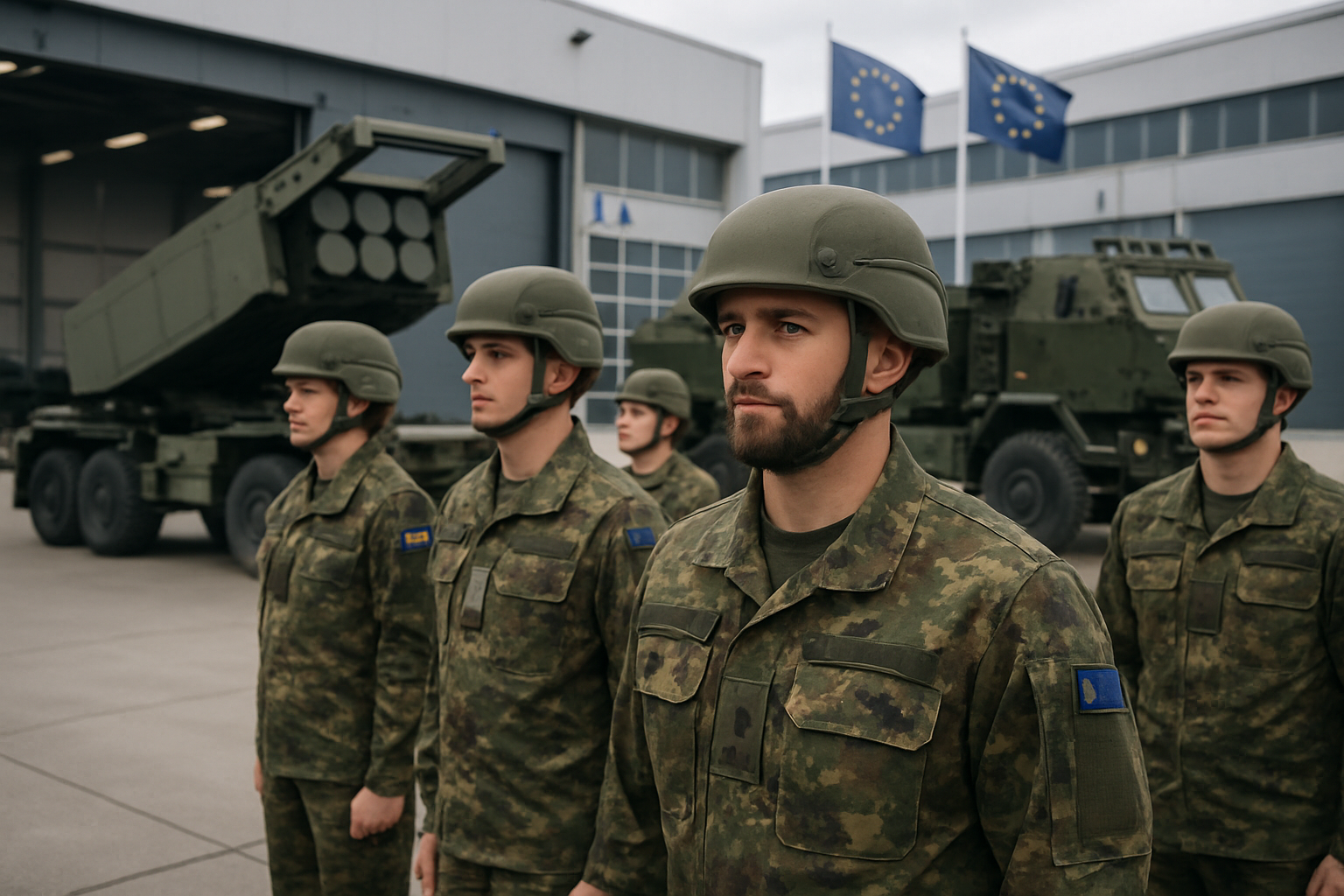
European defense cooperation reaches new heights as Lockheed Martin announces a €10 million Baltic maintenance center for HIMARS missile systems in Estonia, while EU military missions expand training partnerships across multiple continents.
Historic HIMARS Maintenance Hub Established
One of the world's largest defense manufacturers, Lockheed Martin, will establish a groundbreaking €10 million Baltic maintenance center for HIMARS mobile rocket launchers in Estonia, the Ministry of Defense announced Wednesday. This strategic decision marks a significant evolution in European defense capabilities and represents the first such regional facility for the advanced rocket systems.
Defense sector lobbyist Taavi Veskimägi emphasized the transformative impact of this development, stating that Lockheed Martin's decision to establish the maintenance center "boosts defense and the economy" while taking "Estonia's capabilities to the next level." The facility will serve the broader Baltic region, positioning Estonia as a critical hub for Western defense technology maintenance and support.
"This development represents a fundamental shift in how we approach defense cooperation in Europe. We're moving from simply purchasing equipment to building comprehensive support ecosystems."
— Taavi Veskimägi, Defense Sector Analyst
EU Military Training Missions Expand Globally
Simultaneously, the European Union Military Assistance Mission in Mozambique (EUMAM MOZ) has launched the Theoretical Basic Ammunition Course (TBAC) for military personnel of the Mozambican Defence Armed Forces (FADM). The specialized training, delivered by Austria's Mobile Advisory Training Team (MATT), demonstrates Europe's expanding global security partnerships.
Two instructors from the Austrian Armed Forces are conducting the comprehensive course, showcasing Europe's commitment to building defense capabilities beyond its immediate borders. This initiative represents a broader trend of European nations taking greater leadership roles in international security cooperation.
Strengthening Regional Security Architecture
The Estonian HIMARS facility comes at a critical juncture for European security. With ongoing geopolitical tensions and the need for enhanced regional defense capabilities, the maintenance center provides strategic advantages for NATO allies and partners. The facility will enable rapid repair and maintenance of HIMARS systems without requiring transport to distant locations, significantly improving operational readiness.
This development builds on existing European defense cooperation frameworks, including the NATO Arctic Sentry mission and enhanced intelligence sharing mechanisms. The Baltic states have been at the forefront of strengthening regional security cooperation, with Estonia, Latvia, and Lithuania deepening partnerships through innovative approaches that combine traditional military cooperation with technological advancement.
Diplomatic Coordination Amid Global Challenges
Estonian Defense Minister Hanno Pevkur's recent meetings with U.S. Secretary of the Army Daniel P. Driscoll in Washington underscore the continuing importance of transatlantic defense partnerships. During these discussions, Pevkur confirmed that "the United States has not abandoned its peace mediation efforts in Ukraine," highlighting the complex intersection of defense cooperation and diplomatic initiatives.
The timing of these developments reflects Europe's strategic response to evolving security challenges. As nations balance immediate defense needs with long-term peace objectives, facilities like the Estonian HIMARS center provide tangible capabilities while diplomatic efforts continue.
Economic and Strategic Implications
The €10 million investment in Estonia represents more than just military capability enhancement; it signals a broader shift toward European strategic autonomy in defense manufacturing and maintenance. This approach reduces dependence on distant supply chains while building local expertise and economic benefits.
The Austrian-led training mission in Mozambique similarly demonstrates Europe's capacity to project stability and build partnerships through knowledge transfer rather than traditional military deployments. These initiatives showcase European soft power projection through capacity building and technical expertise sharing.
Technology Integration and Innovation
Modern defense cooperation increasingly emphasizes technology integration alongside traditional military hardware. The Estonian facility will leverage advanced maintenance technologies and diagnostic systems, contributing to broader defense innovation ecosystems across Europe.
The EU's approach in Mozambique, utilizing specialized training teams from member states, demonstrates how European nations can efficiently share expertise and resources. This model maximizes the impact of individual national capabilities through coordinated multilateral efforts.
Future of European Defense Cooperation
These developments reflect a maturing European approach to defense cooperation that balances alliance obligations with regional autonomy. The combination of advanced facility establishment and expanded training missions creates a template for sustainable defense partnerships that extend beyond simple equipment transfers.
As European nations continue to strengthen their collective defense capabilities, initiatives like the Estonian HIMARS center and the Mozambican training programs provide concrete examples of how modern security cooperation can address multiple objectives simultaneously: enhancing military readiness, building economic partnerships, and projecting stability through capacity building.
The success of these programs will likely influence future European defense cooperation strategies, potentially leading to additional regional maintenance hubs and expanded international training partnerships. This approach represents an evolution toward more comprehensive, sustainable defense cooperation that addresses both immediate security needs and long-term strategic objectives.