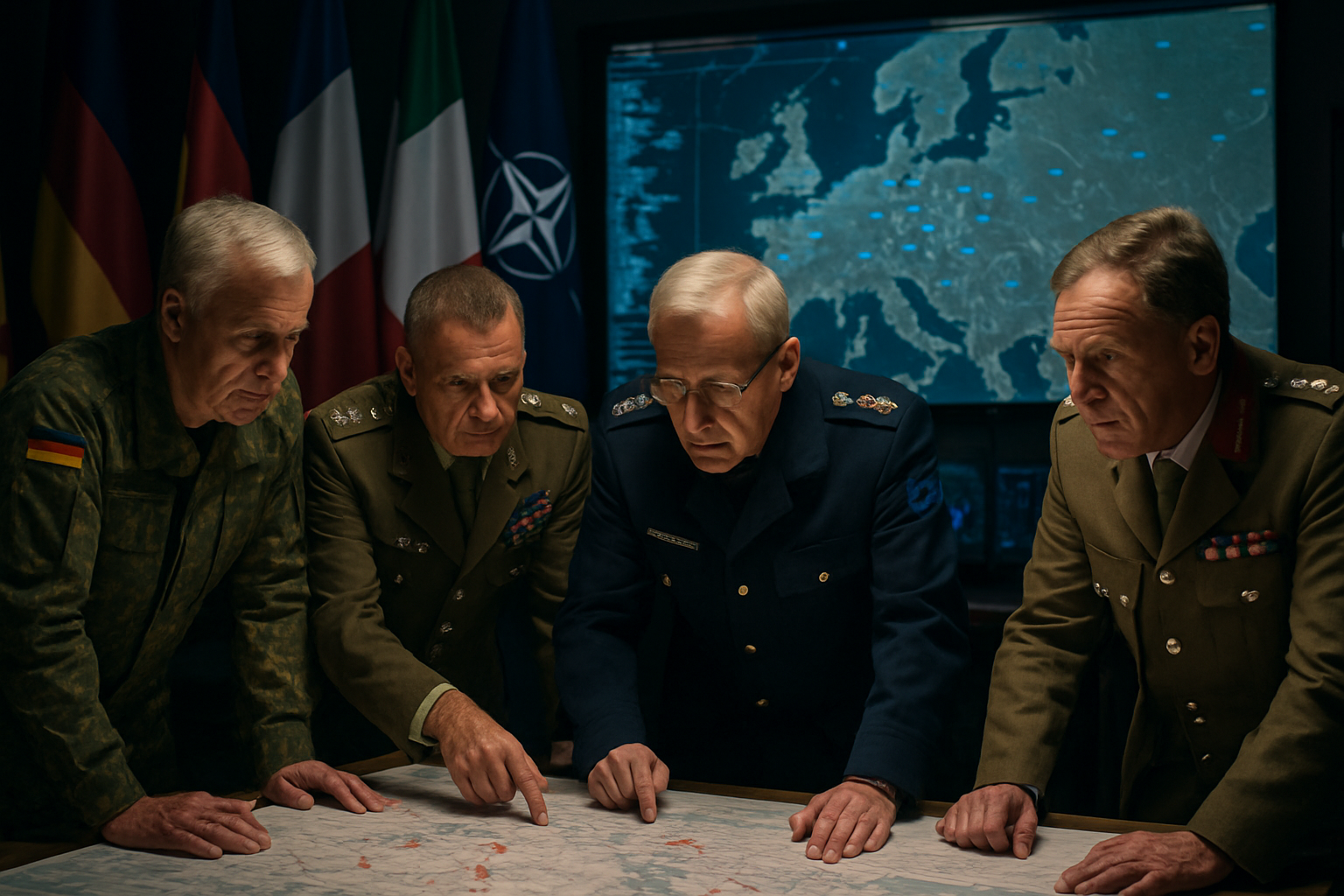
In a groundbreaking achievement for transatlantic security, all 32 NATO member states have reached the alliance's benchmark of allocating at least 2% of GDP to defense spending in 2025, marking the first time in the organization's 75-year history that every member meets this critical threshold simultaneously.
The historic milestone, announced by NATO Secretary-General Mark Rutte in the alliance's annual report, comes as Europe confronts its most complex security environment since the Cold War. Combined alliance spending reached $1.4 trillion in 2025, representing a 6% increase from the previous year and demonstrating unprecedented unity in defense commitments.
Universal Compliance Achieved
The final five nations to reach the 2% target were Spain, Portugal, Albania, Belgium, and Canada, completing universal compliance with the defense spending benchmark established at the 2014 Wales Summit following Russia's annexation of Crimea. Poland leads the alliance with defense expenditure reaching 4.3% of GDP, while most European nations have committed to maintaining or increasing their spending levels through 2030.
This transformation represents a dramatic shift from 2014, when only three NATO countries met the spending target. The achievement reflects both external security pressures and internal alliance dynamics that have fundamentally altered European defense priorities over the past decade.
European Strategic Autonomy in Action
Beyond meeting spending targets, European nations are demonstrating unprecedented military cooperation independent of traditional US leadership. The most concrete example emerged in March 2026 when Iranian drone strikes on RAF Akrotiri in Cyprus – the first attack on European territory since World War II – triggered a coordinated four-nation naval response.
France repositioned the aircraft carrier Charles de Gaulle from the Baltic to the Mediterranean, while Greece deployed F-16 fighter jets and naval frigates in the most significant Greek military support operation since 1974. Britain contributed HMS Dragon destroyer with Sea Viper missile systems, and Spain provided air defense frigates, creating a multi-layered protection system for Cyprus within hours of the attack.
"This is strategic autonomy in practice – European nations taking responsibility for European security,"
— High Representative for Foreign Affairs, European Union
Arctic Security Concerns Drive Cooperation
The NATO Arctic Sentry mission, launched in February 2026, represents the alliance's most comprehensive Arctic security response since the Cold War. European allies have assumed leadership roles, with the UK doubling its troop presence in Norway from 1,000 to 2,000 over three years. Sweden is deploying Gripen jets for Greenland exercises, while Finland contributes operational planning expertise.
This enhanced Arctic focus addresses a 23% increase in Russian military activity since Finland and Sweden joined NATO, including systematic base reopening, submarine incursions, and GPS jamming operations. Estonian Defense Minister Hanno Pevkur emphasized the critical importance of Poland as a "priority partner" for Estonian defense industry development during recent Warsaw consultations.
Climate change is opening new Arctic shipping routes and resource extraction opportunities, creating great power competition in a domain that requires specialized equipment capable of operating in temperatures as low as -70°C with wind speeds exceeding 200 km/h.
Addressing Fragmented Defense Systems
Despite increased spending, European defense faces significant structural challenges. Analysis from French defense experts highlights long-standing inefficiencies in fragmented defense systems across the continent. The combination of war in Europe and uncertainty about transatlantic security guarantees is forcing governments to confront these vulnerabilities more directly.
Norway is prioritizing defense infrastructure in its next national transport plan, with Northern Norway potentially becoming a major beneficiary of this strategic shift. The integration of military and civilian transportation networks represents a comprehensive approach to national security that goes beyond traditional defense spending metrics.
Nuclear Policy Evolution
The most significant shift in European defense thinking involves nuclear policy. Following the expiration of the New START Treaty in February 2026 – creating the first nuclear governance vacuum between the US and Russia in over 50 years – European nations are reconsidering their nuclear stance.
Finland is lifting its comprehensive nuclear weapons ban, with Defense Minister Antti Häkkänen stating that current legislation is inadequate for NATO membership requirements. Sweden has announced willingness to host nuclear weapons during wartime, breaking an 80-year Nordic tradition of nuclear-free policies. These developments reflect concerns about extended deterrence credibility in an era of heightened nuclear risks.
France has initiated discussions about expanding its nuclear deterrent role beyond national scope, with Germany, Poland, and Finland engaging in preliminary conversations about extended deterrence arrangements. This represents the first serious European nuclear cooperation discussions since the Cold War's end.
Regional Security Challenges
The achievement of NATO's spending targets comes amid multiple regional security challenges. Lithuanian intelligence warns that Russia could be ready for "limited military conflict" within 3-5 years if a Ukraine ceasefire allows force reconstitution. Baltic states report systematic Russian provocations including drone incidents, submarine incursions, and infrastructure sabotage attempts.
European defense infrastructure remains inadequate for complete airspace protection despite improved response capabilities. Recent Russian drone attacks on Estonian and Latvian territory highlighted critical infrastructure vulnerabilities, with one drone striking the Auvere power station in Estonia and another crashing in Latvia's Krāslava region.
Ukraine's ongoing conflict continues to influence European defense planning, with recent peace talks suspended due to the Iran crisis. The war has demonstrated both the importance of sustained defense investment and the need for rapid adaptation to contemporary warfare techniques, including drone technology and electronic warfare capabilities.
Technology and Industrial Cooperation
European defense cooperation extends beyond spending to include significant technological and industrial collaboration. Estonia has established a HIMARS maintenance center worth €10 million – the first regional facility for advanced rocket systems. The UK has acknowledged four operational maintenance, repair, and overhaul (MRO) facilities in Ukraine servicing Western equipment, with a fifth planned.
Defense technology integration focuses on AI partnerships, standardized capabilities across alliance members, and regional manufacturing hubs designed to reduce dependence on distant supply chains. These initiatives create economic multiplier effects supporting specialized industries and R&D capabilities while building local expertise in advanced systems.
Future Implications
The achievement of universal NATO defense spending compliance represents more than a statistical milestone – it demonstrates institutional resilience and adaptive capacity essential for the great power competition era. With unprecedented resources allocated for sustained deterrence and defense capabilities, the alliance is better positioned to preserve peace through strength.
However, success requires more than raw expenditure. Effective capability development, interoperability improvements, and technological innovation must translate spending into operational effectiveness. The ongoing conflicts in Ukraine and the Middle East serve as practical tests of whether increased defense investments can provide credible deterrence against diverse security threats.
European strategic autonomy is evolving from aspiration to operational reality, demonstrated by rapid crisis response capabilities and coordinated defense planning. This transformation occurs within alliance frameworks while addressing concerns about American commitment reliability, creating a more balanced transatlantic security architecture.
The path forward requires sustained political commitment across electoral cycles, continued coordination among diverse stakeholders, and balance between deterrent effects and diplomatic stability. The current security environment demands both military preparedness and diplomatic engagement to address the complex challenges of 21st-century international relations.
As NATO enters its second century, the achievement of universal defense spending compliance provides a foundation for addressing AI integration, space-based systems, and hybrid warfare threats. The alliance's adaptation to contemporary security challenges while maintaining institutional unity offers a template for how democratic nations can coordinate substantial defense investments during periods of great power competition.