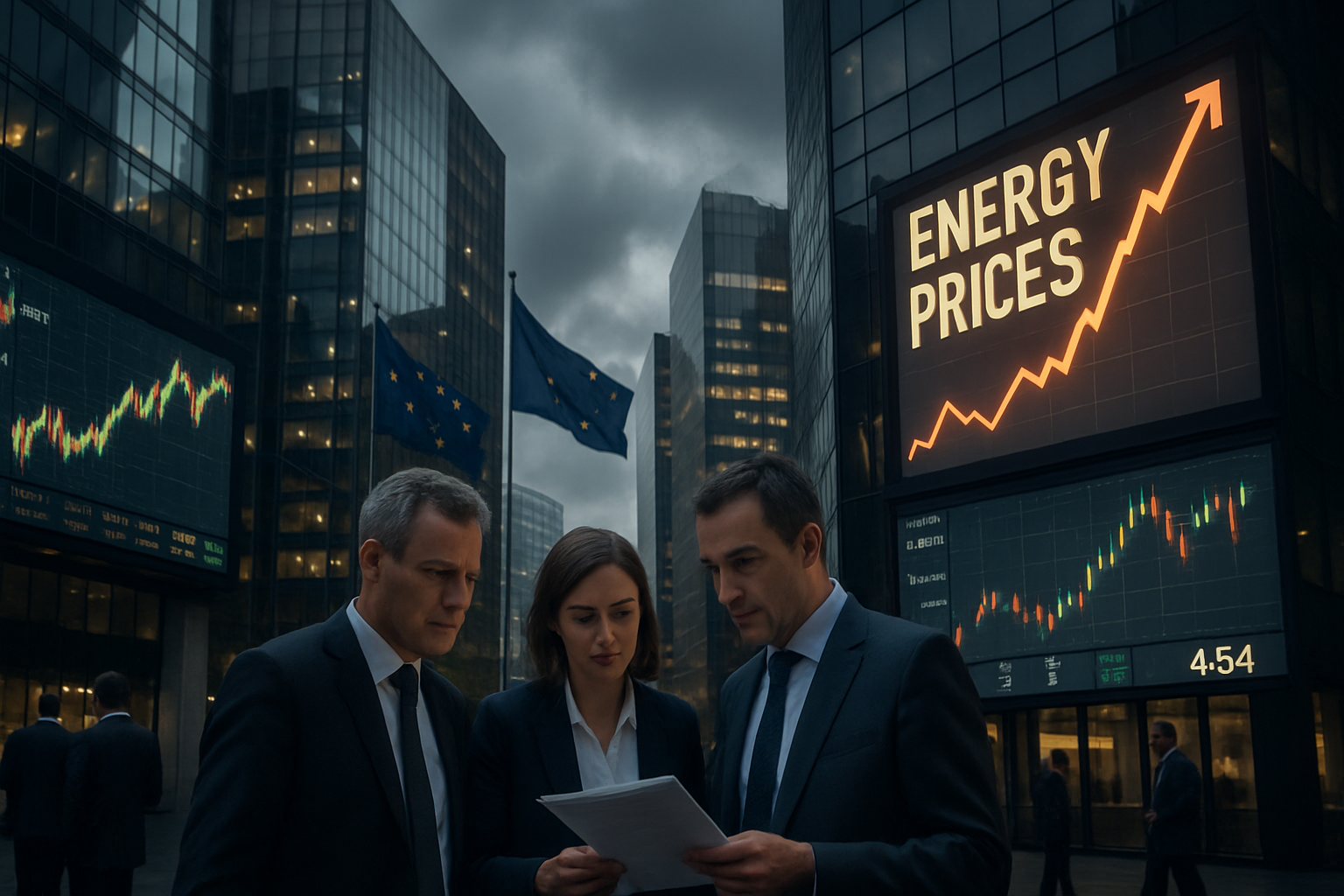
European economies are confronting an unprecedented convergence of challenges as energy costs surge by 40%, inflation pressures mount, and Middle East tensions disrupt critical supply chains, creating what analysts describe as the most serious economic threat to the continent since the 2008 financial crisis.
The crisis reached a critical juncture on March 2, 2026, as gas prices in Europe spiked 24% while oil surged to $80 per barrel following the closure of the Strait of Hormuz, which handles 40% of global oil transit. The energy shock has sent ripple effects across European economies already struggling with inflationary pressures and supply chain vulnerabilities.
Energy Crisis Reaches Critical Point
Austria stands at the center of Europe's energy dilemma as gas prices surged 40% following Middle East tensions, according to reports from Der Standard. The country's heavy dependence on energy imports has left it particularly vulnerable to geopolitical shocks, with the current crisis highlighting the urgent need for energy diversification.
"The dependence on imports is now taking revenge," Austrian sources noted, as facilities in Qatar, Iraq, and Saudi Arabia have halted oil and gas production due to regional conflicts. This disruption comes at a critical time when Europe was already grappling with energy security concerns following previous supply chain disruptions.
Slovakia faces similar challenges with disruptions to the Druzhba pipeline affecting oil supplies, forcing both Hungary and Slovakia to draw on strategic petroleum reserves while seeking assistance from Croatia's alternative pipeline network. The crisis underscores the fragility of European energy infrastructure and the continent's vulnerability to geopolitical tensions.
Labor Market Pressures Intensify
The Czech Republic's labor shortage has exposed significant structural challenges in European employment markets. The country faces a critical blind spot in its workforce strategy, particularly affecting late-career Generation X professionals who represent a substantial untapped resource during a period of acute labor demand.
This demographic challenge reflects broader European employment trends, where aging populations and evolving skill requirements have created mismatches between available talent and market needs. The situation has been exacerbated by energy cost increases that are forcing businesses to restructure operations and reassess workforce strategies.
Estonia's moderate economic growth of 0.7% year-over-year in the fourth quarter demonstrates the challenging environment facing European economies, as growth remains sluggish despite significant policy interventions and investment in renewable energy infrastructure.
Supply Chain Vulnerabilities Exposed
The Middle East crisis has exposed critical vulnerabilities in European supply chains that extend far beyond energy. The closure of major shipping routes and aviation networks has disrupted the flow of goods, materials, and components essential to European manufacturing and commerce.
Latvia's electricity prices, which dropped 19% to €100.11 per megawatt hour last week, now face upward pressure as regional energy markets react to supply disruptions. The volatility demonstrates how quickly energy markets can shift and the limited buffering capacity within European energy systems.
Business sentiment in Latvia remains fragile despite some hopeful signs, according to the Central Statistical Bureau. While retail trade and services sectors showed positive momentum in February, the overall business environment has worsened compared to January, reflecting growing uncertainty about economic prospects.
"The business environment in February 2026 was positive in retail trade and the services sector, however, compared with January, it has worsened slightly."
— Central Statistical Bureau of Latvia
Inflation Concerns Mount Across Region
Portugal's economic officials have acknowledged that rising oil prices represent "bad news" for the economy, with the government preparing to implement appropriate measures to ensure economic stability. The situation reflects broader concerns across Europe about the inflationary impact of energy cost increases.
Slovakia faces particularly acute challenges with the European Central Bank's balance sheet suffering from billion-euro losses, creating additional pressure on monetary policy and financial stability. The ECB's difficulties have real consequences for member nations, including Slovakia, as they navigate complex economic headwinds.
The convergence of energy costs, supply chain disruptions, and inflationary pressures has created what economists describe as a "perfect storm" scenario that requires coordinated policy responses across European institutions.
Infrastructure and Climate Adaptation Pressures
Slovakia's infrastructure faces additional challenges as new projects and reconstructions must account for changing climate conditions and evolving demands on energy networks. Critical infrastructure must now calculate climate risks into development planning, adding complexity and costs to essential projects.
The intersection of climate adaptation requirements and immediate economic pressures has created difficult trade-offs for European policymakers, who must balance long-term resilience with short-term economic stability.
Financial System Under Strain
The European financial sector faces mounting pressure as energy costs impact both institutional operations and consumer spending power. Slovakia's experience demonstrates how monetary policy complications can cascade through national economies, affecting everything from government finances to individual household budgets.
Financial institutions across Europe are reassessing risk models and exposure levels as the economic outlook becomes increasingly uncertain. The combination of energy price volatility, supply chain disruptions, and geopolitical tensions has created a challenging environment for financial planning and investment decisions.
Policy Responses and Economic Outlook
European governments are scrambling to implement coordinated responses to the multi-faceted crisis. Portugal's commitment to taking "adequate measures" if necessary reflects the proactive stance many European nations are adopting as they prepare for potentially prolonged economic challenges.
The Latvian government's assertion that it is "doing well" in its progress report contrasts sharply with the fragile business sentiment data, highlighting the disconnect between political messaging and economic reality that characterizes the current crisis.
Central banks across Europe face difficult decisions about monetary policy as they balance inflation concerns with the need to support economic growth during a period of significant external shocks.
Long-term Structural Challenges
The current crisis has exposed fundamental structural weaknesses in European economies that extend beyond immediate energy and supply chain concerns. Labor market mismatches, demographic challenges, and infrastructure vulnerabilities represent long-term issues that require sustained policy attention.
The energy transition, while necessary for climate goals, has created short-term vulnerabilities that geopolitical actors can exploit. European policymakers must navigate the complex challenge of maintaining energy security while advancing decarbonization objectives.
Supply chain diversification efforts, while promising in the long term, offer little immediate relief for current disruptions. European businesses and consumers are experiencing the costs of over-reliance on unstable regions for critical inputs.
Regional Cooperation and Resilience
The crisis has highlighted both the importance and limitations of European economic integration. While shared institutions provide some buffering capacity, the interconnected nature of European economies also means that shocks can rapidly spread across the continent.
Estonia's continued investment in renewable energy infrastructure, including continental Europe's largest battery storage facility serving 90,000 households, demonstrates the long-term thinking required to build economic resilience. However, such investments require time to yield full benefits while immediate challenges demand urgent responses.
The current economic challenges facing Europe represent a critical test of the continent's resilience and adaptive capacity. Success in navigating this crisis will depend on coordinated policy responses, strategic investments in economic diversification, and the ability to balance short-term stability with long-term structural reforms necessary for sustainable prosperity.