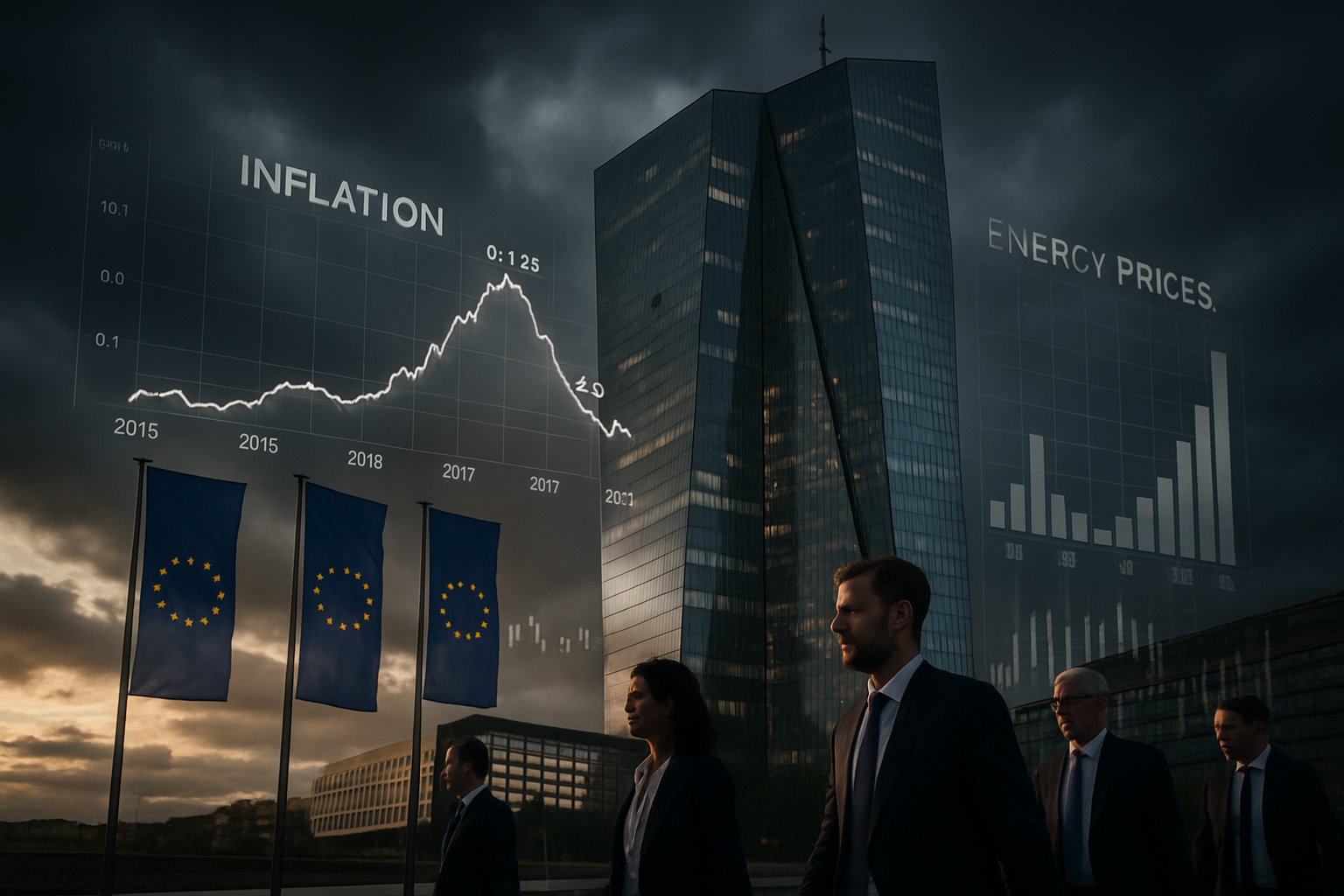
European economies are confronting their most severe crisis since 2008, as the ongoing Middle East conflict drives energy prices to unprecedented levels while inflation rates surge across the continent, creating a perfect storm that threatens the EU's economic recovery and stability.
The crisis began intensifying in March 2026 following Iran's closure of the Strait of Hormuz, which handles 40% of global oil transit. Oil prices have surged past $100 per barrel for the first time since 2022, while natural gas prices have exploded by 24% in Europe, reaching €47.32 per MWh - the highest levels since February 2025.
Energy Security at Breaking Point
Sweden exemplifies the regional disparities emerging across Europe, with electricity prices increasing by 10-20 öre and gasoline costs rising 1-2 kronor per liter. Energy analyst Samuel Ciszuk warns of "the most severe energy security crisis in decades," with southern Sweden's Malmö region particularly vulnerable due to its integration with continental European markets.
Austria's labor unions have criticized what they term "war-driven price explosions," as fuel costs have jumped 20% since the conflict began. The Austrian situation mirrors broader European concerns about energy companies potentially exploiting geopolitical tensions to inflate prices beyond what commodity costs justify.

German Export Engine Stalls
Germany, Europe's largest economy, has reported significant declines in exports as demand from China and Europe weakens. German exporters experienced a "false start" to 2026, with declining demand from key trading partners compounding domestic economic pressures.
The downturn comes as Germany faces approximately €940 billion in crisis-related costs, exposing structural weaknesses in the export-driven model that has powered European growth for decades. This challenges fundamental assumptions about European economic resilience and competitiveness.
Inflation Pressures Mount
Greece has witnessed its inflation rate climb to 2.7% in February, up from 2.5% in January, with significant price increases affecting basic foodstuffs - a development that particularly impacts lower-income households already struggling with cost-of-living pressures.
"The war cannot serve as a pretext for abusive price increases."
— French Prime Minister Sébastien Lecornu
France has deployed 500 fuel station inspectors to prevent price manipulation, while Romania's Energy Minister Bogdan Ivan has outlined five scenarios to prevent diesel from exceeding 10 lei per liter, including potential tax and excise reductions.
UK Housing Market Under Pressure
Britain's construction giant Persimmon has warned that the Iran conflict could significantly damage homebuyer sentiment, as fears of prolonged elevated interest rates continue to grip markets. The company noted growing consumer concerns about financial uncertainty extending well beyond immediate energy costs.
According to Barclays research, worries that ongoing conflicts will drive inflation higher are increasing expectations that interest rates will remain elevated for an extended period, fundamentally challenging the UK's economic recovery trajectory.
Central Bank Response Challenges
The European Central Bank faces an increasingly complex balancing act as it attempts to maintain price stability while supporting economic growth. With energy costs driving inflation, traditional monetary policy tools have limited effectiveness against supply-side shocks driven by geopolitical events.
The crisis has exposed the vulnerability of European energy infrastructure, which remains heavily dependent on Middle Eastern supply chains through critical chokepoints like the Strait of Hormuz. This single 21-mile waterway's closure demonstrates the fragility of Europe's energy security architecture.
Supply Chain Disruptions Spread
Beyond energy, the crisis has disrupted global supply chains affecting everything from automotive manufacturing to electronics production. European companies dependent on Persian Gulf trade networks face severe operational challenges as shipping giants Maersk and MSC have suspended operations, leaving 150+ tankers stranded with billions in cargo value.
Policy Responses and Coordination
European Union leadership, coordinated by High Representative Kaja Kallas, has activated emergency protocols including potential state aid for energy-intensive industries. However, the scale of the crisis has overwhelmed traditional crisis management tools, forcing policymakers to consider unprecedented interventions.
Hungary implemented immediate price caps on gasoline and diesel, while Slovakia has activated strategic petroleum reserves for the first time under current crisis protocols. These national responses highlight the challenge of maintaining EU market unity during energy emergencies.
Long-term Structural Implications
The current crisis has accelerated discussions about fundamental European energy architecture transformation. Estonia's model - achieving 88% renewable electricity with continental Europe's largest battery storage system serving 90,000 households - represents one pathway toward energy independence.
However, the transition to renewable energy sources requires years if not decades to complete, leaving Europe vulnerable during this critical transformation period. The crisis has highlighted dangerous over-dependence on volatile geopolitical regions for essential energy supplies.
Economic Recovery at Risk
The confluence of energy price surges, inflation pressures, and supply chain disruptions threatens Europe's post-pandemic economic recovery. With global financial markets experiencing severe volatility - including the Pakistan stock exchange's largest single-day decline in history - European economies face contagion risks from worldwide financial instability.
Looking Forward
The coming weeks will prove decisive for European economic stability. Unlike weather-related disruptions, the current crisis depends on military and diplomatic developments whose timeline remains uncertain. Traditional monetary policy tools have limited effectiveness against structural geopolitical disruptions affecting fundamental energy and supply chain infrastructure.
European policymakers face the challenge of balancing immediate crisis response with long-term structural reforms necessary for sustainable energy security. The success or failure of coordinated European responses will influence economic governance approaches for decades to come.
"This represents the most serious threat to European economic stability since the 2008 financial crisis."
— Senior EU Economic Policy Analyst
The current crisis serves as a template-setting moment for 21st-century European crisis management, testing the limits of multilateral cooperation and institutional resilience. The stakes extend far beyond immediate economic impacts to fundamental questions about European unity, energy security, and economic sovereignty in an increasingly volatile global environment.
As European leaders work to contain the immediate crisis, the longer-term imperative remains clear: fundamental restructuring of energy architecture and supply chain diversification to reduce dependence on volatile geopolitical regions. The window for effective action is narrowing, but the crisis also provides unprecedented political momentum for transformative change that previous generations of European leaders could only envision.