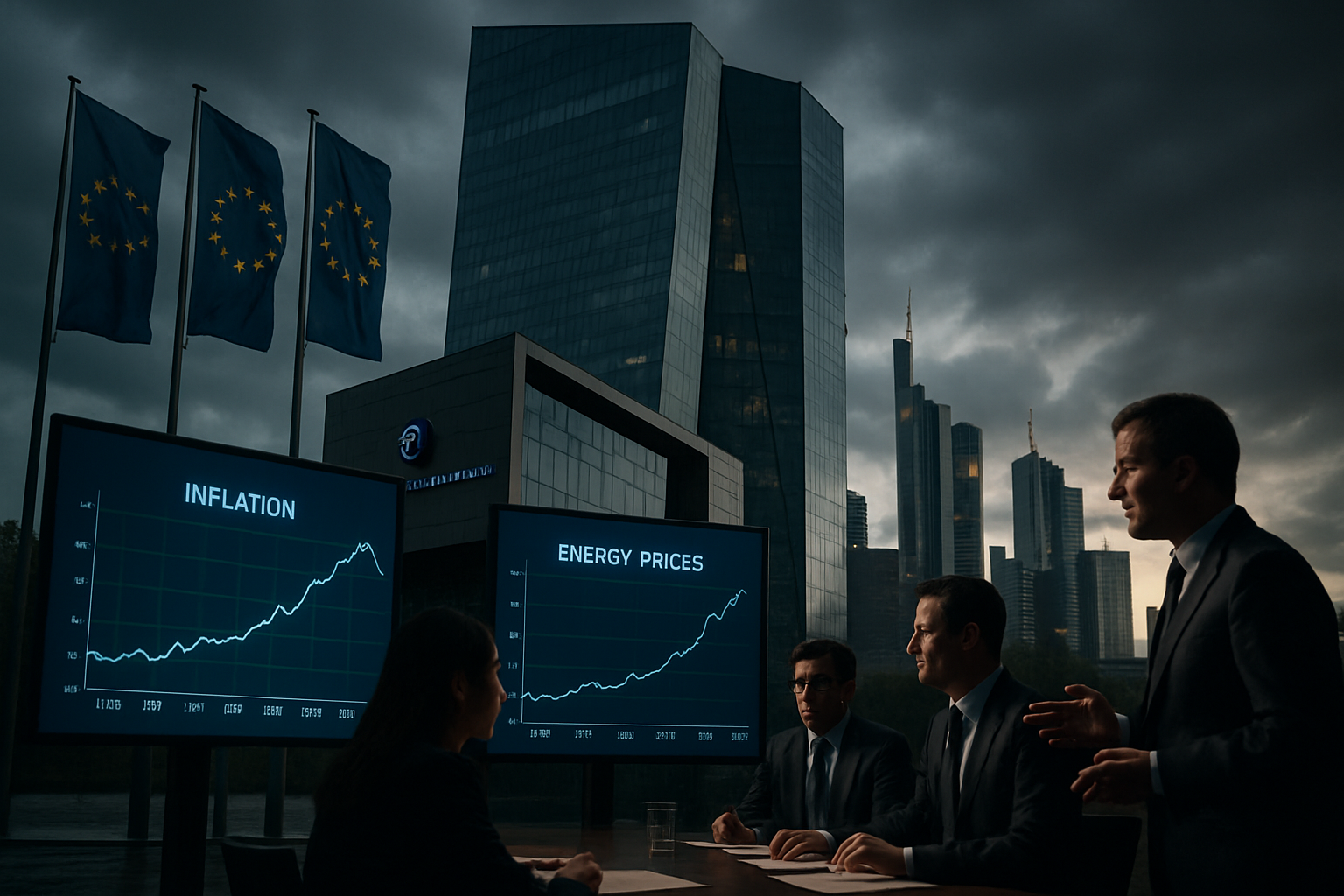
European governments are implementing emergency economic measures as the Middle East energy crisis sends inflation surging across the continent, with Latvia projecting 3.4% inflation if conflicts end soon, while Germany grapples with what economists call the most severe energy security challenge in decades.
The crisis has exposed fundamental vulnerabilities in Europe's energy architecture, with natural gas prices exploding 24% to €47.32/MWh—the highest level since February 2025—while oil prices have breached the $100 per barrel threshold for the first time since the 2022 Russia-Ukraine conflict.
Baltic States Face Inflation Pressures
Latvia's Finance Ministry warns that inflation could reach 3.4% this year if the Middle East conflict ends within the coming weeks, according to official government projections. The projection represents a significant increase from current levels, driven primarily by energy cost spillovers from the Iranian closure of the Strait of Hormuz, which handles 40% of global oil transit.
Estonia, despite its renewable energy leadership with 88% renewable electricity and Europe's largest battery storage system serving 90,000 households, faces mounting pressure from continental energy market integration. The country's economic growth of 0.7% year-over-year in Q4 2025 now faces headwinds from the energy crisis.
Germany's Economic Reckoning
Germany confronts what analysts describe as the most serious economic threat since the 2008 financial crisis, with the energy disruption exposing structural vulnerabilities in Europe's largest economy. The crisis has intensified concerns about over-dependence on volatile geopolitical regions for essential energy supplies.
"The current energy crisis represents a fundamental test of European economic resilience and the effectiveness of our diversification efforts over the past several years."
— Senior EU Economic Analyst
German businesses report significant export declines to China and other major markets, with the conflict exacerbating existing challenges in the country's export-driven economic model. The disruption has forced a reassessment of supply chain dependencies and energy security frameworks that have underpinned German industrial competitiveness for decades.
Portugal's Academic Warning
Portuguese economic experts are sounding alarms about the broader implications of the crisis. João Carvalho, director of the Department of Economics and Management at Universidade Portucalense, predicts comprehensive price increases across all sectors if the conflict continues beyond the immediate term.
The warning reflects growing concern among European economists that the current crisis could trigger a sustained period of elevated inflation, similar to the energy shocks of the 1970s but compounded by today's interconnected global supply chains.
Energy Market Disruption
The closure of the Strait of Hormuz has created unprecedented supply chain disruptions extending far beyond energy markets. Major shipping companies including Maersk and MSC have suspended Persian Gulf operations, leaving over 150 oil and LNG tankers stranded with billions of dollars in cargo value.
Qatar, which supplies approximately 20% of global LNG exports, has halted production at its Ras Laffan and Mesaid facilities following Iranian attacks, with force majeure declarations expected. This disruption particularly affects European gas supplies, already strained by previous geopolitical tensions.
Policy Response Framework
European Union leadership is rapidly developing emergency response mechanisms, including:
- State aid programs for energy-intensive industries facing unviable operational costs
- Strategic petroleum reserve coordination among member states
- Accelerated renewable energy transition discussions
- Enhanced surveillance to prevent fuel price manipulation
High Representative Kaja Kallas is coordinating emergency protocols, including the first-ever activation of Cyprus's ESTIA evacuation plan, demonstrating the crisis's spillover effects beyond economic concerns into security considerations.
Regional Variations and Vulnerabilities
The crisis's impact varies significantly across European regions. Sweden faces electricity increases of 10-20 öre and gasoline price rises of 1-2 kronor per liter, with the Malmö zone 4 area most exposed due to continental market integration.
Southern European nations, heavily dependent on Middle Eastern energy imports, report more severe impacts. Malta officials warn that fuel prices would be 45% higher without government subsidies, while Bosnia-Herzegovina has been reduced to just two days of gas reserves.
Financial Market Contagion
The energy crisis has triggered significant financial market volatility across Europe and globally. Traditional monetary policy tools have proven limited in addressing what economists describe as structural geopolitical disruptions rather than conventional economic cycles.
The European Central Bank, maintaining its 2% deposit rate, faces complex balancing requirements between supporting growth and maintaining price stability across diverse eurozone economies experiencing varying degrees of energy market exposure.
Long-term Structural Implications
The crisis is accelerating discussions about fundamental restructuring of European energy architecture. The dangerous over-dependence on strategic chokepoints has been fully exposed, requiring years or decades of investment in supply diversification and renewable transitions.
Economic analysts warn that the current crisis represents a template-setting moment for 21st-century energy security policy. Success in containing the immediate crisis while building long-term resilience will influence European economic governance for decades to come.
Recovery Timeline Uncertainty
Unlike weather-related disruptions with predictable recovery patterns, the current crisis timeline depends entirely on military operations resolution and diplomatic normalization in the Middle East. Aviation industries cannot maintain long-term scheduling with multiple airspace closures, while energy markets remain volatile with critical transit routes blocked.
The interconnected nature of modern European economies means that disruptions in one region quickly transmit across the continent, testing the limits of economic integration benefits during crisis periods.
"This crisis demonstrates both the strength and vulnerability of European economic integration. Our response will determine whether we emerge more resilient or more fragmented."
— European Economic Policy Expert
The coming weeks will prove decisive in determining whether European economic coordination can effectively address the most serious energy security threat since the Cold War, with implications extending far beyond immediate price pressures to the fundamental architecture of continental economic governance.