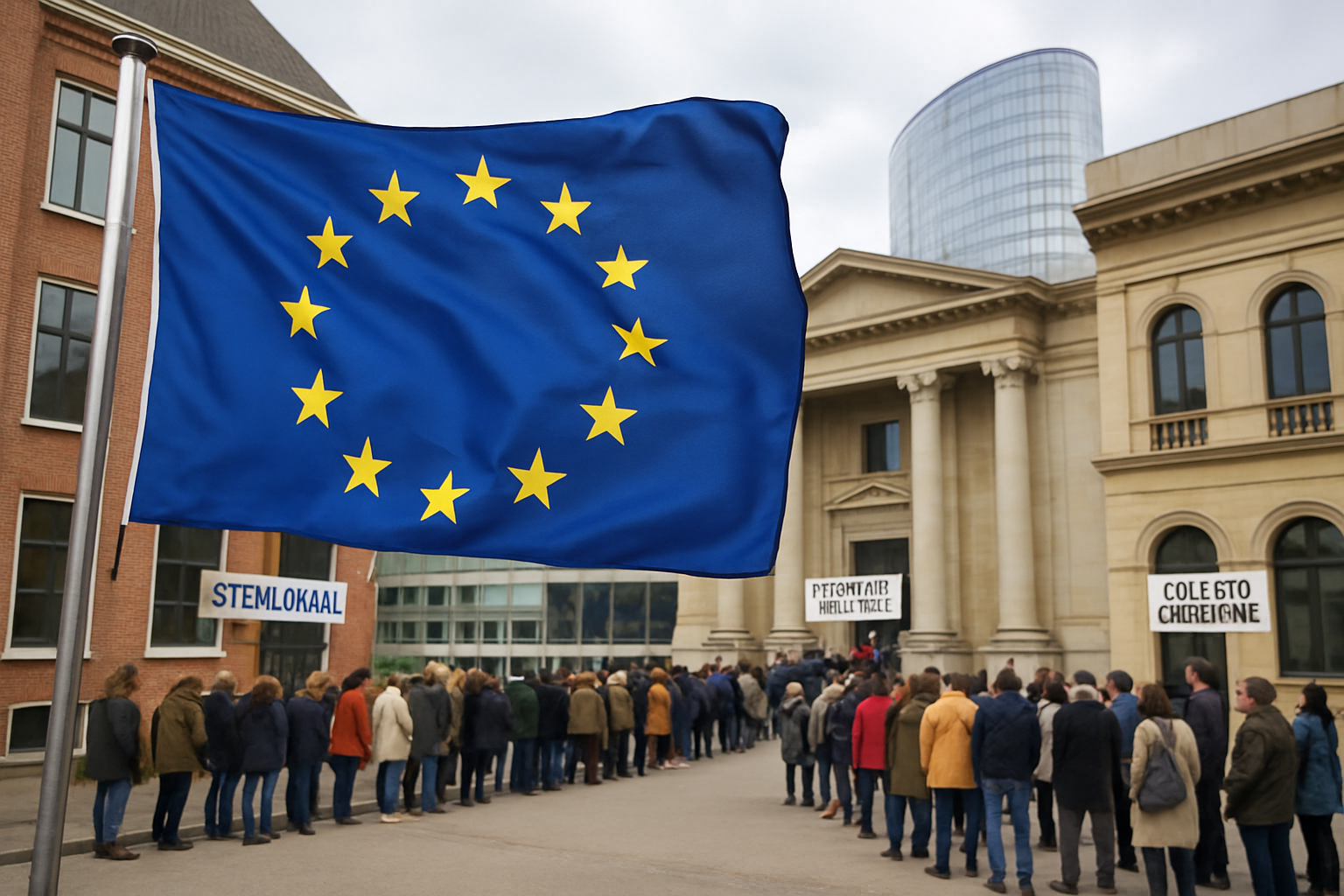
March 18, 2026 marked a pivotal moment for European democracy as millions of citizens across the Netherlands, France, and Spain participated in crucial elections that will determine the continent's political trajectory for years to come. With over 14.2 million Dutch voters heading to municipal polls, French cities preparing for decisive second rounds, and Spanish parties navigating complex coalition mathematics, Europe faces its most significant democratic test since World War II.
The convergence of these electoral processes reveals the profound challenges confronting European democratic institutions. From rising far-right influence to coalition instability and voter fragmentation, the continent's political landscape is undergoing a transformation that extends far beyond national borders.
Netherlands: Record Participation Amid Political Innovation
The Netherlands demonstrated exceptional democratic engagement on March 18, with municipal elections featuring innovative approaches to voter participation. Overnight polling stations specifically designed to engage young voters saw "good turnout, with hundreds of votes cast," according to official reports. This groundbreaking initiative reflects broader European efforts to revitalize democratic participation among younger generations.
The electoral significance extends beyond mere participation numbers. In Haaksbergen, voters cast two separate ballots - one for municipal council elections and another for an advisory referendum on conditions for a new asylum seekers center. This dual-ballot approach illustrates how local communities are grappling with immigration policy, a defining issue across European politics.
With more than 14.2 million eligible voters across the country, the Dutch municipal elections serve as a crucial barometer for national political sentiment. The results will influence coalition dynamics and policy directions as the Netherlands continues to navigate complex European integration challenges while addressing domestic concerns.
France: Municipal Elections as Presidential Preview
French municipal politics have taken on extraordinary national significance as March 15-22 elections serve as a decisive preview for the 2027 presidential race. The political landscape has been fundamentally altered by the February Lyon violence, where the death of 23-year-old Quentin Deranque created a crisis that continues to reverberate through electoral campaigns.
Marine Le Pen's National Rally achieved unprecedented urban breakthroughs, successfully evolving from rural populism to sophisticated metropolitan campaigning. This "authoritarian innovation" strategy represents the most significant far-right advance into traditionally progressive strongholds in modern French history. Cities like Marseille, historically resistant to far-right influence, now face genuine electoral challenges from National Rally candidates.
The Interior Ministry's controversial reclassification of La France Insoumise from "left" to "extreme left" triggered Council of State legal challenges, raising fundamental questions about administrative neutrality in democratic processes. This administrative manipulation accusation reflects broader concerns about institutional integrity during sensitive electoral periods.
"Each pact with Vox has a price - it's a right that citizens lose," warned PSOE spokesperson Montse Mínguez, highlighting the democratic stakes of coalition politics.
— Spanish Socialist Party Communication
The fragmentation of France's traditional left became apparent as Socialist Party leaders distanced themselves from Jean-Luc Mélenchon's movement following the Lyon violence. Raphaël Glucksmann's call for a "definitive break" with La France Insoumise demonstrates how political violence can reshape electoral alliances and ideological positioning.
Spain: Coalition Mathematics and Far-Right Integration
Spanish politics witnessed a critical escalation in March 2026 as Popular Party leader Alberto Núñez Feijóo delivered an unprecedented ultimatum to Vox's Santiago Abascal. The "ya está bien" (enough is enough) moment during the National Executive Committee meeting reflected mounting pressure over stalled regional government agreements in Extremadura, Aragón, and Castilla y León.
The electoral mathematics reveal the complexity of contemporary Spanish governance. In Castilla y León, the PP secured 33 seats while Vox obtained 14, creating a comfortable 47-seat coalition majority in the 81-member parliament. However, this numerical advantage masks deeper tensions about policy direction and democratic values.
Vox's enhanced negotiating position following recent electoral gains demonstrates the institutionalization of far-right influence through coalition arrangements rather than exclusion strategies. This Spanish model provides a unique template for how European democracies manage extremist integration while attempting to preserve democratic norms.
The broader European context adds urgency to Spanish developments. Recent Swedish Liberal Party discussions about cooperation with the Sweden Democrats and German AfD breakthroughs in Baden-Württemberg demonstrate continental patterns of far-right normalization that extend well beyond Spain's borders.
Democratic Resilience Under Pressure
The March 2026 electoral cycle represents a fundamental test of European democratic institutions' capacity to channel political tensions through legal rather than extra-legal means. Despite Lyon violence, administrative controversies, and coalition crises, elections proceeded with high democratic standards and peaceful transitions.
Eurobarometer polling reveals a striking disconnect: 89% of Europeans demand greater EU unity while political reality demonstrates increasing fragmentation and sovereignty assertions. This gap between public aspirations and institutional capacity represents one of the most significant challenges facing European integration.
The success of democratic processes during this period provides crucial precedents for managing political extremism, violence, and institutional stress. International observers monitoring these developments recognize their template-setting importance for global democratic governance in the 21st century.
Far-Right Innovation and Institutional Adaptation
Perhaps the most concerning development across all three countries is what analysts term "authoritarian innovation" - the sophisticated adaptation of far-right movements to work within democratic systems while gradually eroding liberal norms. This represents a fundamental shift from revolutionary violence to electoral capture strategies.
In France, National Rally's urban expansion demonstrates growing appeal beyond traditional rural bases. Spain's Vox has evolved from marginal protest movement to essential governing partner. Even in the Netherlands, immigration-related referenda reflect how populist concerns influence mainstream political agendas.
Traditional democratic mechanisms - parliamentary coalitions, media scrutiny, civil society opposition - appear insufficient to contain movements that have learned to package radical agendas in mainstream political language. This poses existential questions about institutional adaptation requirements.
European Integration at Stake
The electoral developments of March 2026 occur within the broader context of European strategic autonomy discussions, energy security challenges, and geopolitical pressures from ongoing conflicts. The capacity of member states to maintain democratic governance while addressing complex international challenges will determine Europe's role in an increasingly multipolar world.
Success in managing current political crises through democratic means could strengthen European integration by demonstrating institutional resilience. However, failure to address citizen concerns while maintaining democratic values risks accelerating backsliding trends that have already affected several member states.
The coming months will reveal whether European democratic institutions can adapt to contemporary pressures while preserving fundamental values. The stakes extend far beyond individual electoral outcomes to encompass the future of liberal democracy as a governing model for complex, interconnected societies.
Looking Forward: Templates for Democratic Governance
As votes are counted and coalition negotiations continue, the March 2026 electoral cycle establishes precedents that will influence European politics for decades. The Dutch innovation in youth engagement, French management of political violence through legal channels, and Spanish navigation of far-right coalition dynamics each provide lessons for democratic governance under pressure.
The ultimate test will be whether these democracies can address the underlying concerns driving political extremism - economic inequality, immigration pressures, sovereignty questions - while maintaining the institutional frameworks that have underpinned European success since 1945.
Success requires not just electoral victories but effective governance that demonstrates democratic institutions' capacity to address 21st-century challenges. The stakes could not be higher for Europe's democratic future and its role as a model for global democratic development.