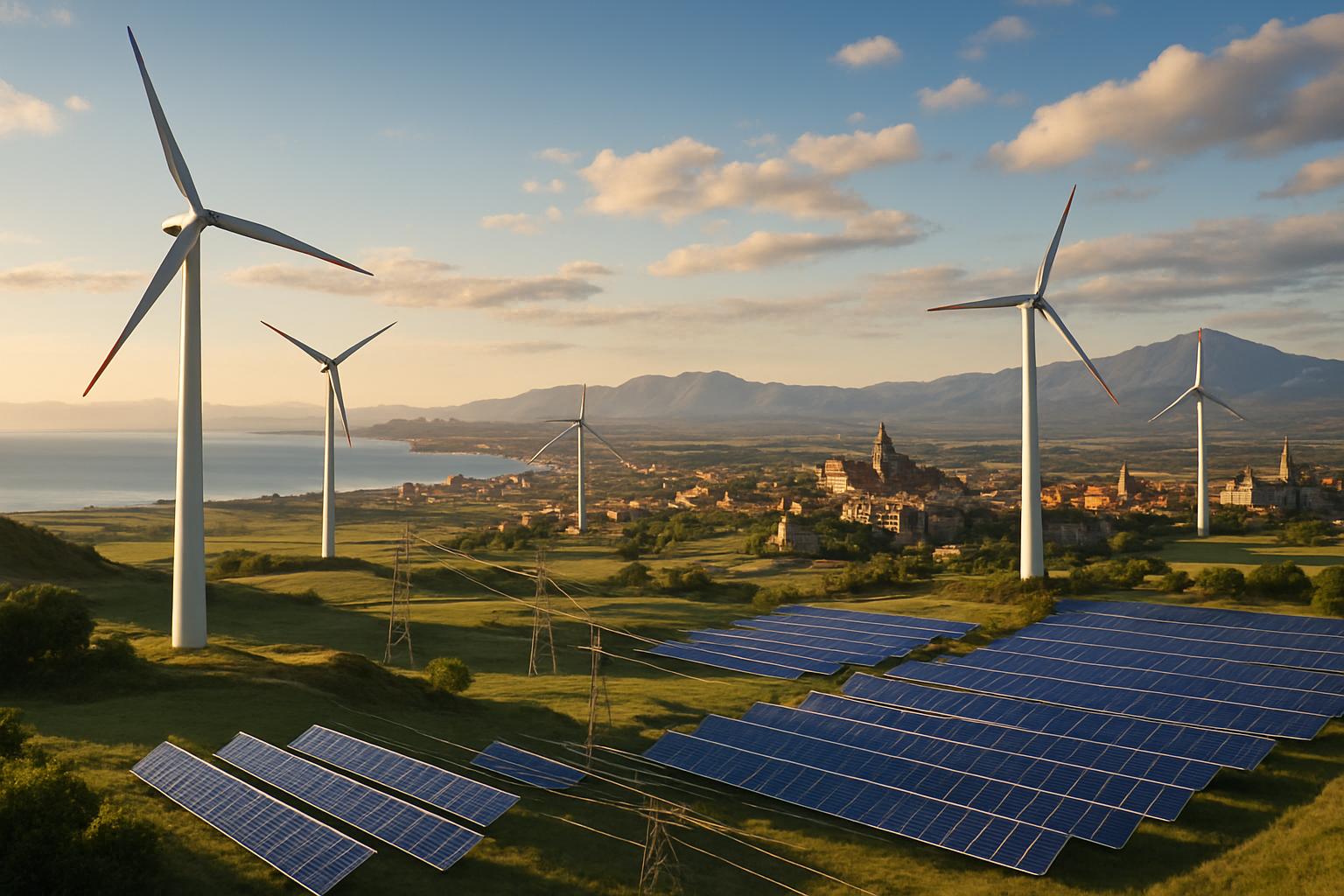
European countries are experiencing an unprecedented energy transformation, with nations from Azerbaijan to Romania advancing ambitious renewable energy projects while confronting complex challenges in their transition toward climate neutrality and energy independence.
The continent's energy renaissance comes at a critical juncture, with January 2026 marking the hottest month on record and the 18th consecutive month exceeding 1.5°C above pre-industrial levels. This climate urgency has catalyzed coordinated action across European nations, each pursuing distinct pathways toward sustainable energy while addressing immediate security and economic concerns.
Eastern Europe Leads Renewable Expansion
Azerbaijan has emerged as a key player in the region's energy transformation, with the Ministry of Energy reviewing progress on major renewable energy projects under Presidential Decree No. 1673. The nation is positioning itself as a strategic energy hub, leveraging its traditional oil and gas expertise to become a coordinator for renewable energy development across the South Caucasus.
Romania is implementing significant policy shifts with its "Casa Verde" program, as Environment Minister Diana outlined plans to transform the "Casa Verde Fotovoltaice" (Green House Photovoltaic) program into "Casa Verde Baterii" (Green House Batteries), emphasizing energy storage solutions. This strategic pivot reflects the growing recognition that renewable energy success depends not just on generation capacity, but on sophisticated storage infrastructure to manage intermittency challenges.
Central Asian Energy Partnerships
Kazakhstan has strengthened its renewable energy credentials through a groundbreaking $2 billion partnership with China for three major renewable energy projects. The initiative, ratified by the Kazakh Senate following agreements signed at COP-29, aims to advance the country's carbon-neutrality goals while creating substantial economic opportunities. This represents the largest renewable energy investment in Central Asia's history and demonstrates how strategic international partnerships can accelerate clean energy deployment.
Uzbekistan has concluded the European Union's "Sustainable Energy Connectivity in Central Asia" (SECCA) project with a final roundtable in Tashkent. The initiative highlighted key achievements in sustainable energy development and established frameworks for continued cooperation between Central Asian nations and European partners in renewable energy advancement.
Baltic Innovation and Energy Security
Latvia faces mounting energy challenges as the Latvian Wind Energy Association (VEA) warns that high electricity prices in January and increasing power consumption highlight insufficient local generation capacity. The association is organizing the "WindWorks 2026" conference in Riga to address these critical challenges and accelerate wind energy development across the Baltic region.
Estonia continues to lead European renewable energy development, having achieved 88% renewable electricity production in 2024 and operating continental Europe's largest battery storage facility with capacity to serve 90,000 households. The nation's success demonstrates how smaller European countries can become renewable energy leaders through focused investment and strategic planning.
Supply Chain Vulnerabilities and Strategic Response
European energy transformation faces significant challenges from supply chain dependencies, particularly China's dominance in critical materials. EU auditors have warned that climate goals are threatened by China's control of 60% of global production and 90% of refining capacity for lithium, cobalt, and rare earth elements essential for renewable energy infrastructure.
"The window for effective climate action is narrowing rapidly, requiring unprecedented coordination across technological innovation, international cooperation, financial commitment, and adaptive management."
— European Climate Advisory Board
This vulnerability has prompted the US-EU-Japan Critical Minerals Partnership, involving 55 countries and seven African alternative suppliers (Angola, DRC, Guinea, Kenya, Morocco, Sierra Leone, and Zambia) to diversify supply chains and reduce strategic dependencies.
Nuclear Renaissance Complementing Renewables
The European energy transformation increasingly recognizes nuclear power as essential for providing reliable baseload electricity while nations build renewable capacity. Hungary's Paks II nuclear construction represents Europe's largest nuclear project, with €39.1 billion in Russian investment creating employment through the start of the 22nd century.
This nuclear renaissance reflects pragmatic recognition that intermittent renewable sources require stable backup power, and nuclear technology offers carbon-neutral electricity generation independent of weather conditions and supply chain vulnerabilities affecting renewable technologies.
Climate Adaptation Infrastructure
European nations are simultaneously addressing energy transition and climate adaptation challenges. The European Scientific Advisory Board on Climate Change has warned that the EU is inadequately prepared for accelerating climate impacts, calling for urgent investment increases to protect populations and infrastructure from floods, wildfires, and severe heat waves.
Countries are responding with comprehensive strategies combining renewable energy deployment with climate resilience infrastructure. This includes smart grid systems capable of handling extreme weather, energy storage facilities that can maintain power during disasters, and integrated planning that addresses both mitigation and adaptation simultaneously.
Economic and Social Dimensions
The energy transition represents massive economic transformation requiring hundreds of billions in investment across transportation, industry, and buildings sectors. However, European leaders increasingly frame this transition as an economic opportunity rather than a burden, creating thousands of specialized high-paying jobs while positioning the continent for competitive advantages in clean technology exports.
Consumer protection provisions ensure that the energy transition benefits rather than undermines social equity, addressing affordability concerns during clean energy deployment. Flexibility mechanisms recognize diverse member state circumstances while maintaining ambitious climate targets, allowing countries with different geographic and economic advantages to contribute through various pathways.
International Cooperation and Geopolitical Implications
European energy transformation occurs amid shifting geopolitical dynamics, with the continent asserting strategic autonomy while maintaining international partnerships. The contrast between European climate ambition and potential policy rollbacks elsewhere positions Europe as a global test case for rapid decarbonization in developed economies.
Regional cooperation patterns are emerging through Baltic leadership in battery storage, different transition strategies balancing nuclear and renewable focus, and coordination mechanisms addressing persistent vulnerabilities. Success requires sustained international cooperation, technological innovation, and adaptive management responding to accelerating climate change and supply chain constraints.
Looking Forward: Critical Implementation Phase
February 2026 represents a potentially pivotal moment for European energy transformation. The combination of climate urgency, technological advancement, supply chain diversification efforts, and political consensus around climate action creates unprecedented opportunities for transformation.
However, implementation challenges remain substantial, including funding sustainability, technical capacity building, climate disruption of project timelines, and the need for adaptive management capabilities responding to rapidly evolving global conditions. The window for effective action is narrowing, but European nations are demonstrating that sophisticated coordination combining technological innovation with international cooperation can accelerate the transition to sustainable energy systems.
The success or failure of Europe's energy transformation will likely influence global environmental policy development for decades to come, establishing templates for other regions facing similar challenges in balancing energy security, economic development, and climate commitments in an era of accelerating environmental change.