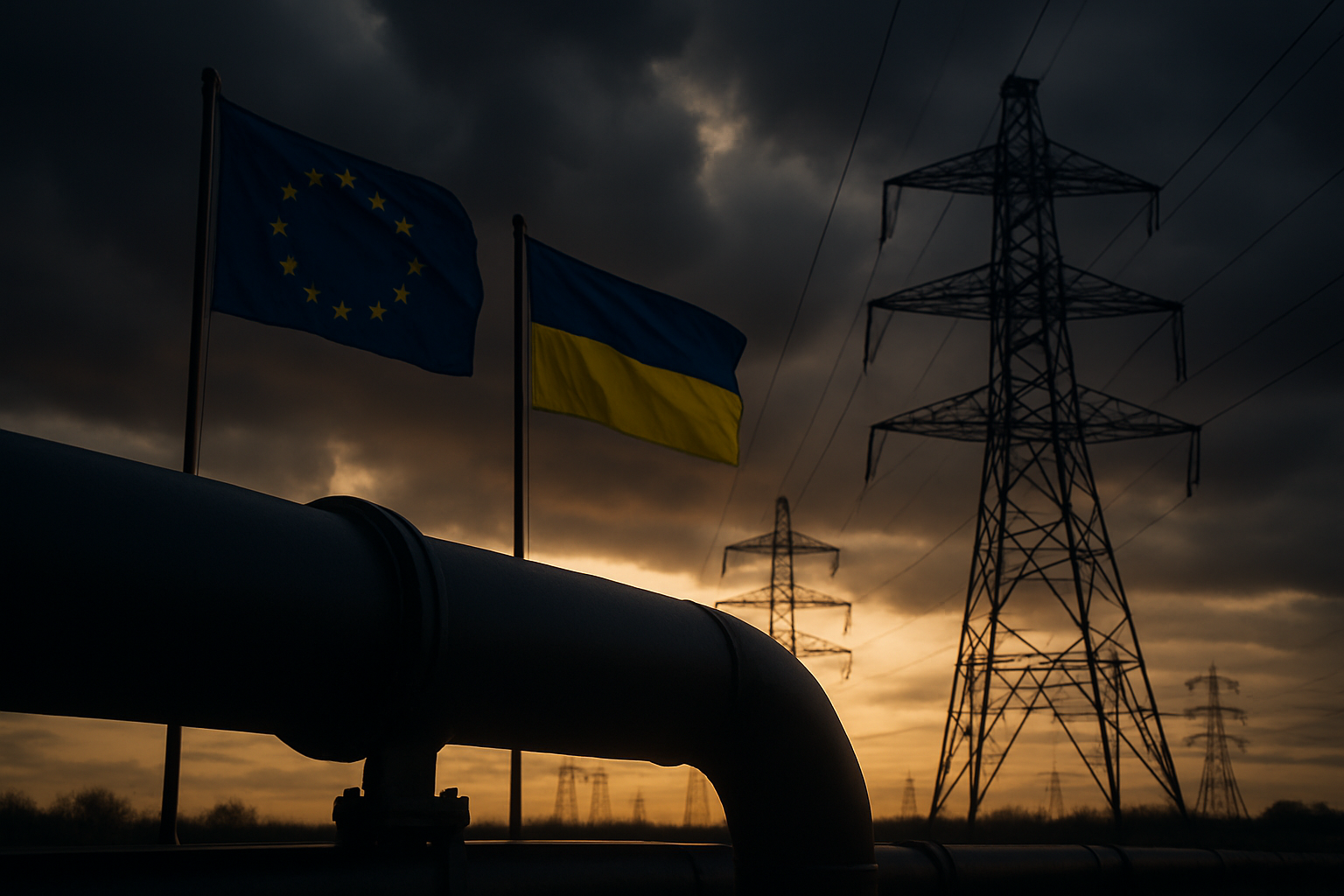
Slovakia has threatened to suspend emergency electricity supplies to Ukraine as early as Monday unless Kyiv restores oil deliveries through the crucial Druzhba pipeline, marking a dramatic escalation in European energy disputes that threatens to undermine regional solidarity during the ongoing conflict.
Prime Minister Robert Fico issued the stark ultimatum on Saturday, warning that Bratislava would halt its critical energy support if oil transit through the Soviet-era pipeline system is not resumed by February 23. The dispute centers on disruptions to the Druzhba pipeline network, which Slovakia claims have been deliberately manipulated by Ukraine as political leverage, while Kyiv maintains the infrastructure was damaged by Russian attacks requiring extensive repairs.
Pipeline Politics and Energy Weaponization
The Druzhba pipeline crisis has emerged as a pivotal test of European Union solidarity, exposing deep vulnerabilities in the bloc's energy architecture. Slovakia, along with Hungary, remains among the only EU countries still dependent on Russian oil via Ukrainian territory under special exemptions negotiated during previous sanctions packages.
"The President of Ukraine refuses to understand our peaceful approach and, since we do not support war, behaves maliciously towards Slovakia," Fico declared in escalating rhetoric that signals broader Central European frustration with Ukraine's energy policies.
The pipeline has been offline since late January, forcing Slovakia to declare an oil emergency and release 250,000 tons from strategic reserves to supply the critical Slovnaft refinery—representing approximately one month's operational capacity. In response, Slovakia has suspended diesel exports to Ukraine and prioritized domestic supply chains.
Hungary Joins the Energy Ultimatum
Hungary has emerged as Slovakia's primary ally in the dispute, with Prime Minister Viktor Orbán announcing his country will provide "no support" to Ukraine as long as oil transit remains blocked. Hungarian Foreign Minister Péter Szijjártó has gone further, blocking a massive €90 billion EU loan package to Ukraine until the pipeline issue is resolved.
"In response to Ukraine's hostile actions, Hungary stopped supplying diesel fuel there and blocked a 90 billion euro military loan of the European Union," Orbán stated, demonstrating how energy disputes can cascade into broader financial and diplomatic crises.
"Ukraine has caused us damage worth 500 million euros per year by stopping gas supplies. Now it has stopped oil supplies, causing us further losses and creating logistical difficulties."
— Robert Fico, Slovak Prime Minister
Ukraine's Strategic Response
Ukrainian officials have responded by proposing alternative solutions, including utilizing the Odessa-Brody pipeline as a replacement for the damaged Druzhba infrastructure. The proposal, formally communicated to the European Commission, would ensure continued oil supplies to dependent countries while bypassing the disputed sections of the pipeline network.
However, these alternative arrangements would likely require significant investment and time to implement, leaving Slovakia and Hungary in precarious positions during the critical winter months when energy security becomes a matter of national survival.
Broader European Energy Vulnerabilities
The Slovakia-Ukraine dispute illuminates fundamental weaknesses in European energy independence that persist despite years of diversification efforts following Russia's full-scale invasion. Natural gas prices have surged 24% across Europe, while critical infrastructure remains vulnerable to both military attacks and political manipulation.
Croatia has offered conditional assistance for Mediterranean route alternatives, but only for non-Russian crude sources, highlighting the complex geopolitical calculations that continue to shape European energy policy. These arrangements would require extensive negotiations and infrastructure modifications that could take months or years to fully implement.
The crisis occurs amid broader energy transformation challenges, with China controlling 60% of global production and 90% of refining capacity for lithium, cobalt, and rare earth elements essential for renewable energy infrastructure. The EU has responded with initiatives including the US-EU-Japan Critical Minerals Partnership covering 55 countries, but these long-term solutions offer little relief for immediate crises.
Diplomatic and Military Context
The energy dispute unfolds against the backdrop of intensifying diplomatic efforts to end the Ukraine conflict. Recent Geneva peace talks between Ukraine, Russia, and the United States achieved significant progress on ceasefire monitoring mechanisms, while the historic 314-prisoner exchange in February marked the first such swap in five months.
However, the Slovakia-Hungary energy ultimatum threatens to undermine European unity at a crucial moment when diplomatic momentum appears to be building toward a potential June 2026 peace deadline established by the Trump administration. The dispute demonstrates how energy interdependence can be weaponized even among allies, complicating broader strategic coordination.
Strategic Reserves and Emergency Measures
Slovakia's deployment of strategic petroleum reserves represents a critical emergency response that provides temporary breathing room while pursuing permanent solutions. The 250,000-ton release demonstrates the importance of proactive crisis management and alternative supply sourcing capabilities during energy infrastructure vulnerabilities.
Regional cooperation has emerged as essential, with Slovak-Hungarian coordination on EU exemption requests and joint diplomatic pressure illustrating how Central European nations can leverage collective action to protect their energy interests. However, this cooperation comes at the cost of broader EU solidarity with Ukraine during its ongoing conflict.
Economic and Humanitarian Implications
The electricity supply threat poses severe humanitarian risks for Ukraine, which desperately needs Slovak power amid systematic Russian attacks on its energy infrastructure. Over 1,170 buildings in Kyiv remain without heating during extreme winter conditions, while Ukrainian nuclear plants have been forced to halt production for the first time since the conflict began.
More than 17.8 million Ukrainians are currently accessing winter support programs, making reliable electricity supplies crucial for basic survival during one of Europe's harshest winters in decades. Slovakia's threat to cut this lifeline represents a dramatic escalation that could affect millions of civilians already struggling under wartime conditions.
Looking Forward: Energy Security in a Multipolar World
The Slovakia-Ukraine oil transit dispute serves as a critical test case for European energy security in an increasingly complex geopolitical environment. The crisis highlights persistent vulnerabilities despite years of diversification efforts and raises fundamental questions about the sustainability of energy interdependence during times of conflict.
Success in resolving this dispute will require unprecedented coordination across technological innovation, international partnerships, and financial commitment. The outcome will influence future dispute resolution mechanisms and set important precedents for how EU member states balance national energy interests with collective security commitments.
As the February 23 deadline approaches, European leaders face a crucial decision point that will determine whether energy cooperation can survive the pressures of geopolitical competition or whether national interests will ultimately fragment the bloc's carefully constructed solidarity during one of its most challenging periods since World War II.