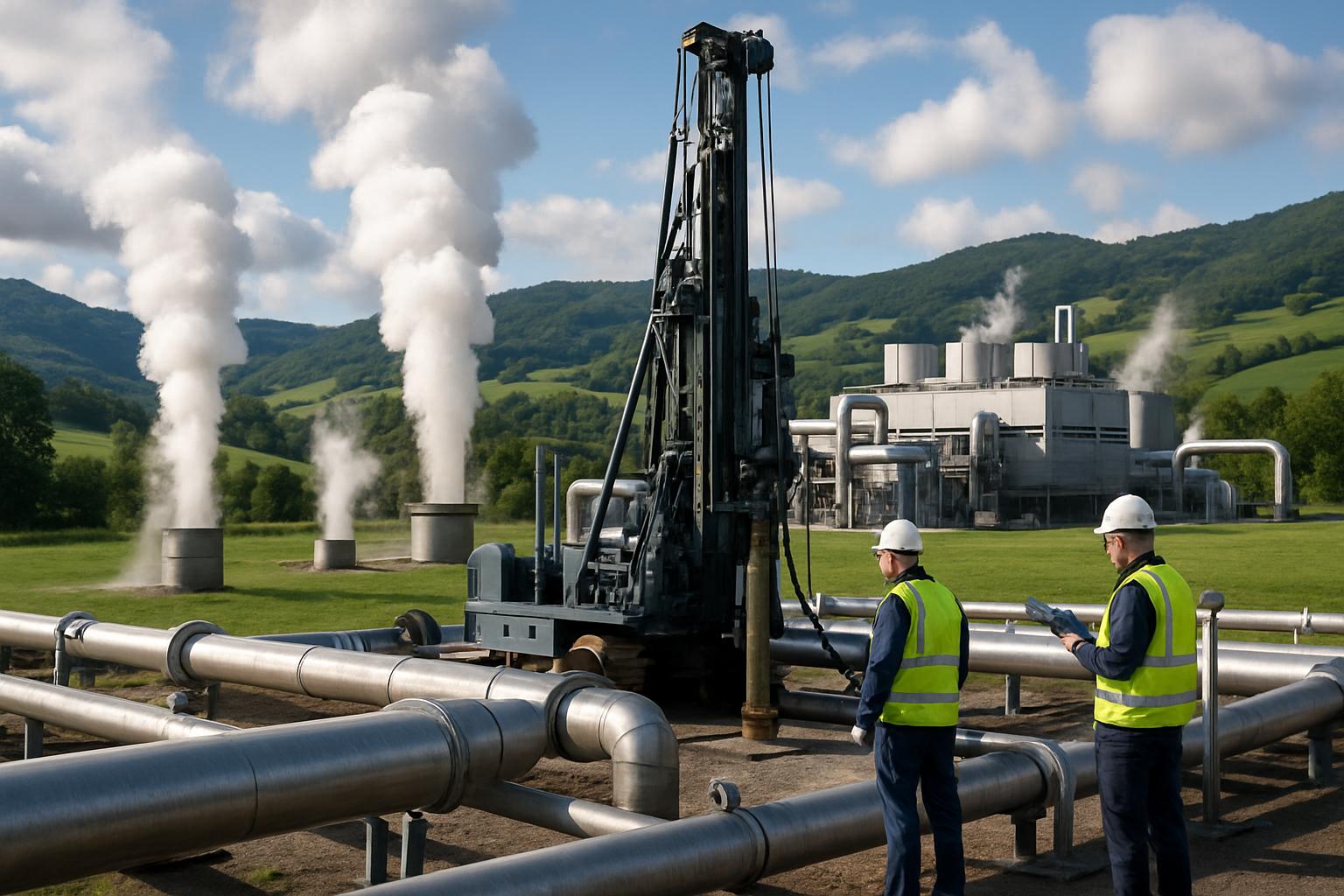
European governments are implementing the most comprehensive energy independence strategies since the 1970s oil shocks, with geothermal energy emerging as a critical component in addressing energy security vulnerabilities exposed by the unprecedented March 2026 Middle East crisis that drove oil prices above $100 per barrel for the first time since 2022.
The ongoing energy transformation represents a fundamental shift in European energy policy, driven by the stark realization that dependence on volatile geopolitical regions poses unacceptable risks to continental stability. Austria, Ireland, and Moldova are leading this charge with innovative approaches that combine traditional energy security measures with cutting-edge renewable technologies.
Austria's Geothermal Breakthrough Initiative
Austria has positioned itself at the forefront of Europe's geothermal renaissance, with the Social Democratic Party (SPÖ) proposing groundbreaking legislation to accelerate underground thermal energy development. According to SPÖ energy spokesperson Andreas Schroll, Austria possesses vast untapped geothermal resources that could provide "renewable energy for hundreds of thousands of households across the country."
The proposed Geothermal Acceleration Act would eliminate regulatory bottlenecks that have historically hindered development, creating a streamlined approval process for thermal energy projects. This initiative builds on Austria's successful achievement of 88% renewable electricity generation in 2024, positioning the nation as a European leader in clean energy integration.
"Deep beneath our earth lies an energy treasure that we must now systematically develop. The federal government must eliminate legal hurdles and accelerate expansion,"
— Andreas Schroll, SPÖ Energy Spokesperson
The Austrian Green Party has simultaneously launched its own initiative to remove barriers to climate-friendly heating through geothermal energy. According to Green Party representative Lukas Hammer, this represents a critical opportunity to provide sustainable heating solutions while reducing dependence on volatile energy imports.
Ireland's Energy Conservation Strategy
Ireland is taking a complementary approach to energy security through aggressive conservation measures and consumer protection initiatives. The Irish government is preparing comprehensive guidance on energy conservation practices amid soaring fuel costs that have pushed heating oil toward €2 per liter – what industry observers have termed "brazen rip-offs" exploiting the global energy crisis.
These measures come as Ireland confronts the harsh reality of energy import dependence. The March 2026 crisis demonstrated how quickly external shocks can translate into devastating consumer costs, with heating oil prices experiencing unprecedented increases that threatened household budgets across the country.
The government's forthcoming conservation guidance represents a critical component of Ireland's broader energy security strategy, emphasizing both immediate consumer relief and long-term independence through diversified energy sources and improved efficiency.
Moldova's Natural Gas Price Dynamics
Moldova offers a unique perspective on European energy security challenges, with Energy Minister Dorin Junghietu indicating potential natural gas price reductions within two weeks. This development comes amid the broader European context where natural gas prices surged 24% during the March crisis, reaching €47.32/MWh – the highest levels since February 2025.
Moldova's position illustrates the complex dynamics affecting smaller European nations during energy crises. While larger EU members can implement comprehensive strategic reserve releases and emergency protocols, countries like Moldova must navigate energy security through diplomatic engagement and market adaptations.
Historical Context of the March 2026 Energy Crisis
The current European energy initiatives emerge from the traumatic experience of March 2026, when Iran's Revolutionary Guard declared the Strait of Hormuz "unsafe for shipping," effectively blocking 40% of global seaborne oil transit. This action triggered the most severe energy crisis since the 1970s oil shocks, with oil prices reaching $119.50 for Brent crude and $108.15 for WTI – representing an 18.98% single-day increase that constituted the largest jump on record.
The crisis exposed critical vulnerabilities in European energy architecture. Despite years of discussions about energy independence, the continent remained dangerously exposed to supply disruptions from volatile geopolitical regions. Natural gas prices exploded across Europe, while aviation networks collapsed with over 18,000 flights cancelled – the most extensive disruption since COVID-19.

EU High Representative Kaja Kallas activated unprecedented crisis management protocols, including state aid programs for energy-intensive industries and enhanced surveillance to prevent fuel price manipulation. The International Energy Agency released 400 million barrels from strategic petroleum reserves – the largest deployment in its 50-year history.
The Geothermal Solution: Technology Meets Tradition
Geothermal energy represents a particularly compelling solution to Europe's energy security challenges because it provides baseload power independent of weather conditions or geopolitical disruptions. Unlike solar and wind energy, which depend on environmental conditions, geothermal installations can provide consistent energy output 24 hours a day, 365 days a year.
Modern geothermal technology has advanced significantly, incorporating digital monitoring systems, automated control mechanisms, and smart grid integration capabilities. These innovations enable precise environmental and economic benefit measurement while ensuring optimal performance and safety standards.
Austria's geothermal initiatives build on successful models from other European nations. Estonia, for example, achieved 88% renewable electricity generation in 2024 while operating continental Europe's largest battery storage facility serving 90,000 households. This demonstrates that sophisticated renewable energy systems can provide both independence and reliability.
Economic and Strategic Implications
The economic implications of Europe's energy transformation extend far beyond immediate cost considerations. Countries implementing comprehensive energy independence strategies demonstrate greater economic resilience and attract sustainable investment across multiple sectors, including green technology manufacturing, eco-tourism, and environmental services.
Austria's geothermal development could create thousands of specialized high-paying jobs while reducing annual energy import costs. The technology involves complex engineering, advanced materials science, and sophisticated monitoring systems – all sectors where European expertise can provide competitive advantages in global markets.
Ireland's conservation initiatives, while seemingly modest, represent crucial steps toward reducing overall energy demand. Every percentage point reduction in energy consumption translates to reduced import requirements and enhanced energy security during future crises.
Supply Chain Vulnerabilities and European Response
European energy independence efforts occur against a backdrop of critical supply chain vulnerabilities that threaten renewable energy deployment. China currently controls 60% of global production and 90% of refining capacity for lithium, cobalt, and rare earth elements essential for renewable energy infrastructure.
The US-EU-Japan Critical Minerals Partnership, involving 55 countries and seven African alternative suppliers, represents a coordinated response to these dependencies. However, developing alternative supply chains requires massive investment and years of infrastructure development, highlighting the importance of immediate energy security measures like geothermal development.
Memory chip shortages have driven semiconductor prices to six times normal levels, affecting smart grid systems and renewable energy control technologies until 2027 when additional fabrication facilities come online. These constraints paradoxically spur innovation in memory-efficient algorithms and alternative processing architectures.
Climate Urgency and Policy Acceleration
European energy initiatives occur during unprecedented climate urgency, with January 2026 marking the 19th consecutive month of global temperatures exceeding 1.5°C above pre-industrial levels. This sustained warming demonstrates that human-induced climate change has fundamentally altered atmospheric systems beyond natural recovery mechanisms.
The convergence of energy security concerns and climate urgency creates a unique policy window for accelerated clean energy deployment. The March 2026 crisis provided irrefutable evidence that fossil fuel dependence poses unacceptable security risks, while climate data demonstrates the environmental imperative for rapid decarbonization.
Implementation Challenges and Opportunities
Despite the compelling strategic case for energy independence, European nations face significant implementation challenges. Funding sustainability remains difficult for developing comprehensive energy infrastructure, particularly given competing budgetary priorities and economic pressures from the ongoing energy crisis recovery.
Technical capacity building presents another challenge, as specialized skills shortages affect renewable energy projects globally. Geothermal development requires particular expertise in subsurface geology, advanced drilling technologies, and sophisticated monitoring systems.
Climate change continues disrupting project timelines by creating rapidly changing baseline conditions that require adaptive management approaches. Traditional energy infrastructure planning assumed relatively stable environmental conditions, but accelerating climate change demands flexible project designs and implementation strategies.
However, these challenges also create opportunities for enhanced international cooperation, technology transfer acceleration, and innovative financing mechanisms that recognize ecosystem services' economic value. The diversity of European approaches provides resilience against single-solution dependencies, offering multiple adaptation pathways for complex energy security challenges.
Future Trajectory and Global Implications
The European energy transformation initiated by the March 2026 crisis provides crucial templates for scaling energy independence globally. Austria's geothermal initiatives, Ireland's conservation strategies, and Moldova's diplomatic adaptations demonstrate that coordinated approaches can address multiple challenges simultaneously while building local capacity and fostering international cooperation.
Success in European energy independence could catalyze additional international investment throughout the renewable energy sector, establishing the continent as a technology hub for sustainable energy development. The integration of cutting-edge technology with traditional energy security approaches creates adaptable frameworks that respect cultural diversity while leveraging global technological capabilities.
The window for effective environmental and energy action continues narrowing as ecological systems approach critical thresholds that could trigger potentially irreversible changes affecting global food security, climate stability, and human settlements. European initiatives demonstrate that sophisticated technological innovation combined with international cooperation can achieve meaningful progress toward energy independence during humanity's most challenging environmental period.
Strategic Significance for 21st Century Energy Security
The European response to the March 2026 energy crisis represents a template-setting moment for 21st-century energy security policy. The convergence of geopolitical vulnerabilities, technological capabilities, and climate urgency creates unprecedented conditions for fundamental energy system transformation.
Austria's geothermal renaissance, Ireland's conservation initiatives, and Moldova's adaptive strategies collectively demonstrate that energy independence requires multifaceted approaches combining technological innovation, policy coordination, international cooperation, and community engagement. These efforts establish frameworks that other regions can adapt to their specific circumstances while contributing to global energy security and climate stability.
The success or failure of these European initiatives will influence energy security planning for decades, determining whether nations can achieve the energy independence necessary for economic prosperity and environmental sustainability in an increasingly volatile and interconnected world.