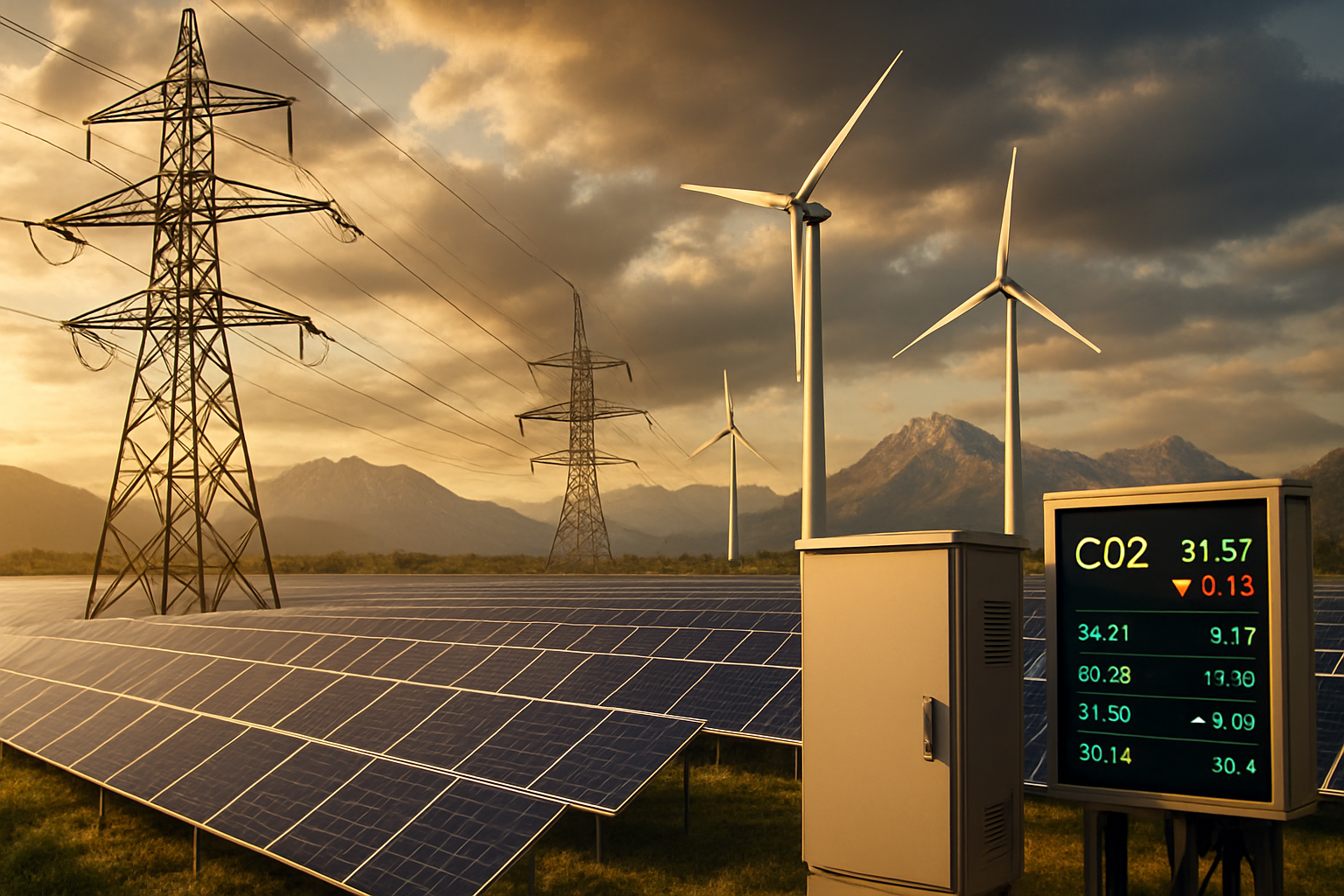
Europe's ambitious sustainable energy transition confronts a pivotal moment as Iceland considers controversial tax increases on energy infrastructure while France and Luxembourg engage in heated debates over carbon market flexibility, highlighting the complex political and economic tensions shaping the continent's climate future during an unprecedented period of global warming.
The Confederation of Icelandic Enterprise has issued stark warnings about proposed legislation that would remove energy infrastructure exemptions from property valuations, potentially driving up operational costs for renewable energy facilities across the Nordic nation. The organization argues that such tax increases could undermine competitiveness and reduce investment in critical energy production infrastructure, raising fundamental questions about how European nations balance revenue generation with climate objectives.
Carbon Market Discord Deepens European Climate Divisions
Meanwhile, fundamental disagreements over the European Union's carbon emissions trading system (ETS) have emerged between major member states, with France advocating for market flexibility to accommodate industrial decarbonization timelines while Luxembourg maintains opposition to any weakening of the system's environmental integrity. This diplomatic tension occurs as energy costs continue pressuring European households and businesses, with natural gas prices having surged 24% across the continent.
France's position reflects growing concern that overly rigid carbon pricing mechanisms could impose "unsustainable costs on European businesses" while potentially driving industrial activity to regions with less stringent climate policies. The French government argues that maintaining ETS integrity while providing flexibility for genuine decarbonization efforts represents a pragmatic approach to achieving the EU's ambitious 90% emissions reduction target by 2040.
"We must absolutely maintain the integrity of the ETS while also making it flexible enough to be compatible with our companies' decarbonization capacities."
— French Government Position on Carbon Trading Reform
Luxembourg's resistance to ETS modifications demonstrates the competing pressures within European climate policy, where smaller nations often advocate for maintaining strict environmental standards while larger economies seek operational flexibility to manage industrial transitions. This disagreement comes at a critical moment when the continent faces its 21st consecutive month of global temperatures exceeding 1.5°C above pre-industrial levels, underlining the urgency of effective climate action.
Infrastructure Investment Challenges Mount
The Icelandic tax controversy illuminates broader challenges facing renewable energy infrastructure development across Europe. Energy facilities require substantial upfront investment and long-term operational planning, making regulatory stability essential for attracting private capital. The Confederation of Icelandic Enterprise specifically warned that increased taxation on energy infrastructure could "significantly increase taxation on energy facilities, potentially harming competitiveness and reducing further investment in energy production."
Iceland's unique position as a renewable energy leader, with abundant geothermal and hydroelectric resources, makes the country's policy decisions particularly significant for European energy integration strategies. The nation has positioned itself as a potential clean energy exporter, but tax policy changes could affect the economic viability of projects designed to supply renewable electricity to continental European markets through undersea cables.
Regional Energy Security Implications
These policy tensions emerge against a backdrop of heightened European energy security concerns following previous disruptions to traditional supply chains. Estonia has demonstrated renewable energy leadership with 88% renewable electricity generation and continental Europe's largest battery storage facility serving 90,000 households, providing a model for energy independence that other nations are seeking to emulate.
The success of such initiatives depends on supportive regulatory frameworks that encourage rather than penalize clean energy investment. Hungary's €39.1 billion Paks II nuclear construction project, backed by the International Atomic Energy Agency, represents another approach to achieving energy security through large-scale infrastructure development that requires decades of policy stability.
Economic Development vs Environmental Protection
The current debates reflect a fundamental tension between immediate economic pressures and long-term environmental objectives. European Parliament approval of the historic 90% emissions reduction target by 2040 with 413 votes in favor demonstrates political commitment to ambitious climate goals, but implementation faces complex challenges balancing competitiveness concerns with environmental imperatives.
Supply chain vulnerabilities add another layer of complexity, with China controlling 60% of global production and 90% of refining capacity for lithium, cobalt, and rare earth elements essential for renewable energy infrastructure. The US-EU-Japan Critical Minerals Partnership, involving 55 countries and seven African alternative suppliers, represents efforts to diversify supply chains, but such initiatives require years of development and massive investment.
Technology Integration and Smart Grid Development
Modern renewable energy projects increasingly incorporate sophisticated technology integration, including digital monitoring, smart grid management, automated efficiency controls, and predictive maintenance systems. These advanced capabilities enable real-time optimization and improved reliability for managing renewable energy intermittency, but they also require substantial initial investment and ongoing operational expertise.
Romania's €1 billion Battery Energy Storage System across 2,500 MW of capacity demonstrates the scale of infrastructure investment required to support renewable energy integration at the continental level. Such projects depend on regulatory certainty and supportive tax policies to attract the private capital necessary for implementation.
International Cooperation Framework Evolution
The success of Europe's energy transition increasingly depends on sophisticated international cooperation frameworks that can balance national interests with collective climate commitments. The current disagreements between France and Luxembourg over carbon market flexibility illustrate the challenges of maintaining unity while accommodating diverse national circumstances and industrial structures.
Flexibility mechanisms within climate policy frameworks recognize that member states face different challenges in achieving emissions reductions, with some countries able to leverage forest resources for natural carbon sequestration while others must rely more heavily on international cooperation and technological solutions. The evolution of such mechanisms will significantly influence the speed and effectiveness of European climate action.
Critical Decision Point for European Climate Leadership
March 2026 represents a critical juncture for European energy policy, with decisions made in coming months potentially shaping the continent's energy landscape for decades. The choice between reactive crisis management and proactive ecosystem service management will determine whether Europe can maintain its position as a global leader in climate action while preserving economic competitiveness and social stability.
The window for effective climate action continues narrowing as ecological systems approach critical thresholds that could trigger irreversible changes. European policymakers must navigate complex trade-offs between immediate economic concerns and long-term environmental sustainability, requiring unprecedented coordination across technological innovation, international cooperation, and adaptive management strategies.
Success in resolving these tensions will provide crucial templates for other regions facing similar challenges in balancing rapid decarbonization with economic development objectives. The tools, knowledge, and cooperation frameworks exist for comprehensive environmental protection, but their effective implementation requires sustained political commitment, enhanced international coordination, and recognition that environmental protection represents essential infrastructure for human prosperity and planetary sustainability.