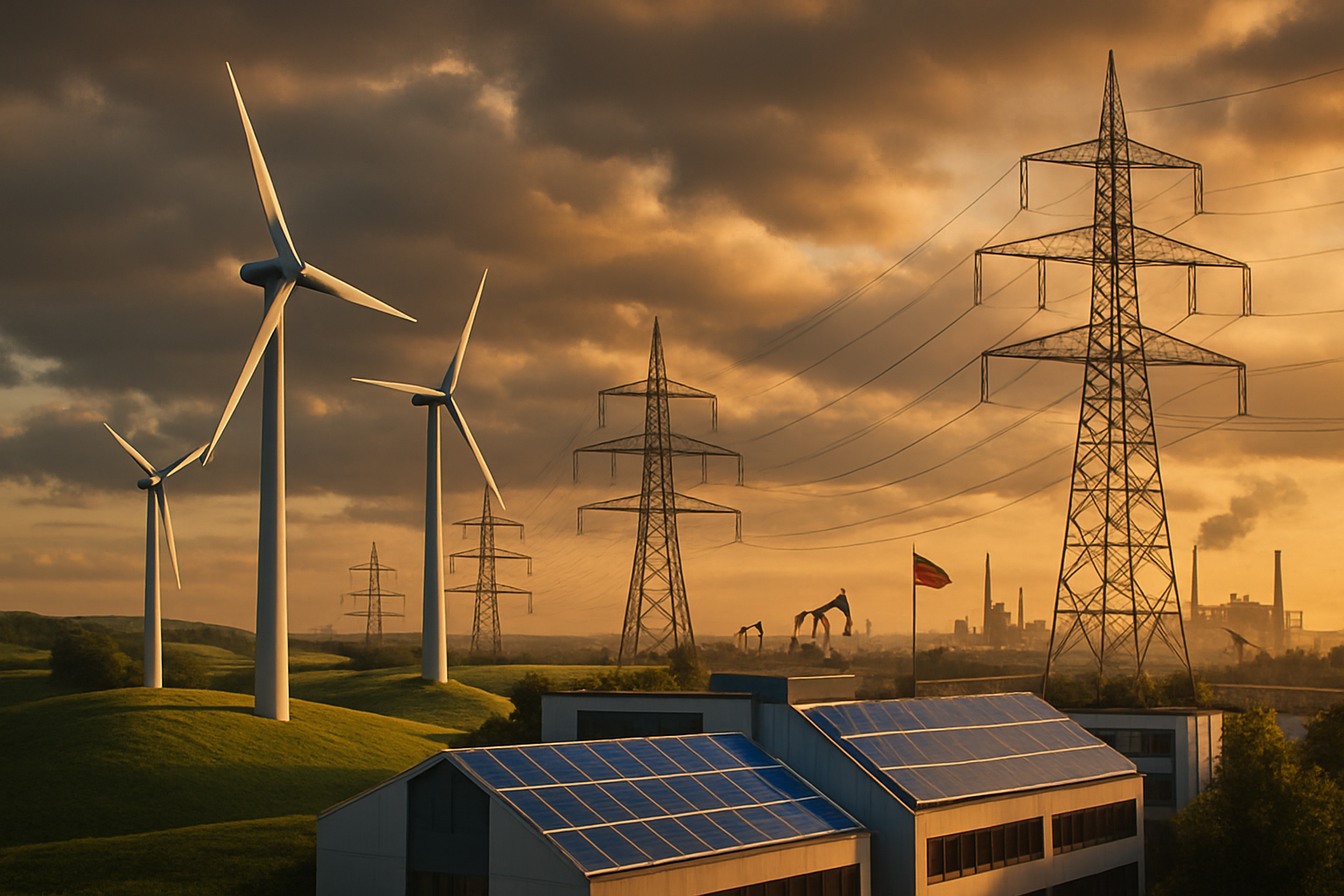
European nations are rapidly transforming their energy sectors through unprecedented investments in renewable infrastructure and grid modernization, while simultaneously grappling with supply chain vulnerabilities and geopolitical pressures that threaten to derail climate commitments across the continent.
Multiple developments this week underscore the complexity of Europe's energy transition, from Estonia's record-breaking electricity demand during Arctic conditions to the Netherlands implementing controversial peak-time pricing that could fundamentally reshape consumer energy use patterns. Meanwhile, Norway's billion-dollar commitment to revitalizing North Sea oil operations and Slovakia's ongoing struggles with Russian energy dependency illustrate the challenging balancing act between immediate energy security and long-term sustainability goals.
Estonia Leads Baltic Energy Innovation
Estonia has emerged as a Baltic energy leader, setting new electricity consumption records of 1,723 megawatts amid the coldest winter in 25 years. The small nation has achieved remarkable energy transformation milestones, including 88% renewable electricity production in 2024 and operating continental Europe's largest battery storage facility with capacity to power 90,000 households.
This infrastructure investment has proven crucial during extreme weather events. The country's advanced grid management systems and storage capabilities enabled it to maintain supply stability despite unprecedented demand spikes caused by Arctic conditions that have claimed over 140 lives across the Northern Hemisphere since late January.
"These are valuable resources that create significant benefits for society," says Arne Jacobsen from the Norwegian Petroleum Directorate, highlighting the strategic importance of energy infrastructure investments across the region.
— Arne Jacobsen, Norwegian Petroleum Directorate
Netherlands Implements Revolutionary Pricing Structure
The Netherlands is set to implement dynamic electricity pricing from 2028, requiring consumers to pay higher rates during peak demand periods. The Dutch Authority for Consumers and Markets (ACM) announced this fundamental shift in energy pricing structure, designed to encourage more efficient energy use and support grid stability as renewable energy sources become dominant.
This pricing revolution reflects broader European efforts to modernize energy markets for a renewable-dominated future. The initiative aims to reduce peak demand pressures while incentivizing energy storage and flexible consumption patterns among households and businesses.
Norway's Billion-Dollar Oil Field Gamble
In a move highlighting the tension between immediate energy security and climate commitments, Norway has announced massive investments to reopen the Ekofisk oil field complex from 1969. ConocoPhillips plans to invest 20 billion kroner ($1.8 billion) in revitalizing the Albuskjell, Vest Ekofisk, and Tommeliten Gamma fields, demonstrating continued confidence in North Sea operations despite European climate targets.
The investment represents a significant bet on oil's continued relevance in the global energy mix, even as the European Union approved historic 90% greenhouse gas emissions reduction targets by 2040. This apparent contradiction reflects the complex reality facing energy-rich nations balancing export revenues with climate commitments.
Central Europe Struggles with Russian Energy Legacy
Slovakia continues to face energy security challenges related to its historical dependence on Russian energy supplies. The Druzhba pipeline has again stopped flowing Russian oil to Slovakia, with deliveries potentially resuming early next week. This situation underscores Central Europe's ongoing vulnerability to energy supply disruptions nearly two years after Russia's invasion of Ukraine.
The European Union has systematically reduced Russian energy imports, with liquefied natural gas purchases from Russia decreasing significantly in 2025. However, Brussels postponed a complete ban on Russian gas imports, creating ongoing uncertainty for countries like Slovakia that remain partially dependent on these supplies.
Ukraine Energy Infrastructure Under Attack
Colonel Ants Kiviselg, head of the Estonian Defense Forces Intelligence Center, reported that Russia launched a record number of air strikes targeting Ukrainian energy infrastructure last week, deliberately timed to coincide with cold weather conditions. This systematic targeting of civilian energy infrastructure represents a continuation of Russia's strategy to weaponize winter conditions against Ukrainian civilians.
The attacks highlight the broader vulnerability of energy infrastructure in conflict zones and the critical importance of energy security for national defense. Estonia's own energy independence achievements take on added significance in this context, demonstrating the strategic value of diversified, resilient energy systems.
Central Asian Renewable Energy Success
Providing a positive contrast to European energy challenges, Uzbekistan announced that solar and wind power plants generated 1 billion kWh of electricity in 2026, exceeding the previous year by 400 million kWh—a remarkable 40% increase. This achievement demonstrates the rapid scaling potential of renewable energy deployment in countries with abundant solar and wind resources.
Uzbekistan's success offers lessons for European nations seeking to accelerate renewable deployment while managing grid integration challenges. The Central Asian nation's achievement suggests that proper planning and investment can deliver dramatic renewable energy growth within short timeframes.
Supply Chain Vulnerabilities Threaten Progress
European energy transition efforts face significant headwinds from critical materials shortages. EU auditors have warned that climate goals are seriously threatened by China's dominance in critical materials production (60%) and refining capacity (90%) for lithium, cobalt, and rare earth elements essential for renewable energy infrastructure.
Memory chip prices have increased sixfold, affecting renewable energy control systems and grid management technologies. This supply chain crisis has prompted the US-EU-Japan Critical Minerals Partnership, involving 55 countries seeking to diversify supply chains and reduce dependencies on single-source suppliers.
Climate Urgency Intensifies Pressure
The energy transition is occurring against a backdrop of accelerating climate change. January 2026 marked the hottest month on record globally, representing the 18th consecutive month of temperatures exceeding 1.5°C above pre-industrial levels. This unprecedented warming trend demonstrates that global heating is overriding natural climate variability, intensifying pressure for rapid decarbonization.
Natural gas prices have surged 24% in Europe and 78% in the United States due to winter demand and supply constraints, making renewable alternatives increasingly economically attractive. However, the supply chain challenges and infrastructure requirements for rapid renewable deployment remain formidable obstacles.
Technology Integration Drives Innovation
Successful energy transition projects across Europe demonstrate the critical importance of technology integration. Estonia's battery storage facility incorporates advanced digital monitoring and grid management systems. The Netherlands' dynamic pricing initiative relies on smart grid technologies and automated demand response capabilities.
These technological innovations enable higher renewable energy penetration while maintaining grid stability and reliability. The integration of artificial intelligence, predictive analytics, and automated systems is becoming essential for managing increasingly complex energy networks dominated by variable renewable sources.
Economic Implications and Investment Flows
The European energy transition represents one of the largest economic transformations in modern history, requiring hundreds of billions in infrastructure investment. Estonia's success demonstrates the economic benefits of early renewable adoption, including energy independence, export opportunities, and technological leadership.
However, the transition also creates economic disruption, particularly for regions dependent on fossil fuel industries. Norway's continued oil investments reflect the challenge of managing economic transition while maintaining fiscal revenues and employment in traditional energy sectors.
Regional Cooperation and Competition
Energy transformation is driving new patterns of regional cooperation and competition across Europe. Estonia's energy leadership provides a model for other Baltic states, while Norway's oil investments highlight different national strategies for managing energy wealth during the transition period.
The Netherlands' pricing innovations may influence energy market design across the EU, while Slovakia's continued Russian energy vulnerabilities demonstrate the geopolitical dimensions of energy transition. These diverse approaches reflect the complex interplay between national interests, EU climate commitments, and global energy market dynamics.
Looking Forward: Challenges and Opportunities
The energy developments across Europe in February 2026 reveal both the enormous potential and significant challenges facing the continent's energy transition. While countries like Estonia and Uzbekistan demonstrate rapid renewable deployment possibilities, supply chain constraints and geopolitical tensions continue to complicate progress.
Success will require sustained international cooperation, technological innovation, and adaptive management strategies that can respond to rapidly evolving global conditions. The window for effective climate action continues to narrow, making the acceleration of Europe's energy transition both more urgent and more challenging.
The contrast between advancing renewable technologies and persistent fossil fuel dependencies illustrates the complexity of 21st-century energy systems. As climate change accelerates and geopolitical tensions reshape global energy relationships, Europe's ability to navigate these challenges while maintaining energy security and economic prosperity will be crucial for global climate progress.