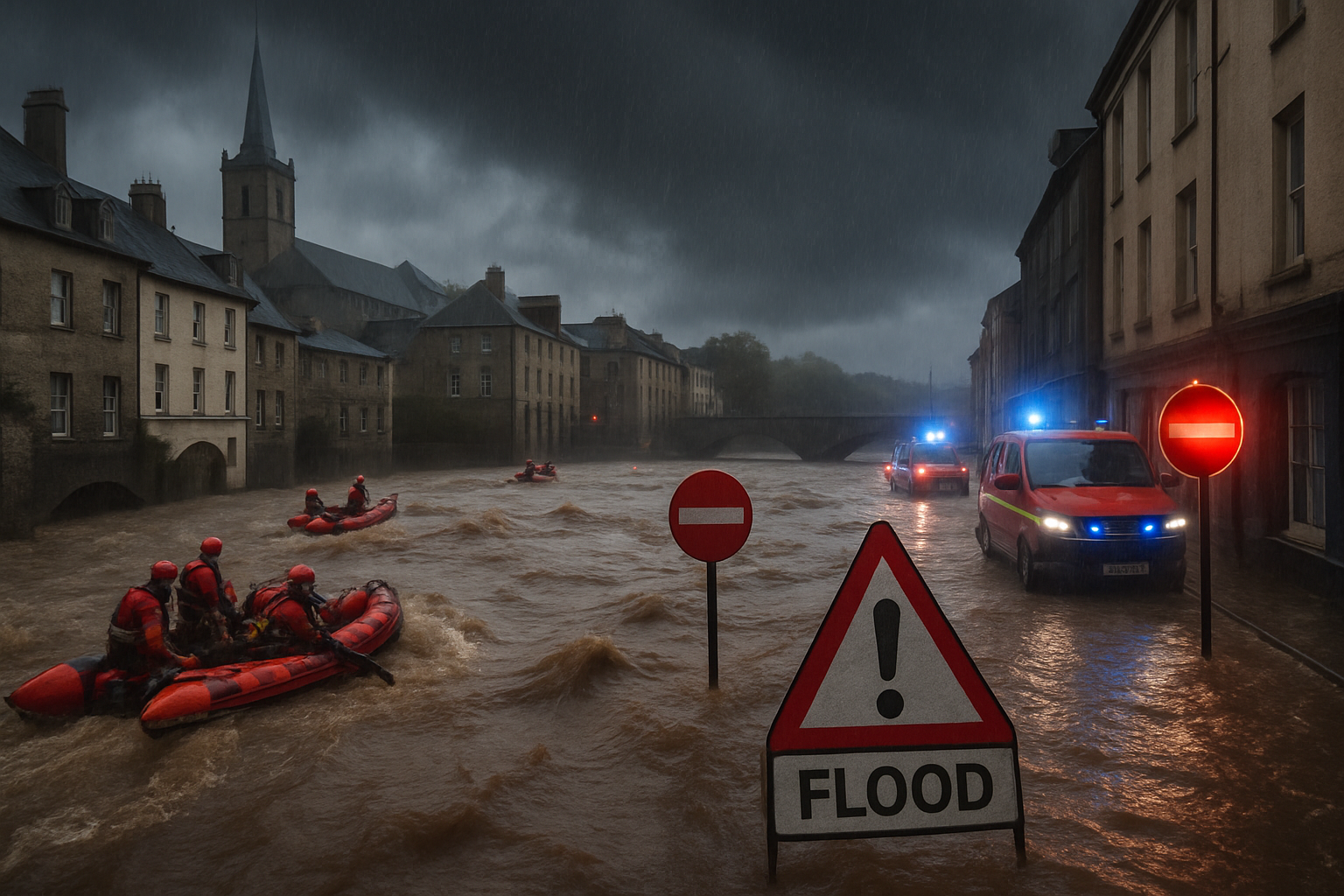
Several European countries remain under severe weather warnings as France maintains three départements in western regions on red alert for life-threatening flooding, marking the continuation of a devastating February weather crisis that has claimed multiple lives and displaced thousands across the continent.
Météo France has sustained red flood alerts for the Maine-et-Loire, Gironde, and Lot-et-Garonne départements through Wednesday, with authorities warning of continued dangerous conditions as river levels remain critically high. The Garonne River system, which burst its banks last week, shows signs of "slow but temporary" water level drops according to the national weather agency, though emergency officials stress the situation remains precarious.
Widespread Evacuations and Emergency Response
Hundreds of residents have been evacuated from their homes since the crisis began, with emergency services conducting round-the-clock rescue operations. The latest alerts cover areas already devastated by Storm Nils and previous Atlantic weather systems that have battered Western Europe throughout February 2026.
In addition to the red alert zones, eleven départements remain under orange flood warnings: Charente, Charente-Maritime, Corrèze, Dordogne, Ille-et-Vilaine, Indre-et-Loire, Landes, Loire-Atlantique, Sarthe, Tarn-et-Garonne, and Vendée. This extensive warning network underscores the broad geographic impact of the ongoing weather emergency.
"The situation remains extremely serious across western and southwestern France despite some improvement in water levels. We cannot let our guard down as the ground remains saturated and additional rainfall could quickly worsen conditions."
— French Emergency Services Official
Infrastructure Damage and Transportation Disruption
The flooding has caused significant infrastructure damage across affected regions. Transportation networks have been severely impacted, with numerous road closures and railway service suspensions affecting both local commuters and long-distance travel. Several bridges remain closed as engineers assess structural damage from the unprecedented water levels.
The crisis has exposed vulnerabilities in aging flood defense systems, with some barriers overwhelmed by water volumes not seen in decades. Local authorities report that many flood protection measures, designed for historical weather patterns, have proven inadequate against the intensity of current conditions.
Regional Impact Beyond France
The weather emergency extends beyond French borders, with other European nations grappling with related challenges. Ireland faces continued flood risks as planning regulators reveal concerning development patterns on flood-prone sites. Over the past six years, local councillors attempted to zone 288 flood-prone locations for development across nine counties, requiring regulatory intervention 93 times to prevent potentially dangerous construction.
Meanwhile, New Zealand's Canterbury region remains under emergency conditions following severe flooding that has left Banks Peninsula isolated, with several hundred residents without power and telecommunications outages affecting emergency communications. The situation demonstrates the global nature of extreme weather events affecting multiple continents simultaneously.
Agricultural and Economic Consequences
The flooding has devastated agricultural areas across southwestern France, with thousands of hectares of farmland submerged. Livestock evacuations have been necessary in several communes, and early assessments suggest significant crop losses that could impact food supplies and local economies for months to come.
Tourism infrastructure has also suffered extensive damage, particularly in rural areas that depend on seasonal visitors. Hotels, restaurants, and recreational facilities in flood-prone valleys face lengthy recovery periods, with some businesses questioning their ability to reopen before the critical summer season.
Climate Context and Future Preparedness
The February 2026 weather crisis forms part of an unprecedented pattern of extreme weather events affecting Europe. Climate scientists note that the current flooding follows January 2026, which marked the 18th consecutive month of global temperatures exceeding 1.5°C above pre-industrial levels, demonstrating the ongoing influence of climate change on weather patterns.
This succession of extreme events has overwhelmed traditional emergency response mechanisms, with rescue services operating at capacity limits and international assistance becoming necessary to manage the crisis. The European Union's Civil Protection Mechanism has been activated, with neighboring countries providing specialized equipment and personnel to support affected regions.
Emergency Management Challenges
Emergency services report unprecedented demand for rescue operations, with water rescue teams deployed continuously across multiple départements. The sustained nature of the emergency has strained resources, requiring careful coordination to maintain response capabilities while personnel and equipment are rotated to prevent exhaustion.
Communication systems have faced significant challenges, with some rural areas experiencing prolonged outages that complicate evacuation efforts and emergency coordination. Temporary communication networks have been established in the most severely affected areas to maintain contact with isolated communities.
Recovery and Reconstruction Outlook
Recovery efforts are expected to continue for months, with full restoration of damaged infrastructure potentially taking years in the most severely affected areas. Government officials have promised comprehensive support for reconstruction efforts, emphasizing the need to "build back better" with improved flood defenses and climate-resilient infrastructure.
The crisis has prompted renewed discussions about long-term climate adaptation strategies, with authorities acknowledging that current flood defense systems require substantial upgrades to cope with increasingly frequent and intense weather events. Urban planning policies are also under review, with stricter controls anticipated for development in flood-prone areas.
As France maintains its vigilant stance with continued red alerts, the broader European response to this weather emergency provides crucial lessons for future crisis management. The unprecedented coordination required across multiple nations, combined with the scale of infrastructure damage, underscores the urgent need for enhanced climate adaptation measures across the continent.