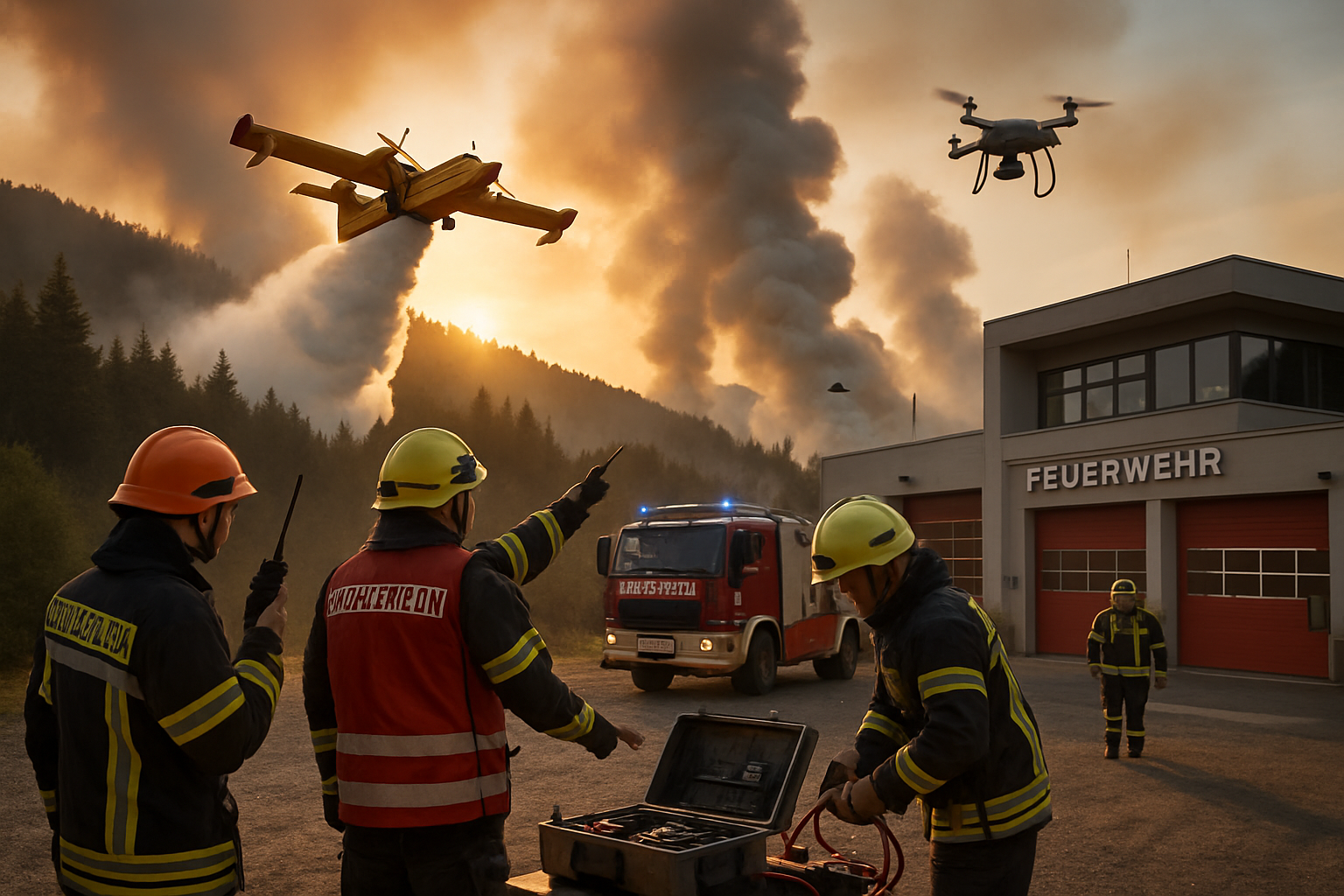
A massive forest fire erupting near Norway's Ålesund has triggered evacuations of approximately 100 homes, exposing critical weaknesses in European forest fire preparedness systems as the continent faces unprecedented climate volatility during the 20th consecutive month of global temperatures exceeding 1.5°C above pre-industrial levels.
The Ålesund fire, burning near the mountain Sukkertoppen, has overwhelmed local emergency services who report they do not have the blaze under control. Fire authorities have urged residents to stay away from the area as firefighting operations continue around the clock. The incident represents a sobering preview of what experts warn could become routine conditions across Europe as traditional emergency response frameworks struggle to adapt to permanent climate volatility.
Cyprus Fire Service Crisis Exposes Systemic Failures
The Ålesund emergency unfolds against the backdrop of Cyprus revealing alarming statistics about its forest fire preparedness. Fire Service Chief Nikos Longinos disclosed that the island recorded 7,154 fires in 2025, marking a 4.31% increase in urban areas and 8.81% spike in rural regions. The fires consumed 133.46 square kilometers and claimed 10 lives in fire-related incidents.
Most concerning is the revelation that rural fire stations must now operate on a 24-hour basis, with 1,180 fire incidents occurring during previously closed hours, creating dangerous coverage gaps across the Mediterranean island. Cyprus is preparing 13 aircraft for summer wildfire containment, acknowledging that current staffing and infrastructure are inadequate for the scale of threats posed by increasingly frequent and intense fire seasons.
Drone Technology: A Double-Edged Response
In response to mounting challenges, Cyprus is pioneering the creation of private drone groups to monitor high-risk areas daily. These unmanned systems will provide immediate alerts when fires begin, enabling emergency services to respond more rapidly to emerging threats. The initiative represents a significant shift toward technological solutions as traditional fire monitoring systems prove insufficient for current conditions.
However, this technological adaptation highlights the resource constraints facing European fire services. The need for private drone operators suggests that public emergency services lack adequate capacity to monitor the expanded risk zones created by climate change.
Sweden's Forest Catastrophe Warning
Sweden faces an even more dire long-term threat, with the Swedish Forest Agency warning that deforestation of high-value natural forests has quadrupled in recent years. At current rates, investigator Camilla Andersson emphasizes, the last unprotected old-growth forests below mountain regions could disappear within 25 years.
"Once destroyed, these ancient forest ecosystems cannot be recreated within human timescales," Andersson warned, noting that Sweden is losing critical carbon sinks and biodiversity refuges essential for climate regulation systems. This destruction significantly undermines Sweden's environmental commitments precisely when forest preservation is most crucial for European climate resilience.
Infrastructure Overwhelmed by Climate Volatility
The current forest fire crisis occurs during a historic climate milestone - the 20th consecutive month of global temperatures exceeding 1.5°C above pre-industrial levels, the longest sustained warming streak in recorded human history. This unprecedented warming has fundamentally overridden natural cooling mechanisms, including La Niña effects, creating what climate scientists term a "climate volatility paradox."
Emergency services across Europe are reaching capacity limits as they manage simultaneous disasters rather than traditional sequential emergencies. Transportation networks, power grids, and communication systems designed for historical climate patterns are operating beyond their intended parameters. The EU Civil Protection Mechanism has been repeatedly activated, with Sweden-Denmark receiving €246 million in assistance - the largest coordinated European weather response on record.
Economic and Social Devastation Mounting
The agricultural sector faces mounting losses as extreme weather destroys crops during critical growing seasons. Tourism industries confront extended cancellations and infrastructure damage during peak revenue periods. Recovery timelines have shifted from weeks to months or years, fundamentally transforming disaster response approaches.
"Building back better" with climate-resilient infrastructure has evolved from an optional enhancement to an essential survival strategy for communities facing repeated extreme weather events. Mental health services report increased demand as families lose generational homes and businesses face extinction from repeated climate disasters.
International Cooperation Under Strain
Environmental challenges transcend political boundaries, making unilateral adaptation efforts insufficient. Ocean currents carry climate changes continentally, while atmospheric systems transport effects globally, regardless of borders. Traditional mutual aid frameworks prove inadequate when multiple continents face simultaneous emergencies.
Success in addressing the forest fire crisis requires coordinated policy frameworks, shared monitoring systems, collaborative enforcement, and innovative financing mechanisms that recognize ecosystem services' value for economic stability and human prosperity. The simultaneity of European disasters tests cooperation mechanisms originally developed assuming stable regions could assist others facing isolated emergencies.
Technology-Tradition Integration Essential
Successful environmental responses require sophisticated integration of cutting-edge technology with traditional ecological knowledge. Estonia combines agricultural wisdom with climate monitoring systems, while Australia integrates Indigenous fire management practices with advanced meteorological forecasting. Satellite imagery, environmental DNA analysis, and AI-enhanced systems provide rapid threat response capabilities, but these require community engagement and traditional knowledge for sustainable management approaches.
March 2026: A Watershed Moment
The convergence of extreme weather events, infrastructure vulnerabilities, and emergency response limitations in March 2026 underscores the urgent need for coordinated international action. Current conditions provide a preview of what could become routine in the 2030s without comprehensive climate adaptation investment.
The choice between reactive crisis management and proactive climate resilience building becomes increasingly critical as the window for effective environmental action narrows. Ecological systems approach critical thresholds that could trigger irreversible changes affecting global food security, climate stability, and human settlements.
"The tools, knowledge, and cooperation frameworks exist for comprehensive environmental protection, but success depends on achieving unprecedented speed and coordination through sustained international cooperation."
— Climate Adaptation Researcher
Emergency Management Transformation Required
March 2026 represents a critical juncture for global climate preparedness. Emergency management systems require fundamental transformation to address permanent climate volatility rather than treating extreme weather as exceptional events. Enhanced multi-sector coordination, climate-resilient infrastructure development, and new international cooperation frameworks for simultaneous global disasters are essential.
The Ålesund fire, Cyprus's inadequate fire station coverage, and Sweden's vanishing forests demonstrate that Europe's current forest fire preparedness systems are insufficient for the climate reality already upon us. The choices made in the coming months will prove decisive for global climate resilience strategies, determining whether human societies can adapt to thrive in an era of unprecedented environmental change.
As traditional seasonal patterns become unreliable planning frameworks, the need for transformative infrastructure adaptation grows ever more urgent. The success or failure of European forest fire preparedness will provide templates for regions worldwide facing similar challenges, making these developments crucial for global climate adaptation strategies affecting generations to come.