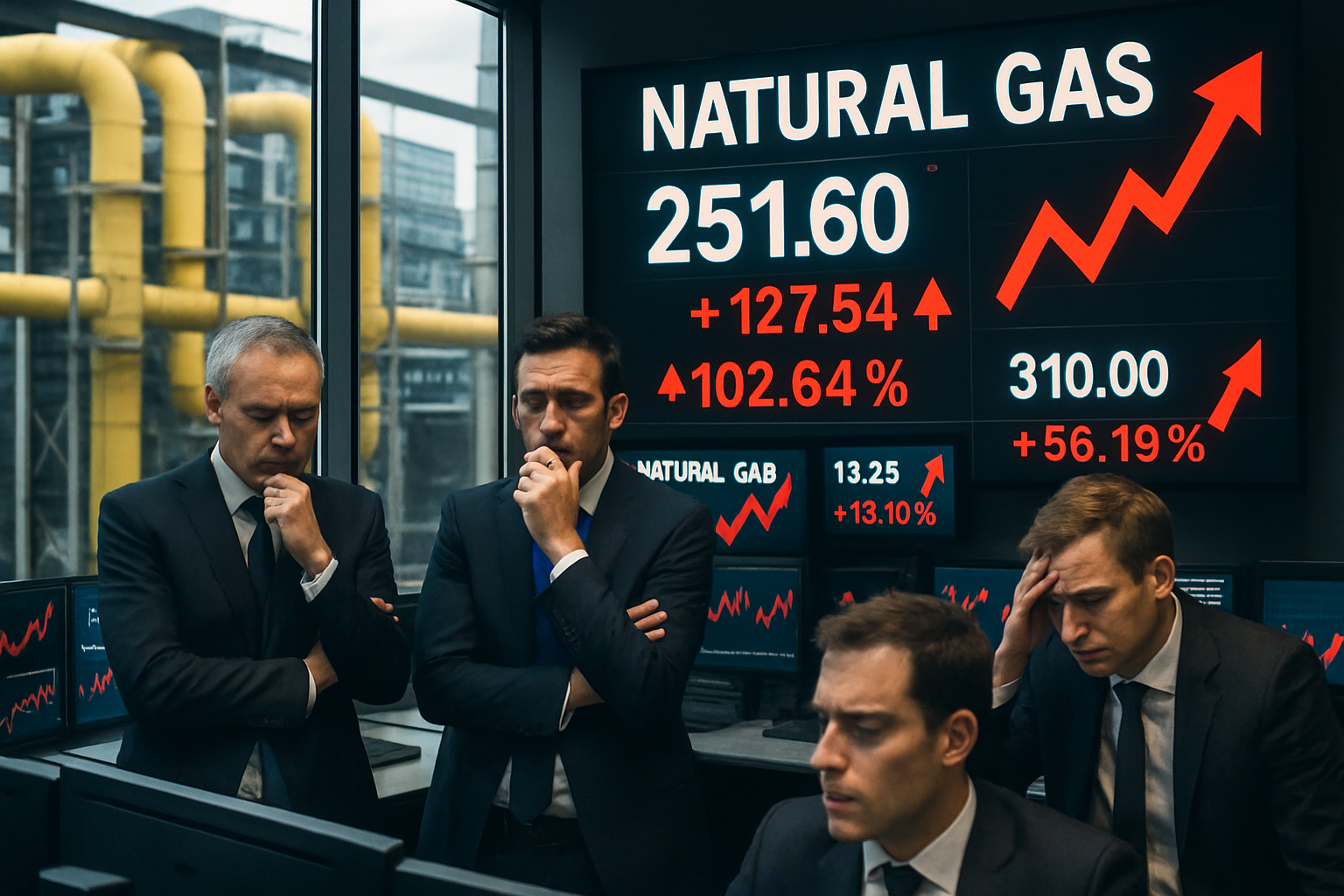
European natural gas prices have surged nearly 50% to €47.32 per megawatt-hour following Qatar's suspension of liquefied natural gas production after Iranian missile attacks on its facilities, marking the most severe energy security threat in decades as regional conflicts disrupt critical supply chains.
The dramatic price spike on the Dutch Title Transfer Facility (TTF) hub represents the highest levels since February 2025, sending shockwaves through European energy markets already strained by geopolitical tensions. QatarEnergy, the world's largest LNG producer, announced the suspension of operations at its North Field facilities following what the company described as "attacks on its installations" amid escalating Middle East conflicts.
Qatar LNG Production Halt Triggers Global Crisis
The suspension comes as Qatar - responsible for approximately 20% of global LNG exports - faces unprecedented regional instability. Iranian forces have targeted energy infrastructure across the Gulf as part of "Operation True Promise 4," a massive retaliation campaign following U.S.-Israeli strikes against Iran.
Natural gas prices have jumped 24% in Europe and 78% in the United States, with analysts warning of potential shortages as winter heating demands approach peak levels. The UK's National Balancing Point (NBP) index has evolved in the same direction, reflecting severe volatility across European markets.
"The Qatar production halt represents a critical disruption to global energy security, affecting not just Europe but markets worldwide. This level of supply shock hasn't been seen since the height of the Russia-Ukraine energy crisis."
— Dr. Andreas Weber, European Energy Research Institute
Middle East Crisis Compounds Energy Security Threats
The crisis stems from the broader collapse of U.S.-Iran nuclear negotiations, despite achieving what negotiators called "broad agreement on guiding principles" - the most significant diplomatic progress since the 2018 JCPOA collapse. Iran's exclusion of ballistic missiles and regional proxies as "red lines" proved incompatible with U.S. demands for a comprehensive agreement covering missiles, armed groups, and human rights.
Following the breakdown of Geneva talks, the largest U.S.-Israeli military operation since 2003 - dubbed "Operation Epic Fury" - targeted Iranian leadership and infrastructure. The confirmed death of Iran's Supreme Leader Ali Khamenei has triggered massive Iranian retaliation across the Gulf region, directly impacting energy production and transportation networks.
The Strait of Hormuz, through which 40% of global seaborne oil transits, has been effectively closed by Iranian forces, with major shipping companies including Maersk and MSC suspending operations. Over 150 oil and LNG tankers remain stranded in the Persian Gulf, representing billions in cargo value.
European Response and Market Impact
European Union energy ministers held emergency video conferences led by High Representative Kaja Kallas to coordinate responses to the unprecedented crisis. The bloc's dependence on LNG imports, particularly from Qatar, has left markets vulnerable to supply disruptions from regional conflicts.
Sweden's energy economists predict electricity price increases of 10-20 öre and gasoline price rises of 1-2 kronor as the crisis ripples through supply chains. Similar concerns are emerging across the continent, with governments activating strategic energy reserves and contingency planning mechanisms.
Stock markets have responded with alarm, with Pakistan's KSE-100 crashing 8.97% and Dow futures dropping 400-570 points as investors flee risk assets. The aviation sector faces additional pressure with over 18,000 flights cancelled worldwide as multiple Middle Eastern countries closed their airspace simultaneously.
Global Supply Chain Disruption
The crisis extends far beyond energy markets, affecting global supply chains that depend on Persian Gulf shipping routes. Dubai International Airport - the world's busiest - has shut down completely after sustaining missile damage, severing critical Europe-Asia trade connections.
Major airlines including Emirates, Air France-KLM, Wizz Air, and Bulgaria Air have suspended Middle East operations, creating the most comprehensive aviation disruption since the COVID-19 pandemic. The interconnected nature of global transportation networks means delays and cancellations are cascading worldwide.
"We're witnessing the fragility of our interconnected global energy system. A single chokepoint disruption can trigger worldwide shortages and price spikes within hours."
— Maria Santos, International Energy Agency
Long-term Energy Security Implications
The crisis highlights Europe's continued vulnerability to geopolitical disruptions in critical energy supply regions. Despite efforts to diversify away from Russian gas following the 2022 invasion of Ukraine, European markets remain heavily dependent on Middle Eastern LNG suppliers.
OPEC+ has announced emergency production increases of 206,000 barrels per day, but analysts note this is insufficient to offset the massive shipping disruptions affecting the Persian Gulf. Alternative routes around the Arabian Peninsula add significant time and costs, while strategic petroleum reserves provide only temporary buffering capacity.
The nuclear governance crisis - marked by the February expiration of the New START Treaty and China's nuclear expansion - adds another layer of complexity to global security calculations. UN Secretary-General António Guterres has warned that nuclear risks are at their "highest levels in decades."
Market Outlook and Recovery Prospects
Recovery timelines remain uncertain as they depend on the resolution of military operations and diplomatic tensions rather than typical supply-demand fundamentals. Unlike weather-related disruptions, geopolitical crises can persist for extended periods, potentially reshaping energy markets permanently.
Energy analysts are revising forecasts as the crisis enters its fourth day with no clear resolution in sight. The historical precedent of sustained Middle Eastern conflicts suggests markets may need to adapt to prolonged instability and higher baseline prices.
The template-setting nature of this crisis for 21st-century energy security planning cannot be understated. Success in containing the regional confrontation could provide frameworks for managing future crises, while failure may accelerate the shift toward military solutions over diplomatic engagement globally.
What This Means for Consumers
European households and businesses face immediate impacts from surging energy costs, with heating and electricity bills expected to rise significantly. Industrial users dependent on natural gas feedstocks may face production constraints or cost increases that filter through to consumer prices.
Government officials across Europe are activating emergency energy protocols and considering additional support measures for vulnerable populations. The crisis occurs as winter approaches, when natural gas demand typically peaks for heating applications.
The broader implications extend to Europe's energy transition goals, as short-term supply security concerns may influence long-term renewable energy deployment and gas infrastructure investment decisions. The crisis underscores the strategic importance of energy independence and supply diversification in an increasingly volatile geopolitical environment.