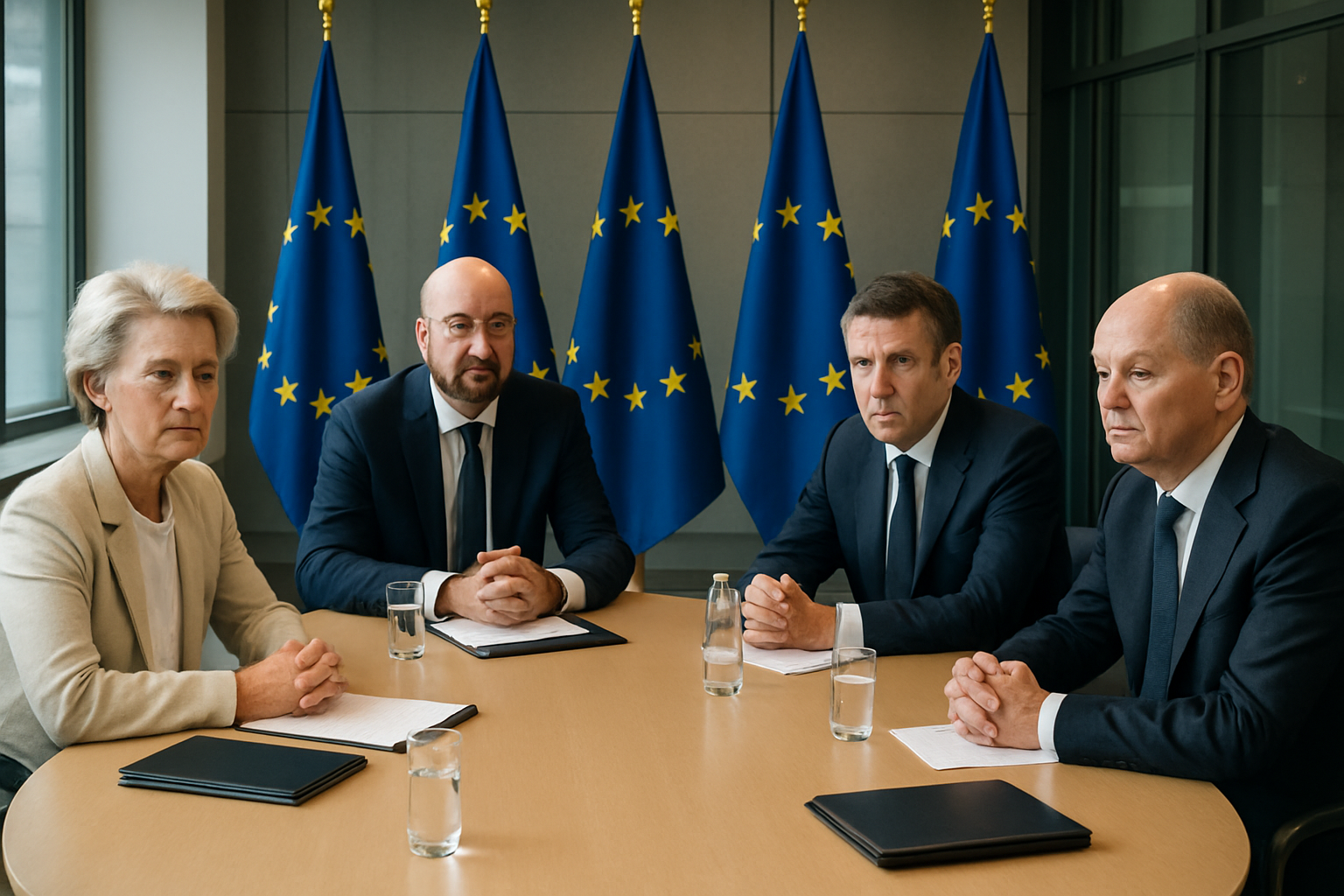
European Union leaders have issued urgent calls for de-escalation and diplomatic solutions as the US-Iran nuclear crisis intensifies, with multiple EU member states demanding full respect for international law following American and Israeli strikes on Iranian targets.
European Commission President Ursula von der Leyen and Council President António Costa released a joint statement describing developments in Iran as "very concerning" while calling on all parties to "exercise maximum restraint and protect civilians." The unprecedented coordinated European response comes as dual US aircraft carriers position near Iranian waters in the largest Middle East naval deployment since 2003.
Unified European Response Emerges
The European reaction has been remarkably unified across member states, with Spain's government explicitly demanding "full respect for international law" from the United States and Israel. Spanish officials have appealed for "de-escalation" and "dialogue" following the strikes, while EU High Representative Kaja Kallas warned that "recent developments in the Middle East are dangerous."
Bulgaria's response, channeled through von der Leyen's statements, emphasized the EU's "unwavering commitment to safeguarding regional security and stability." The Commission President stressed that "ensuring nuclear security and preventing any actions that could further escalate tensions or undermine the global non-proliferation regime are crucial."
Denmark's Prime Minister Mette Frederiksen confirmed to Danish media that Denmark is taking the situation "seriously," reflecting the broader European concern about regional stability implications.
Nuclear Security Concerns Drive EU Position
Central to the European response is deep concern about nuclear security implications. Romanian sources emphasize that EU leaders are prioritizing "ensuring nuclear security and preventing any actions that could further aggravate tensions or undermine the global non-proliferation regime."
"We reaffirm our unwavering commitment to safeguarding regional security and stability."
— Ursula von der Leyen, European Commission President
The European position comes amid reports that Iran maintains uranium enrichment at 60% purity, approaching the 90% weapons-grade threshold. Former IAEA inspector Dr. Yusri Abu Shadi has confirmed that Iran possesses over 400 kilograms of uranium enriched to 60%, making nuclear weapons capability "easily achievable."
Diplomatic Framework Under Pressure
European concerns are heightened by the fragile state of ongoing Geneva negotiations, where Iranian Foreign Minister Abbas Araghchi recently announced "broad agreement on guiding principles" - the most significant diplomatic progress since the 2018 JCPOA collapse. However, fundamental disagreements persist over scope, with Iran excluding ballistic missiles and regional proxies as "red lines" while the US demands comprehensive agreements.
The EU's emphasis on international law compliance reflects European frustration with unilateral military actions that could undermine diplomatic progress. Spain's foreign ministry particularly emphasized the need for dialogue over military solutions, while acknowledging Iran as a "murderous regime" - indicating European leaders are threading carefully between supporting allies and maintaining diplomatic channels.
Regional Stability Stakes
European leaders are acutely aware of the regional implications, with the Persian Gulf handling 40% of global oil transit. The deployment of USS Gerald R. Ford and Abraham Lincoln carriers represents approximately one-third of the active US Navy fleet concentrated in the region, creating unprecedented military tensions alongside diplomatic efforts.
Bosnia and Herzegovina's media coverage highlighted how EU leaders von der Leyen and Costa are "calling for restraint" amid "missile attacks throughout the Gulf," emphasizing the immediate regional security concerns driving European diplomatic intervention.
International Law Framework
The European emphasis on "full respect for international law" addresses growing concerns about the erosion of multilateral frameworks. The crisis unfolds against the backdrop of the New START treaty's expiration on February 5, 2026 - the first time in over 50 years without US-Russia nuclear constraints, creating what UN Secretary-General António Guterres calls a "grave turning point" with nuclear risks at their highest in decades.
European officials have maintained close contact with regional partners, with von der Leyen confirming the EU is in "close contact with our partners in the region." This diplomatic coordination reflects European concerns about being marginalized from crucial Middle East security decisions affecting global stability.
Looking Ahead: Diplomatic Window Narrowing
The coordinated European response comes as military and diplomatic tracks run parallel, with Trump administration officials warning of potential military action if meaningful nuclear agreements aren't reached. The European position serves both as diplomatic pressure for restraint and as preparation for potential economic and security consequences of regional conflict.
With Saudi Arabia, UAE, Qatar, and Egypt also backing diplomatic processes - creating unprecedented Middle Eastern consensus - European leaders are positioning themselves within a broader coalition supporting negotiated solutions over military confrontation.
The coming days will test whether European diplomatic pressure, combined with regional coalition support, can maintain space for the Geneva talks framework to produce substantive agreements addressing legitimate security concerns while avoiding military escalation that could destabilize global energy markets and nuclear governance structures.