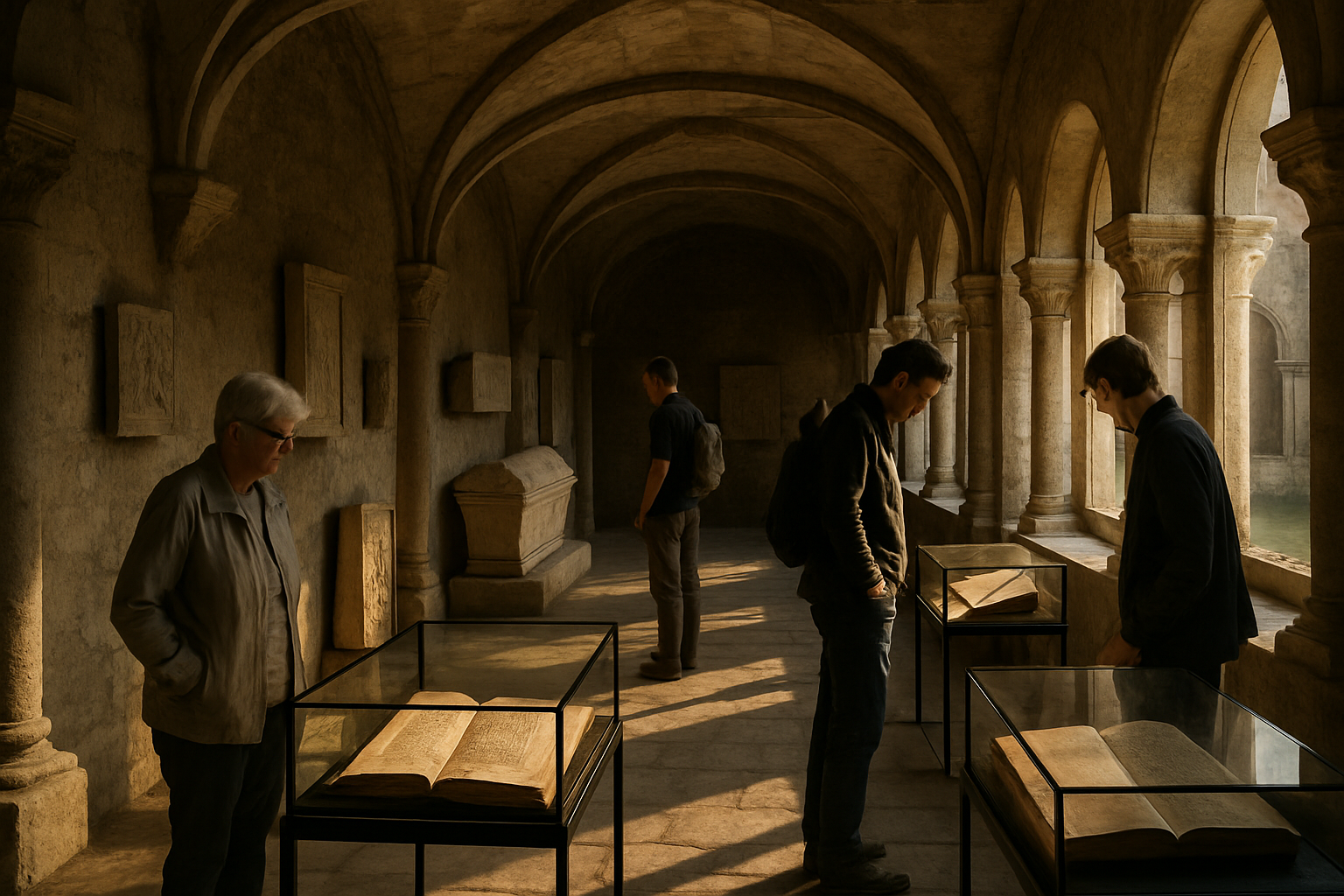
Two historic sites in Croatia and Malta have been awarded the prestigious European Heritage Label this week, marking significant milestones in the European Union's ongoing efforts to preserve and promote the continent's shared cultural heritage.
The Monastery of St. Francis in Zadar, Croatia, received the recognition for its pivotal role in European history as the location where the 1358 Treaty of Zadar was signed. Meanwhile, St Paul's Catacombs in Rabat, Malta, became the first Maltese site to earn this distinction, recognized for its contribution to understanding Europe's early Christian heritage.
Croatia's Historic Monastery Gains European Recognition
The Franciscan monastery in Zadar represents more than eight centuries of continuous religious and cultural activity. The site's significance extends far beyond its architectural beauty, encompassing its role as a witness to crucial moments in European diplomatic history. The 1358 Treaty of Zadar, signed within these walls, marked a pivotal moment in medieval European politics and territorial arrangements.
This recognition comes as part of Croatia's broader cultural renaissance, which has seen the country emerge as a leader in innovative approaches to heritage preservation. The nation has been successfully balancing historical conservation with modern community needs, as evidenced by projects like the Gruž City Market in Dubrovnik, which recently gained attention for its innovative architectural approach that respects historical context while meeting contemporary requirements.
Malta Achieves First European Heritage Label
Malta's achievement with St Paul's Catacombs represents a landmark moment for the Mediterranean nation's cultural diplomacy efforts. Culture Minister Owen Bonnici emphasized the dual significance of this recognition, stating that it "not only highlights Malta's rich and significant history, but also demonstrates our forward-looking approach with seriousness and responsibility."
"When culture is seen as a pillar of innovation and sustainable growth, we are building a future with solid roots."
— Owen Bonnici, Malta's Culture Minister
The catacombs, dating from the 3rd century AD, provide unique insights into early Christian burial practices and artistic expression in the Mediterranean. The site's underground chambers contain remarkable examples of Byzantine and early medieval art, offering scholars and visitors alike a window into Malta's position as a cultural crossroads between Europe, Africa, and the Middle East.
Part of a Broader Cultural Renaissance
These awards occur within what cultural analysts have identified as a "February 2026 Cultural Renaissance" – an unprecedented period of coordinated international cultural preservation and innovation initiatives. The European Heritage Label program, operated under the European Commission's Creative Europe framework, represents a sophisticated approach to cultural diplomacy that goes beyond traditional UNESCO World Heritage designations.
The program specifically recognizes sites that have played significant roles in European history, culture, and integration. Unlike other heritage programs that focus primarily on architectural or artistic merit, the European Heritage Label emphasizes the narrative of European cooperation and shared values.
Recent months have witnessed remarkable coordination in cultural preservation efforts across the continent. From Finland's investment in the €90 million Fuuga music hall to Greece's comprehensive digital heritage platform providing unified access to 108 archaeological sites, European nations are demonstrating sophisticated strategies for balancing heritage preservation with contemporary accessibility.
Technology Enhances Traditional Preservation
Both Croatia and Malta have embraced technological innovation as an enhancement tool rather than a replacement for traditional preservation methods. Digital documentation, virtual reality experiences, and advanced conservation techniques are being deployed to make heritage more accessible while protecting physical artifacts from environmental damage and overtourism.
This approach reflects a mature understanding of cultural preservation that has emerged across Europe. Rather than viewing technology as a threat to authentic cultural experience, institutions are leveraging digital tools to expand their educational reach and create sustainable funding models through cultural tourism.
Malta's approach exemplifies this synthesis. The country has been developing sophisticated digital platforms that allow global audiences to experience Maltese heritage while maintaining strict conservation protocols for the physical sites. This model has attracted international attention as other nations seek to balance preservation with access in an era of increasing cultural tourism.
Economic and Diplomatic Dimensions
The European Heritage Label designation carries significant economic implications beyond its cultural value. Heritage tourism has become a crucial economic driver across Europe, with successful sites generating substantial revenue that can be reinvested in conservation efforts.
Croatia's tourism sector has demonstrated remarkable sophistication in recent years, deploying 62 tourist medical clinics for the 2026 season – Europe's most extensive seasonal healthcare network. This infrastructure investment reflects the country's commitment to quality-focused tourism strategies that prioritize visitor experience and community benefits over simple volume growth.
Malta's recognition positions the nation strategically within European cultural networks, potentially enhancing its attractiveness to international visitors and cultural institutions. The country has been pursuing an active cultural diplomacy strategy, with recent initiatives including the "Malta's Carnival – Behind the Mask" exhibition at the European Parliament in Brussels.
Challenges and Opportunities Ahead
The success of these heritage preservation initiatives occurs against a backdrop of significant challenges. Climate change poses increasingly severe threats to historic sites, with extreme weather events testing the resilience of conservation efforts across the continent. Both Croatia and Malta have experienced the effects of changing weather patterns on their archaeological and architectural heritage.
Economic pressures also present ongoing challenges, particularly in ensuring that younger generations maintain connection with traditional cultural practices. However, the success of recent initiatives suggests that authentic cultural programming, enhanced by thoughtful technology integration, can create sustainable models that serve multiple community functions.
The international cooperation evident in these preservation efforts provides a template for addressing these challenges. Knowledge sharing, resource pooling, and collaborative approaches are proving more effective than isolated national efforts. This cooperation extends beyond Europe, with institutions like the Netherlands voluntarily returning artifacts to Egypt and the Metropolitan Museum repatriating Khmer sculptures to Cambodia, establishing new ethical standards for cultural institutions globally.
Looking Forward: A New Model for Cultural Stewardship
The European Heritage Label awards to Croatia and Malta represent more than recognition of historical sites – they symbolize a new approach to cultural stewardship that balances preservation with accessibility, tradition with innovation, and local authenticity with international cooperation.
This model emphasizes community engagement, economic sustainability, and technological enhancement while maintaining respect for cultural authenticity. Success requires not just institutional support but active community involvement, ensuring that heritage sites serve living communities rather than becoming static museums.
As Europe continues to navigate complex challenges including climate change, demographic shifts, and evolving tourism patterns, the principles demonstrated in these heritage preservation efforts provide a roadmap for sustainable cultural development. The emphasis on cooperation over competition, quality over quantity, and community benefit over institutional prestige offers lessons applicable far beyond the cultural sector.
The recognition of these sites during the broader "February 2026 Cultural Renaissance" suggests that Europe may be entering a new era of cultural confidence and creativity. By successfully integrating preservation with innovation, local identity with international cooperation, these initiatives demonstrate that cultural heritage can serve as a foundation for future growth rather than simply a reminder of past achievements.
For Croatia and Malta, these European Heritage Labels represent not endpoints but beginning points – launching platforms for enhanced international collaboration, sustainable tourism development, and continued innovation in cultural preservation techniques. Their success provides a model that other nations and regions can adapt to their own cultural contexts, contributing to a global renaissance in heritage stewardship that honors the past while building bridges to the future.