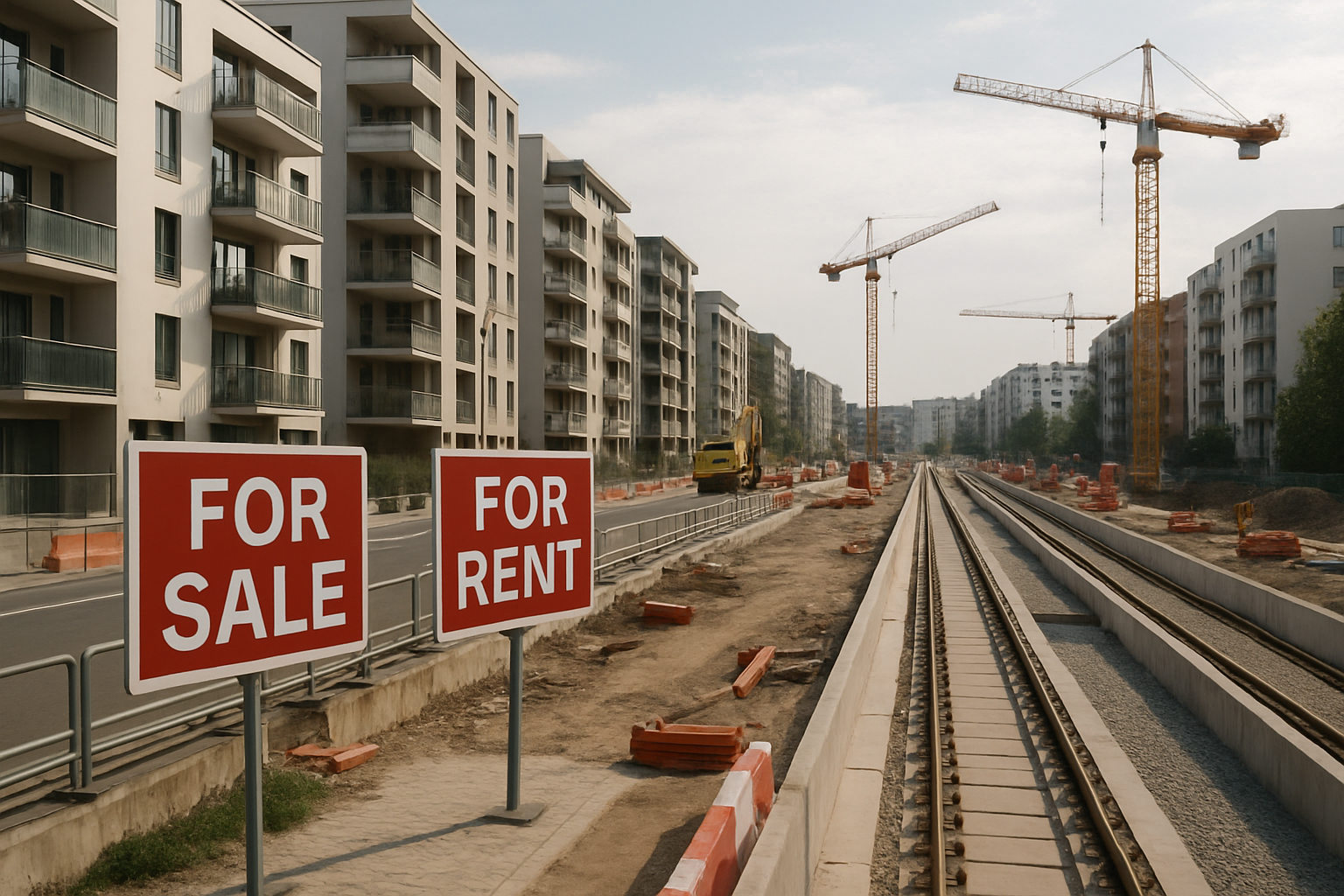
Europe's housing crisis has entered a new phase of complexity as infrastructure improvements designed to enhance urban connectivity simultaneously exacerbate property price inflation, while political patience wears thin among voters demanding immediate solutions to mounting affordability challenges.
The paradox of urban development is starkly illustrated in Athens, where the construction of the new Metro Line 4 has triggered significant property price increases in surrounding neighborhoods, according to recent market analysis. The Greek capital's real estate market demonstrates how infrastructure improvements, while beneficial for connectivity and economic development, create unintended consequences for housing affordability in areas previously accessible to middle-class families.
Metro-Driven Gentrification in Athens
Areas along the planned Metro Line 4 route have experienced substantial price appreciation even before the line's completion, with property values and rental costs surging beyond the reach of many local residents. This phenomenon, known as transit-oriented gentrification, reflects a broader European challenge where public infrastructure investments inadvertently contribute to displacement pressures in urban communities.
The Athens metro expansion represents part of Greece's broader urban development strategy, building on the country's participation in European Union infrastructure programs. However, the price effects highlight the need for complementary policies to preserve housing affordability alongside transportation improvements.
Irish Voter Frustration Reaches Breaking Point
Meanwhile, in Ireland, political patience with the housing crisis has reached a critical juncture as half of all voters report that the country's problems are deteriorating rather than improving. The growing appetite for radical policy changes reflects widespread frustration with incremental approaches to addressing housing shortages and affordability challenges that have persisted for years.
Irish voters increasingly favor action over caution when it comes to housing policy, signaling potential support for more aggressive government intervention in property markets. This shift in public opinion occurs against the backdrop of continued supply shortages and rental price pressures that have made homeownership increasingly elusive for younger generations and working families.
"The housing crisis has become the defining political issue of our time, with voters clearly demanding more decisive action than traditional market-based approaches have delivered."
— Political Analyst, commenting on Irish voter sentiment
Mediterranean Policy Coordination
The housing challenges in Greece and Ireland reflect broader Mediterranean trends documented in recent policy initiatives. Croatia has launched an ambitious program targeting 600,000 empty homes through affordable rental schemes, while Cyprus is advancing legislation to restrict foreign real estate acquisition by non-nationals. These coordinated responses suggest recognition that housing affordability has become a transnational challenge requiring innovative policy tools.
Greece's experience with regional price variations between Athens and Thessaloniki demonstrates the increasing complexity of national housing markets, where local economic conditions create divergent outcomes even within single countries. The concept of "Μέση Ζητούμενη Τιμή" (Average Asking Price) has become a key metric in understanding market behavior and pricing dynamics across different Greek metropolitan areas.
Construction Cost Pressures
Across the Mediterranean region, construction costs have created negative profit margins for developers, reducing incentives for new housing supply precisely when demand remains elevated. Rising material costs have become a universal challenge affecting housing development from Spain to Greece, contributing to supply shortages that compound affordability problems.
The construction industry crisis represents a critical bottleneck in addressing housing shortages through traditional market mechanisms. Developer reluctance to initiate new projects amid unfavorable profit margins has created a supply-demand imbalance that government intervention alone may struggle to resolve without addressing underlying cost structures.
European Union Response Framework
The European Union has recognized housing as a continental challenge requiring coordinated policy responses rather than purely national solutions. Current discussions focus on developing EU-wide approaches that acknowledge housing market interconnectedness while respecting national sovereignty over domestic policy.
Recent policy analysis suggests that successful housing interventions require integrated approaches combining traditional regulatory tools with innovative solutions addressing construction costs, foreign investment pressures, and demographic changes. The Greek and Irish experiences provide valuable case studies for developing scalable solutions across diverse European contexts.
Infrastructure Investment Dilemma
The Athens Metro Line 4 situation illustrates a fundamental policy dilemma facing European cities: how to pursue necessary infrastructure development without triggering gentrification that displaces existing communities. Transportation improvements are essential for urban sustainability and economic competitiveness, yet their property value effects can undermine social cohesion and affordability goals.
Successful policy frameworks must anticipate and mitigate the housing market effects of public infrastructure investment. This might include inclusionary housing requirements, tenant protection measures, or community land trust mechanisms that preserve affordability alongside development benefits.
Global Context and Lessons
The European housing crisis exists within a global context of urbanization pressures, climate change adaptation needs, and changing work patterns that affect housing demand. International cooperation has become essential for knowledge sharing and developing locally adapted solutions that address common underlying trends.
Recent global housing market analysis suggests that the most dramatic price increases may face significant corrections over time, though the timing remains uncertain. European policymakers must balance short-term crisis management with long-term sustainable development strategies that promote inclusive growth and housing accessibility.
Political and Economic Implications
The Irish voter sentiment data suggests that housing affordability has become a critical test of democratic governance effectiveness. Political systems that fail to address basic shelter needs risk losing public legitimacy, particularly among younger demographics facing barriers to homeownership and family formation.
Economic implications extend beyond housing markets to broader questions of social mobility, regional development, and European competitiveness. Cities that become unaffordable for middle-class families may struggle to attract and retain the human capital necessary for innovation-based economic growth.
The convergence of infrastructure-driven gentrification in Greece and political impatience in Ireland represents a broader European reckoning with housing policy effectiveness. Success will require innovative approaches that harness the benefits of urban development while preserving community accessibility and social cohesion that make European cities vibrant and sustainable places to live.