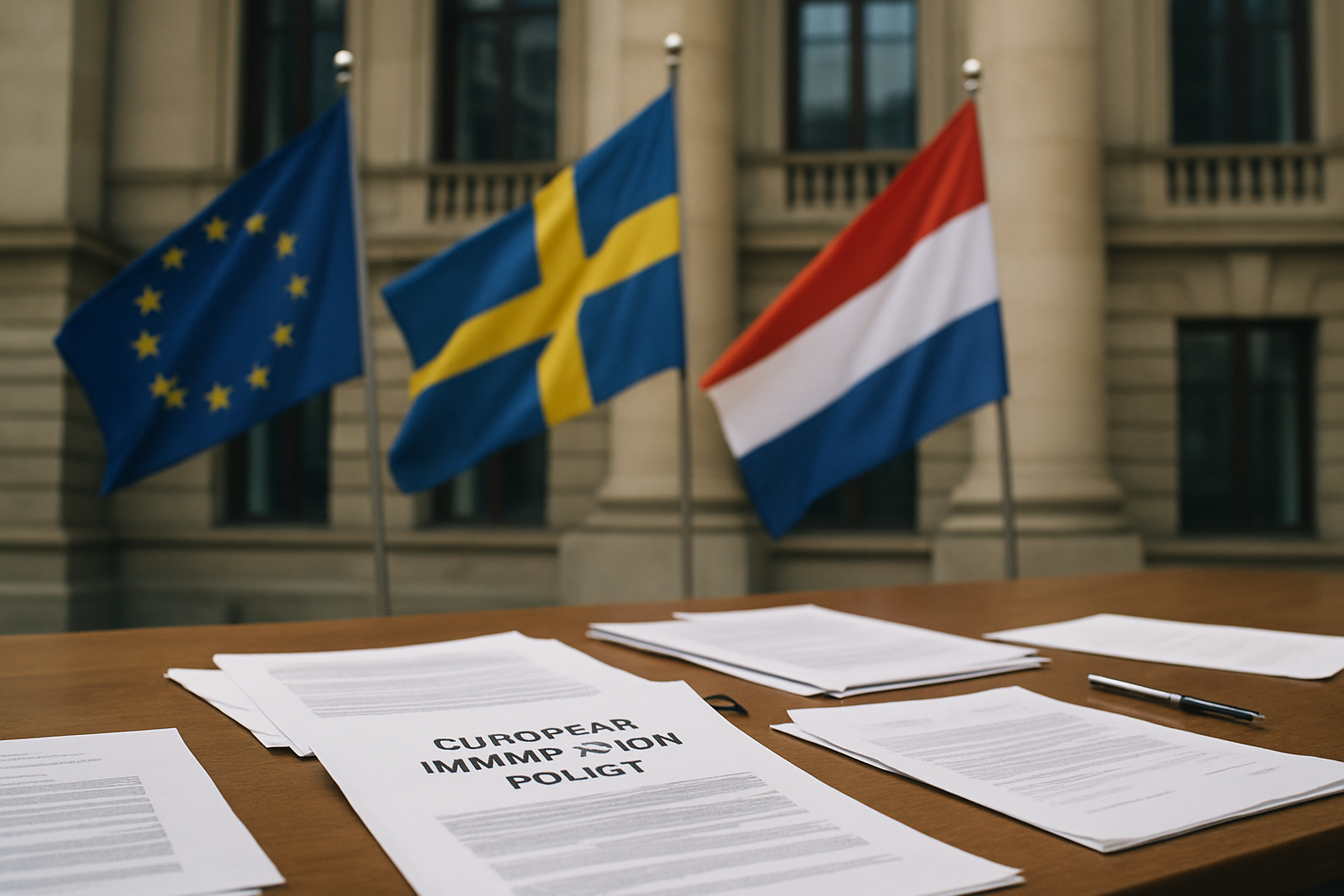
Sweden announced a suspension of deportations of minors on Friday while the Netherlands confirmed plans to collaborate with other EU member states on establishing deportation hubs outside the European Union, marking the latest developments in Europe's rapidly evolving immigration policy landscape.
The Swedish government's decision to pause what critics have dubbed "teenage deportations" comes amid sustained political pressure and public outcry over the controversial practice. The country's Migration Agency confirmed it has suspended deportations of unaccompanied minors up to 21 years of age following mounting criticism from opposition parties and civil rights organizations.
Sweden's Policy Reversal
Swedish Migration Agency spokesperson Jesper Tengroth confirmed that the agency's director-general has "verbally pressed the brakes" on teenage deportations, affecting young people up to 21 years old. The suspension represents a significant policy shift for the ruling Tidö parties, who had previously defended the deportations as necessary for maintaining immigration control.
Opposition parties celebrated the announcement as a victory against what they viewed as inhumane policies. Sources within the Swedish parliament described the decision as evidence that the government had "lost the fight" on deportations, with one MP expressing jubilation at the unexpected policy reversal.
"We are starved, tortured, betrayed, deceived, disappointed,"
— Opposition response to previous policies
The policy change particularly affects young people who had arrived in Sweden as unaccompanied minors and faced deportation upon reaching adulthood, despite having established lives in the country. One woman living under protected identity due to honor violence in her home country expressed disbelief and joy at the news, telling Swedish media she "could hardly believe it was true."
Netherlands Announces EU Cooperation Initiative
Meanwhile, the Netherlands confirmed it is joining forces with several EU member states to establish "return hubs" for rejected asylum seekers outside the European Union. The initiative represents part of a broader European trend toward external processing of asylum claims and deportations to third countries.
This development builds on earlier announcements from a coalition including Greece, Germany, Austria, and Denmark to establish similar facilities, likely in Africa, for migrants whose asylum claims have been rejected and whose countries of origin refuse to readmit them.
The Dutch participation in these "deportation hubs" reflects the changing political landscape in European immigration policy, with even traditionally liberal countries adopting more restrictive approaches to asylum and migration management.
Broader European Context
These developments occur within the context of sweeping changes to European immigration policy that have accelerated throughout 2026. The European Parliament approved historic asylum procedure changes in February allowing member states to deport asylum seekers to "safe" third countries, representing a fundamental shift from protection-focused to deterrence-based policies.
The policy transformation follows years of debate stemming from the 2015-2016 refugee crisis, with 89% of Europeans now demanding greater EU unity according to Eurobarometer polling, while 72% express concerns about border security. Enhanced cooperation mechanisms are enabling smaller groups of member states to advance controversial policies without requiring unanimous EU consent.
Cyprus has implemented some of the strictest enforcement measures, closing four buildings in Nicosia for overcrowding violations and conducting 131 arrests for illegal residence in the past year. Estonia has temporarily closed Russian border crossings due to security incidents, while other member states pursue varying approaches to immigration management.
Political Pressures and Internal Conflicts
The Swedish suspension appears to reflect significant internal political pressure within the governing coalition. Social Democrat spokesperson Ida Karkiainen suggested the Tidö parties had experienced "internal problems" with the deportation issue, noting it was "obvious that they themselves had reached the insight that they couldn't wait" for new legislation to take effect.
The policy reversal comes as Sweden grapples with broader debates about citizenship requirements and immigration integration. Recent proposals to tighten citizenship requirements for Swedish nationality have sparked heated political debate, with opposition parties arguing the measures would "make life more difficult for immigrants."
Critics have noted that the deportation policies particularly affected vulnerable young people who had grown up in Sweden but faced removal to countries they barely knew. The suspension provides temporary relief while new legislation is developed, though the ultimate direction of Swedish immigration policy remains uncertain.
EU-Wide Policy Evolution
The contrasting approaches between Sweden's suspension and the Netherlands' participation in deportation hubs illustrate the complex and sometimes contradictory nature of European immigration policy evolution. While some countries pull back from controversial enforcement measures, others are doubling down on deterrence-focused strategies.
The EU's Entry/Exit System has demonstrated early success, detecting over 4,000 overstayers in its first four months of operation, though implementation challenges have required potential summer suspensions due to processing delays at major airports.
European cooperation on immigration has intensified despite national sovereignty concerns. Greece has emerged as a leader in the coalition establishing external processing centers, with Migration Minister Thanos Plevris emphasizing that facilities would host migrants whose asylum claims have been rejected and whose home countries refuse readmission.
International Implications
The developments in European immigration policy are being closely monitored internationally, as they may establish templates for similar approaches worldwide. The success or failure of external processing centers could influence migration management strategies across multiple regions facing similar pressures from population displacement.
Human rights organizations have raised concerns about potential violations of non-refoulement principles, which prohibit returning individuals to countries where they may face persecution. Legal challenges to the new policies are expected, creating uncertainty about their long-term viability.
The policy shifts also occur amid demographic challenges facing European nations, including aging populations and labor shortages that create tensions between immigration restrictions and economic needs. Some countries, like Albania, have successfully welcomed foreign workers to fill critical labor gaps, demonstrating alternative approaches to migration management.
Looking Forward
The Swedish suspension of minor deportations and Dutch participation in EU cooperation hubs represent different facets of Europe's ongoing struggle to balance humanitarian obligations with border security concerns and public opinion pressures. The temporary nature of Sweden's suspension suggests continued volatility in immigration policies across Europe.
As European countries continue to grapple with migration pressures, climate displacement, and changing demographics, the policy decisions made in 2026 are likely to establish precedents that will shape immigration management for years to come. The success of enhanced cooperation mechanisms may encourage similar approaches on other controversial policy areas, potentially reshaping how the European Union operates on sensitive issues.
The ultimate test will be whether these evolving policies can effectively manage migration flows while maintaining Europe's commitment to humanitarian principles and international law obligations. The coming months will be critical in determining whether the current policy directions represent sustainable solutions or temporary measures that will require further adjustment as circumstances evolve.