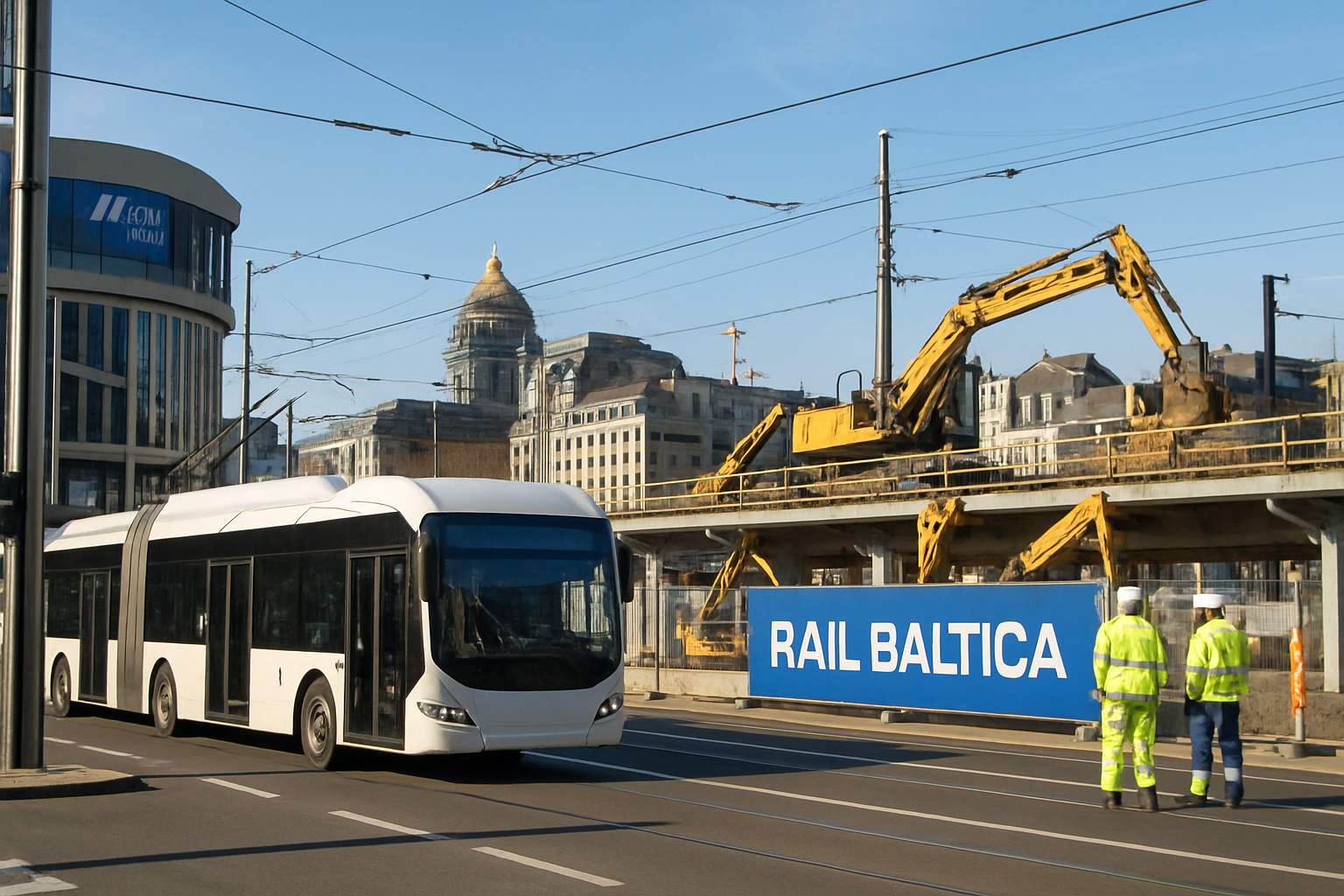
Major transportation infrastructure developments across Europe showcase both remarkable progress and significant challenges as the continent navigates its most ambitious connectivity transformation since the post-war reconstruction era, with electric bus fleets modernizing urban transit while cross-border railway projects face unprecedented scrutiny.
Brussels Electric Transit Revolution
The Brussels public transport company MIVB has purchased 36 new electric buses as part of a comprehensive urban mobility transformation that positions the Belgian capital at the forefront of sustainable transportation in Europe. The buses will be gradually rolled out on lines 47, 56, 58, and 83, representing a strategic shift toward emission-free public transportation.
"Quiet buses that emit less means we are investing in neighbourhoods where the living is good," declared Brussels mobility minister Elke Van den Brandt, emphasizing the project's dual focus on environmental sustainability and community quality of life. The initiative aligns with broader European Union objectives for reducing urban emissions and improving air quality in major metropolitan areas.
This electric bus deployment comes within the context of Europe's unprecedented €570+ billion infrastructure investment surge, demonstrating how cities are prioritizing immediate environmental benefits while contributing to continental climate adaptation strategies. The timing is particularly significant as January 2026 marked the 18th consecutive month of global temperatures exceeding 1.5°C above pre-industrial levels.
Rail Baltica Governance Crisis
While Brussels celebrates transit modernization, the ambitious Rail Baltica project faces serious governance challenges that threaten to undermine one of Europe's most strategic infrastructure initiatives. The project, designed to connect the Baltic states with the broader European rail network, has encountered systematic management failures that demand immediate attention.
According to reports from Latvian media, the company "Eiropas Dzelzceļa līnijas" (European Railway Lines), responsible for implementing the Rail Baltica project in Latvia, has experienced extraordinary leadership instability. In nearly 12 years of existence, the organization has had 12 different leaders in management positions, creating continuity problems that have plagued the project's development.
The situation has prompted Latvian Prime Minister Evika Siliņa to initiate comprehensive service inspections regarding the railway project's implementation. Economics Minister Viktors Valainis publicly supported this decision, stating that while the reviews are justified, "it is necessary to achieve confidence that deficiencies will be eliminated in the further implementation of the project and decisions that do not have clear added value."
Regulatory Scrutiny Intensifies
The Latvian government has established two separate inspection commissions to evaluate specific aspects of the Rail Baltica implementation. These commissions will assess AS "RB Rail" procurement for railway track ties and rail expansion joint supplies, as well as review the incomplete bridge supports in the Daugava River and the initiated railway viaduct in Mārupe.
Despite these challenges, construction continues with significant local economic impact. The Rail Baltica main route builder "ERB Rail" has engaged more than 20 local subcontractors for the southern section from Misa to the Lithuanian border, according to representatives from "European Railway Lines" (EDzL), the national implementer of the Rail Baltica project in Latvia.
This local contractor involvement demonstrates how major infrastructure projects can serve as economic multipliers, creating employment opportunities and supporting regional business development even amid governance concerns. The approach aligns with European Union objectives for maximizing local economic benefits from cross-border infrastructure investments.
Estonia's Connectivity Challenges
Estonia faces its own Rail Baltica implementation challenges, particularly regarding rural connectivity. Some stops in rural areas along the established Rail Baltica route are located far from larger settlements, creating accessibility concerns that local governments must now address through improved transportation connections and area development.
Estonian authorities emphasize that local governments must begin working immediately to ensure proper connections to rural stops and develop surrounding areas to maximize the project's benefits. This represents a critical lesson for major infrastructure projects: successful implementation requires coordinated planning across multiple levels of government and sustained attention to community connectivity.
The Estonian experience highlights how transformative infrastructure projects create both opportunities and obligations for regional development, requiring comprehensive approaches that extend beyond the primary construction to encompass broader economic and social integration strategies.
Historical Context and Precedents
The current infrastructure developments occur within a rich historical context of European transportation modernization. Estonia's previous successes include achieving 88% renewable electricity usage and developing Europe's largest battery storage system serving 90,000 households, alongside maintaining a 99.25% EU funding absorption rate—the highest among member states.
Luxembourg's CFL recently achieved 31.4 million passengers in 2025, representing a 0.57% increase from 2024 and consolidating previous record performance. This success demonstrates the effectiveness of integrated public transportation approaches featuring cross-border railway cooperation under comprehensive regional planning frameworks.
The broader European context includes ongoing climate adaptation requirements, as recent extreme weather events exposed infrastructure vulnerabilities. February 2026 saw devastating storms across the continent, requiring massive emergency deployments and highlighting the need for resilient infrastructure designed for future rather than historical climate conditions.
Technology Integration and Innovation
Modern European transportation projects incorporate sophisticated technology integration from the design phase, including real-time passenger information systems, predictive maintenance using sensors and AI analytics, integrated digital payment platforms, and environmental monitoring capabilities that optimize energy consumption.
The Brussels electric bus initiative exemplifies this technological sophistication, featuring advanced battery systems, intelligent route optimization, and integrated monitoring capabilities that enhance both operational efficiency and passenger experience. These systems connect to broader smart city networks, enabling comprehensive transportation management across multiple modes.
However, global semiconductor shortages continue to affect control system implementations, with prices increasing sixfold through 2027. This supply chain challenge requires adaptive procurement strategies and alternative technological approaches to maintain project timelines and cost targets.
Economic and Regional Impact
The economic implications of current infrastructure developments extend far beyond construction employment. Rail Baltica, despite its governance challenges, represents a cornerstone of Baltic-European integration, with the potential to reduce logistics costs, improve market access, and enhance regional competitiveness for decades to come.
Brussels' electric bus investment generates immediate environmental benefits while creating permanent transportation employment and stimulating local business development. The project demonstrates how urban infrastructure improvements can serve multiple policy objectives simultaneously: climate action, economic development, and community enhancement.
Regional integration benefits include strengthened EU single market connectivity, enhanced cross-border cooperation frameworks, and improved coordination between national transportation policies. These projects create templates for future European infrastructure development that balances national priorities with continental objectives.
Challenges and Solutions
Current infrastructure challenges include complex coordination requirements across multiple jurisdictions, environmental compliance obligations, community engagement processes, and the need to maintain existing services during major improvements. The Rail Baltica governance crisis illustrates how management stability and transparent oversight are essential for long-term project success.
Success factors emerging from current projects include comprehensive stakeholder engagement, adaptive management approaches that respond to changing conditions, sustained political commitment across electoral cycles, and sophisticated project management that combines international best practices with local expertise.
Climate adaptation requirements are becoming central design considerations, with projects incorporating enhanced drainage systems, weather-resistant materials, backup power infrastructure, and flood management capabilities as standard features rather than optional additions.
Future Implications
The March 2026 infrastructure developments establish precedents that will influence European transportation policy for decades. The convergence of technological advancement, environmental awareness, and international cooperation is creating new development models that prioritize sustainability alongside economic growth.
Lessons from current successes and challenges will inform future investment strategies across the European Union, with particular attention to governance frameworks, community engagement processes, and climate resilience requirements. The balance between rapid modernization and comprehensive oversight will remain a critical consideration for major infrastructure initiatives.
As Europe continues its infrastructure renaissance, the integration of immediate mobility needs with long-term sustainability goals represents both the greatest challenge and the most significant opportunity for creating transportation systems that serve 21st-century requirements while adapting to unprecedented global challenges.