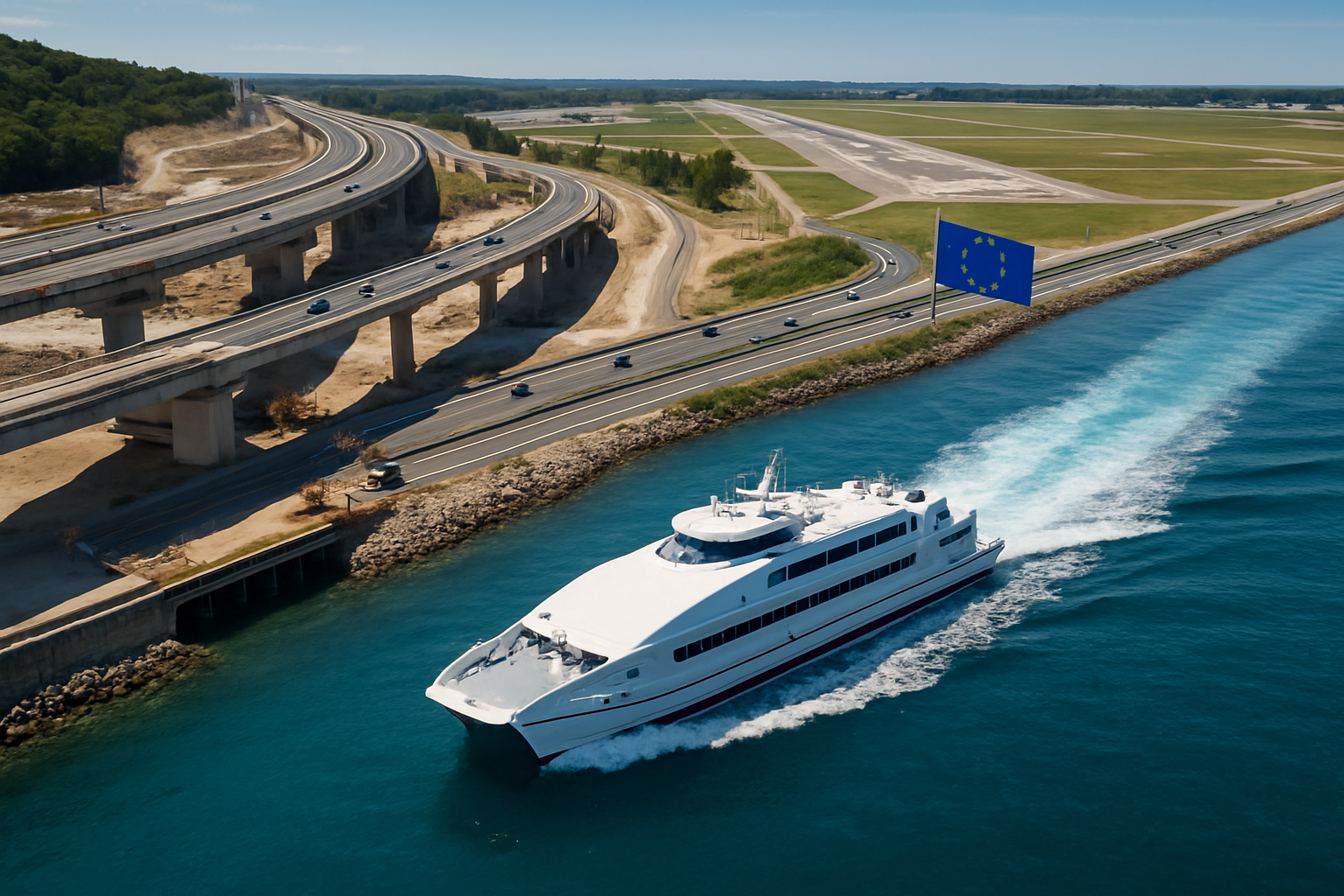
European nations are making substantial progress on critical infrastructure projects as Croatia advances a €150 million highway construction project and explores new maritime transport solutions, while Estonia expands international aviation connectivity through three new direct routes from Tallinn.
These developments represent the latest phase in Europe's unprecedented €570 billion infrastructure investment surge, with projects demonstrating sophisticated coordination between maritime, road, and aviation networks to strengthen regional connectivity and support economic integration across the continent.
Croatia Pursues Dual Transportation Strategy
Croatia is advancing on two major fronts to address transportation challenges along its Adriatic coast. Construction has officially begun on the crucial Split–Omiš fast road project, marking the commencement of the second phase of this €150 million infrastructure initiative that will transform regional connectivity.
The Split-Omiš highway project represents one of Croatia's most significant transportation investments, designed to alleviate chronic traffic congestion along the heavily traveled coastal corridor. The project incorporates advanced engineering standards and climate-resilient design principles, reflecting Croatia's 99.25% EU funding absorption rate—the highest among member states.
Simultaneously, Croatia is exploring innovative maritime solutions to complement road infrastructure improvements. Plans are underway for a new fast boat service connecting Rijeka and Mošćenička Draga, specifically targeting the reduction of summer traffic queues that have plagued this corridor for years. The proposed maritime route would provide an alternative to road travel during peak tourist seasons, demonstrating Croatia's comprehensive approach to transportation planning.
Estonia Expands Baltic Aviation Hub
Estonia's national carrier airBaltic has launched three new direct routes from Tallinn for the 2026 summer season, with the first direct flight to Hamburg successfully completing its inaugural departure. This expansion represents a strategic enhancement of Estonia's position as a key aviation hub serving the Baltic region and broader European connectivity networks.
The new routes from Tallinn Airport strengthen Estonia's role in regional integration while supporting the country's sustainable transport leadership. Estonia has achieved 88% renewable electricity usage and operates continental Europe's largest battery storage system serving 90,000 households, positioning the nation at the forefront of environmentally conscious transportation development.
These aviation improvements build upon Estonia's comprehensive infrastructure modernization, including ongoing work on the Pelguranna tram route development and participation in the ambitious Rail Baltica project connecting Baltic states to the broader European railway network by 2030.
Regional Integration and Technology Advancement
Both Croatian and Estonian projects demonstrate the evolution of European infrastructure planning toward integrated systems that support economic development, environmental protection, and social connectivity simultaneously. Modern infrastructure projects universally incorporate sophisticated technology from the design phase, including real-time monitoring, predictive maintenance capabilities, digital payment systems, and environmental optimization features.
Climate adaptation has evolved from an optional consideration to a fundamental requirement, with projects incorporating enhanced drainage systems, weather-resistant materials, and backup power infrastructure designed for future rather than historical climate conditions. This approach reflects lessons learned from recent extreme weather events that exposed vulnerabilities in traditional infrastructure designed for past climate patterns.
"These infrastructure investments represent strategic foundations for economic competitiveness, climate resilience, and international cooperation in the 21st century."
— European Infrastructure Development Analysis, March 2026
Economic Multiplier Effects
The economic impact of these infrastructure projects extends far beyond construction employment, creating substantial multiplier effects through reduced logistics costs, enhanced market access, and improved business productivity. Croatia's Split-Omiš highway will generate permanent benefits by reducing transport costs and improving market connectivity for businesses throughout the Dalmatian region.
Estonia's expanded aviation routes create direct economic value through increased tourism, business travel, and cargo capacity while supporting the country's strategic positioning as a digital and logistics hub serving Northern Europe and the Baltic region.
Both countries benefit from sophisticated financing mechanisms combining EU structural funds, national investment, and innovative public-private partnerships that enable major infrastructure modernization while maintaining fiscal responsibility.
Challenges and Implementation Strategies
Contemporary infrastructure projects face universal challenges including material cost inflation, skilled labor shortages, environmental compliance requirements, and complex coordination across multiple stakeholders. The global semiconductor shortage has driven smart infrastructure component prices sixfold higher, requiring innovative approaches to technology integration and project management.
Success factors consistently include sustained political commitment transcending electoral cycles, transparent governance frameworks, comprehensive stakeholder engagement, and adaptive management strategies that can respond to changing conditions while maintaining core project objectives.
Environmental compliance and community consultation have evolved from optional considerations to essential components of project success, requiring extensive consultation processes and adaptive management approaches that balance immediate mobility needs with long-term sustainability requirements.
Future Infrastructure Development
These March 2026 developments establish important precedents for European infrastructure policy that will influence continental transportation planning for decades ahead. The convergence of technological advancement, environmental awareness, and international cooperation is creating new development models that prioritize comprehensive sustainability alongside economic growth.
Croatia's integration of maritime and road solutions demonstrates innovative approaches to regional connectivity challenges, while Estonia's aviation expansion shows how smaller nations can leverage strategic positioning and sustainable practices to become regional transportation leaders.
The success of these projects will influence broader European integration objectives, contributing to the EU's single market goals while supporting climate adaptation and sustainable development priorities. As Europe continues its infrastructure renaissance, these examples provide templates for balancing immediate connectivity needs with long-term resilience requirements.
The choice between transformative infrastructure adaptation and reactive crisis management represents a critical policy decision for the current decade, determining Europe's adaptive capacity in an increasingly interconnected and climate-challenged world.