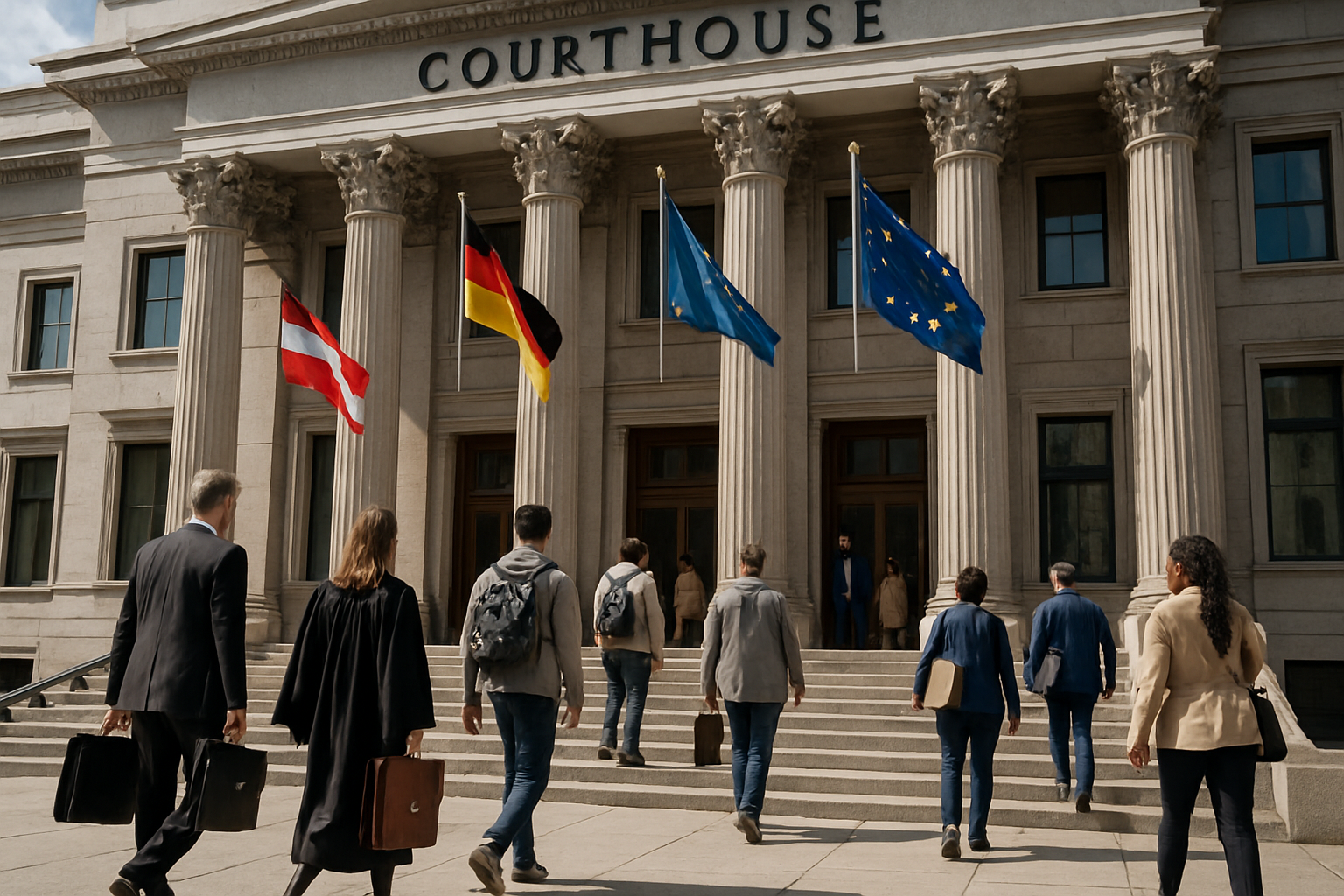
Courts across seven European nations are simultaneously processing explosive corruption cases, violent crime prosecutions, and constitutional challenges that threaten to overwhelm judicial systems already struggling with case backlogs and resource constraints, according to a comprehensive Planet News investigation.
From Austria's Nazi-era symbols prosecution to Germany's corrupt prosecutor conviction, from Greece's massive embezzlement case to Italy's constitutional referendum, European judicial institutions are confronting an unprecedented convergence of institutional crises that test the very foundations of democratic governance.
High-Stakes Corruption Prosecutions Rock European Capitals
In Germany, former prosecutor Yashar G. was sentenced to eight years and six months in prison for maintaining contacts with organized crime and leaking investigation secrets to drug cartels. The Hannover prosecutor's conviction represents one of the most serious breaches of judicial integrity in recent European history, highlighting vulnerabilities within law enforcement institutions.
Austria's courts processed René Schimanek, former office chief to Walter Rosenkranz, for Nazi re-engagement charges after he designed his father's death notice with NS-era symbols. The conviction led to his resignation as an FPÖ city councilor, demonstrating Europe's ongoing struggle with far-right symbolism and historical accountability.
"The attacks against the judiciary should not be carried out on social media or any other platform. Democratic institutions require respect and protection."
— Judge Consuelo Scerri Herrera, Malta Courts
Greece delivered a landmark verdict against former governor Panagiotis Psomiadis, sentencing him to ten years imprisonment for embezzlement involving 456 infrastructure projects. The case represents one of the largest corruption prosecutions in modern Greek judicial history, affecting hundreds of millions in public funds.
Violence Cases Challenge Judicial Capacity
Sweden's judicial system confronted a disturbing milestone when a 14-year-old boy was found guilty of murdering a 28-year-old man in Norrköping, reflecting escalating youth violence that challenges traditional rehabilitation-focused justice approaches across Scandinavia.
Cyprus education authorities launched investigations after anonymous complaints accused a secondary school teacher of making "offensive and degrading remarks" about vulnerable pupils' personal hygiene and clothing. The Independent Authority against Corruption forwarded the case to education officials and the Children's Rights Commissioner, demonstrating institutional cooperation in protecting vulnerable populations.
Slovakia's judicial system delivered a surprising verdict in the high-profile Bonaparte case, with courts acquitting all defendants including prominent businessman Jozef Bašternák. The defendants didn't even attend court to hear the verdict, with judges ruling the prosecution had not sufficiently proven their case.
Constitutional Crisis and Democratic Reforms
Italy faces a critical constitutional moment as citizens prepare for Sunday and Monday voting on the Nordio-Meloni justice reform referendum. The proposed changes would separate prosecutorial and judicial careers, establish two separate Supreme Judicial Councils (CSM), and introduce random selection procedures for key appointments - reforms that could fundamentally reshape Italian jurisprudence.
The referendum represents the culmination of decades-long debates about judicial independence, prosecutorial power, and democratic accountability within Italy's legal system. Recent polls suggest a deeply divided electorate, with outcomes likely to influence European approaches to judicial reform.
International Cooperation Under Pressure
Legal experts emphasize that these simultaneous crises are testing enhanced European law enforcement coordination mechanisms developed over recent decades. The European Union's judicial cooperation frameworks are being pushed to their limits as member states grapple with transnational criminal networks that exploit jurisdictional boundaries.

Digital case management systems, advanced forensic analysis, and sophisticated evidence-gathering techniques are becoming critical for processing complex international cases, but they require substantial investment in training and equipment that many jurisdictions struggle to provide.
Resource Allocation Crisis Threatens Democratic Function
Court systems across the continent report unprecedented case backlogs, with some proceedings requiring years for resolution. Complex cases involving powerful individuals, international elements, and sensitive political contexts are placing enormous strain on judicial infrastructure designed for less sophisticated criminal challenges.
Professional accountability mechanisms are strengthening with expanded transparency requirements, but this creates additional administrative burdens on already overwhelmed court systems. The challenge is maintaining democratic oversight while preserving operational effectiveness.
Technology Integration Balances Efficiency with Rights
Modern European courts increasingly rely on digital evidence, encrypted communications analysis, and advanced forensic techniques. However, legal professionals warn that technological advancement must balance efficiency improvements with due process preservation and privacy protection.
The intersection of digital age crimes with traditional legal frameworks creates new challenges for judges and prosecutors who must interpret centuries-old legal principles in contexts involving social media evidence, cryptocurrency transactions, and cross-border digital communications.
Democratic Resilience Under Test
Despite mounting pressures, European judicial institutions demonstrate fundamental resilience in delivering fair and transparent justice regardless of defendants' political or social status. The willingness to prosecute Nazi symbolism cases in Austria, corruption involving prosecutors in Germany, and high-level embezzlement in Greece reflects institutional commitment to rule of law principles.
However, legal scholars warn that sustained political commitment, adequate resource allocation, and continued public support are essential for maintaining judicial independence. The success or failure of these current challenges will influence public confidence in democratic governance across the continent.
"Courts are serving as constitutional guardians beyond simple dispute resolution, protecting civil rights and maintaining social order in an increasingly complex world."
— Dr. Elena Marchetti, European Judicial Studies Institute
Precedent-Setting Implications for Global Justice
The outcomes of these converging legal challenges will establish crucial precedents for 21st-century democratic responses to complex governance problems. European courts are essentially writing the rulebook for how democratic institutions should respond to sophisticated criminal networks, political corruption, and institutional threats while preserving civil liberties.
International observers are monitoring these cases as indicators of democratic resilience during an era of political polarization and technological disruption. The balance between accountability demands and institutional stability remains the central challenge facing judicial systems worldwide.
Looking Forward: Institutional Adaptation Requirements
Legal experts identify several critical areas requiring immediate attention: enhanced international cooperation for transnational criminal networks, technology integration that preserves due process, professional development emphasizing contemporary challenges, and resource allocation matching the complexity of modern criminal justice demands.
The success of European judicial systems in navigating these current crises will determine not only immediate justice outcomes but also provide templates for democratic governance in an interconnected but politically fragmented world. The preservation of rule of law principles while adapting to contemporary realities represents one of the defining challenges of modern democratic governance.
As courts across Europe continue processing these landmark cases through spring 2026, the results will influence legal development patterns globally and contribute to evolving international jurisprudence for decades to come.