European financial markets displayed mixed performance on April 7, 2026, with divergent trends emerging across major economies as investors grapple with ongoing uncertainties in investment markets and economic indicators.
The complex landscape reflects a broader transformation in investment strategies, with traditional market dynamics being challenged by geopolitical tensions, energy price volatility, and evolving monetary policies across the continent.
Austrian Real Estate Demonstrates Resilience
Austria's BDO Immo Investment Barometer revealed that real estate investments continue to be perceived as an attractive investment form, according to a comprehensive analysis released Monday. The barometer particularly highlighted the potential for value appreciation and stability as an income source, indicating investor confidence in property markets despite broader economic uncertainties.
This resilience in Austrian real estate comes at a critical time when construction industries across Europe face significant challenges. Rising material costs have created negative developer profit margins worldwide, constraining new housing supply despite persistent demand. The semiconductor shortage, which has driven chip prices up sixfold due to AI development demand, has particularly impacted smart building technologies that are becoming standard in modern developments.
"The possibility of value increases and stability as an income source continue to make real estate an attractive investment option for Austrian investors"
— BDO Immo Investment Barometer Analysis
German Markets Face Pressure
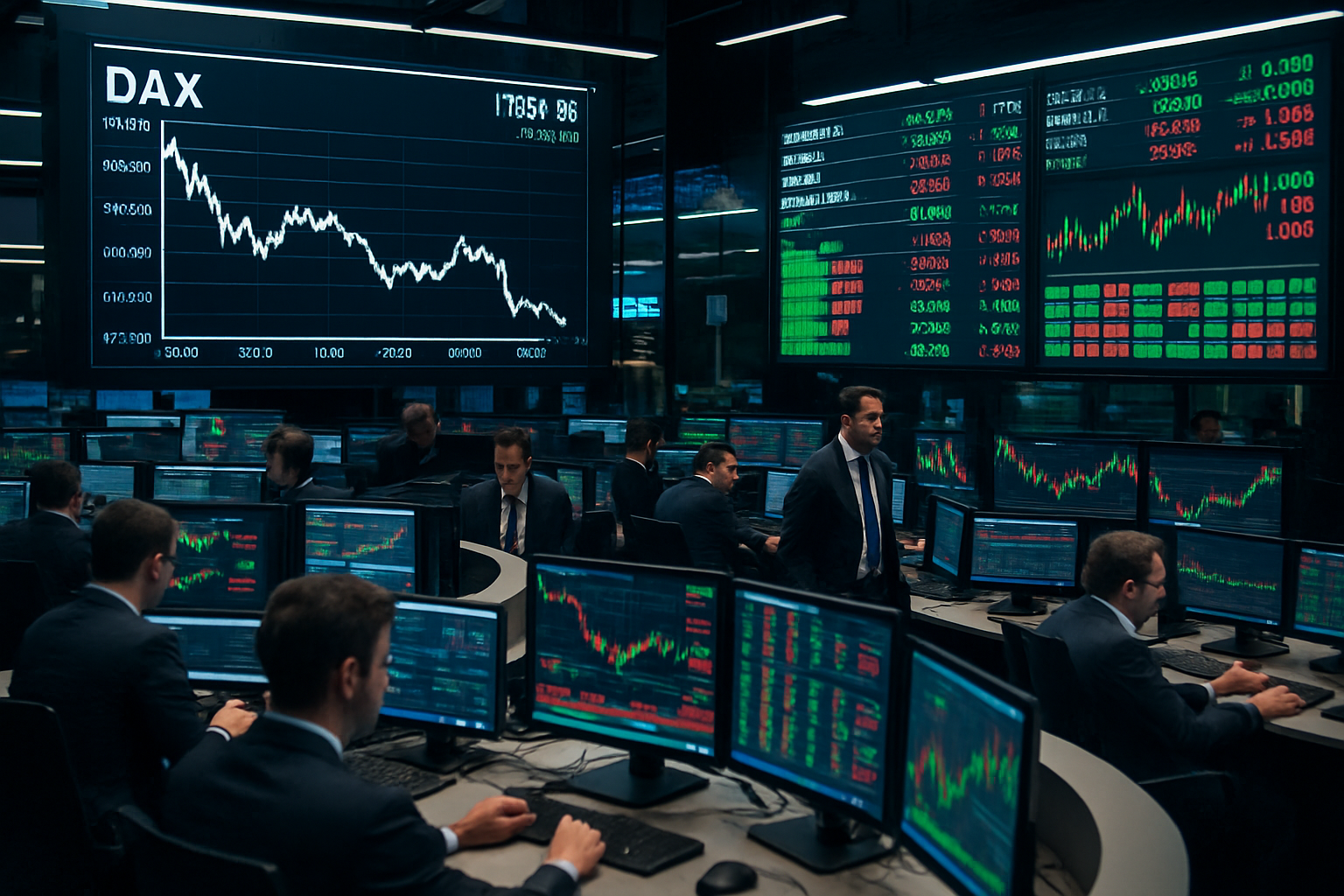
In contrast to Austrian optimism, German financial markets experienced notable pressure, with the DAX unable to maintain its earlier gains amid uncertainty about developments in the Persian Gulf region. The index's retreat from higher levels reflects broader concerns about geopolitical risks affecting European markets.
German investors found some consolation in dividend announcements, with companies delivering record dividend payments despite challenging market conditions. This development provides a counterbalance to market volatility, offering income-focused investors some stability during turbulent periods.
The mixed performance in Germany reflects broader European challenges, where traditional investment approaches are being tested by new economic realities. Energy price volatility, supply chain disruptions, and changing monetary policy frameworks are forcing institutional and retail investors to reassess their strategies.
Nordic Investment Innovation
Scandinavian markets are demonstrating innovative approaches to investment challenges. Norwegian financial experts are providing updated investment advice to retail investors, emphasizing the importance of professional guidance in navigating current market conditions. The emphasis on expert advice reflects the increasing complexity of investment decisions in the current environment.
Swedish markets, meanwhile, faced external pressures, with reports of red performance on Wall Street following recent political developments. This demonstrates the interconnected nature of global financial markets, where regional political events can have immediate impacts across continents.
Central Bank Policy Divergence
The European Central Bank's maintenance of its 2% deposit rate continues to create complex dynamics across member states, with different economies pursuing varying approaches to monetary policy challenges. This divergence from the post-2008 era of synchronized global monetary policy is creating new challenges for investors attempting to develop coherent regional strategies.
Austrian savers, for instance, are receiving 1.15 percentage points less interest than their German counterparts despite operating under the same ECB framework. This disparity highlights how regional banking market structures can create different outcomes even within unified monetary policy frameworks.
Investment Strategy Evolution
Market participants are increasingly developing nuanced, country-specific investment approaches rather than broad regional or emerging market strategies. This shift reflects the growing importance of local conditions, regulatory environments, and institutional quality over traditional geographic categorizations.
The evolution toward localized investment strategies is particularly evident in real estate markets, where policy predictability and regulatory clarity have become crucial factors. Countries providing transparent governance frameworks are attracting larger long-term commitments, while jurisdictions with unclear or unstable policies risk capital flight to more predictable alternatives.
Technology and Infrastructure Challenges
The ongoing global memory chip crisis continues to impact financial markets and corporate investment decisions. With semiconductor prices having increased sixfold, companies across Europe are reassessing their technology infrastructure investments and digital transformation strategies.
This technological constraint is particularly affecting the financial services sector, where digital payment systems and automated trading platforms require sophisticated semiconductor components. However, the crisis is also accelerating innovation in energy-efficient computing and alternative architectural approaches that may prove superior to current centralized models.
Real Estate Market Transformation
European real estate markets are experiencing significant transformation, with new coordination mechanisms emerging across EU member states. Croatia's ambitious program to convert 600,000 empty homes into affordable rental properties represents Europe's most comprehensive vacant property initiative, while Cyprus is advancing foreign investment restrictions scheduled for May 2026.
These coordinated responses reflect a growing understanding that housing markets are increasingly interconnected through migration patterns, investment flows, and economic spillovers. The Vienna model, where social housing covers 60% of the rental market through sustained public investment, continues to provide a template for other European cities seeking to balance affordability with market functionality.
Looking Forward
The divergent performance across European markets on April 7 reflects deeper structural changes in how investors approach risk and opportunity in an increasingly complex global environment. While Austria's real estate sector demonstrates confidence in traditional value stores, German market volatility highlights the ongoing challenges posed by geopolitical uncertainties.
Success in this environment appears to require sophisticated analysis of country-specific fundamentals rather than reliance on broad regional themes. Investors are placing increasing emphasis on regulatory clarity, institutional quality, and policy predictability as key determinants of investment attractiveness.
As European markets continue to navigate these challenges, the premium placed on local expertise and nuanced understanding of individual market dynamics is likely to increase. The traditional center-periphery model of European finance is evolving toward a more complex landscape where regional markets are driven by local fundamentals and institutional capabilities rather than proximity to major financial centers.