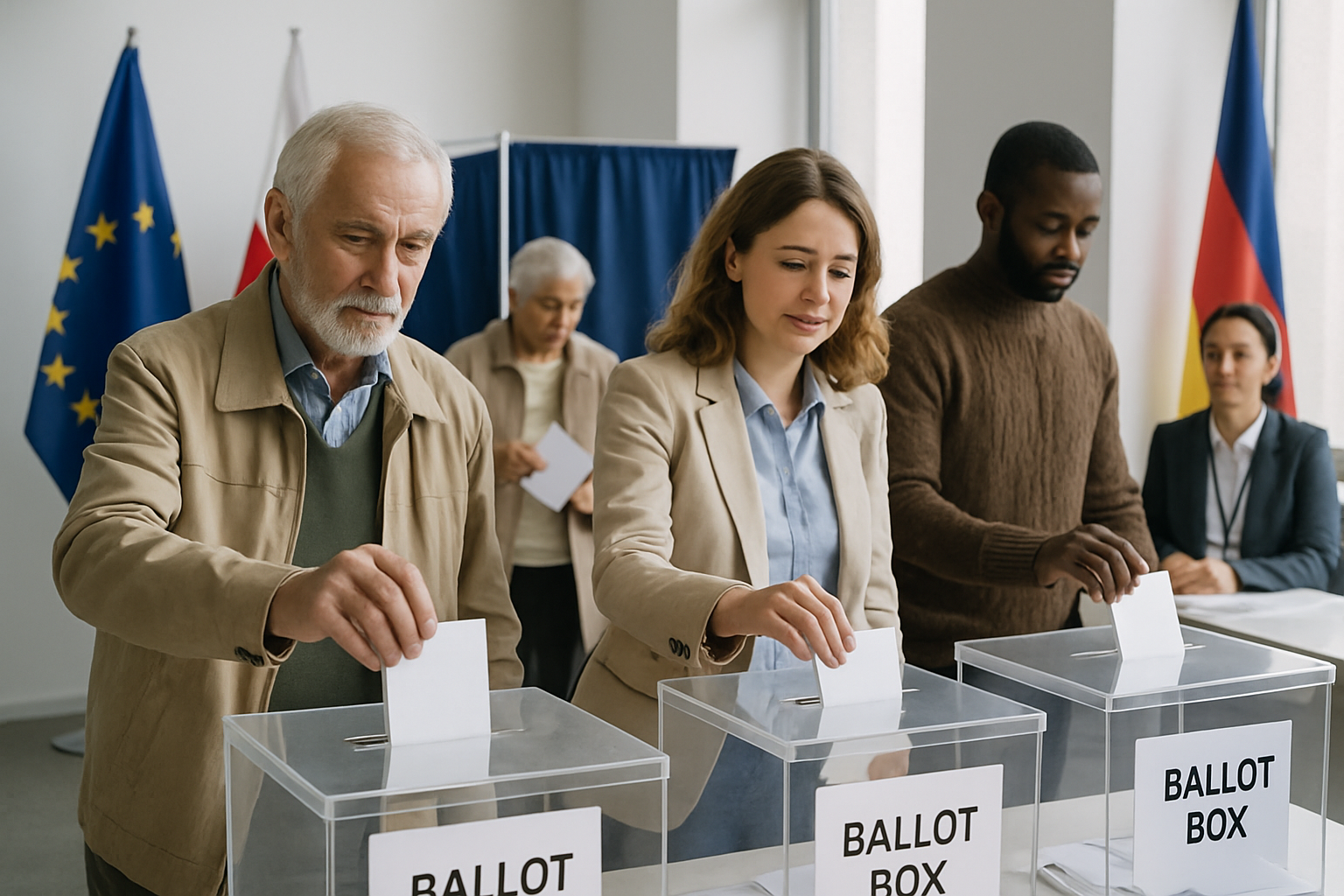
Municipal elections across Europe are experiencing dramatically different participation patterns, with Netherlands facing historically low turnout concerns while French cities see unprecedented far-right breakthroughs following February's political violence in Lyon.
The Netherlands conducted municipal elections on March 18, 2026, with early results showing a stark divide in voter engagement across major cities. Utrecht and Groningen emerged as standout examples of civic participation, recording the highest early turnout rates in the country. However, this localized enthusiasm contrasts sharply with national concerns about what experts fear could be historically low overall participation.
Weather conditions provided some optimism for Dutch electoral officials, with sunny, warm conditions throughout the day potentially encouraging voters who might otherwise have stayed home. The Netherlands has experienced declining municipal election turnout over successive electoral cycles, reflecting broader patterns of voter fatigue and disconnection from local governance issues.
French Elections: Violence Shadows Democratic Process
Meanwhile, France's municipal elections have been overshadowed by the tragic death of Quentin Deranque in Lyon in February 2026, which has fundamentally altered the political landscape. The incident, resulting in charges against seven individuals including La France Insoumise parliamentary assistant Jacques-Elie Favrot, has contributed to significant fragmentation within France's left-wing political movements.
Marine Le Pen's National Rally has capitalized on the Lyon violence to advance what political analysts describe as "authoritarian innovation" - a sophisticated evolution from traditional rural populism to urban campaigning strategies. This tactical shift has enabled unprecedented far-right competitiveness in historically progressive strongholds, fundamentally challenging France's traditional political alignments.
"The absence of withdrawal or coalition agreements in about fifteen cities, including several prefectures, confirms the far-right's chances of victory in the second round of municipal elections."
— Le Monde Analysis, March 18, 2026
The French Interior Ministry's controversial reclassification of La France Insoumise from "left" to "extreme left" has triggered Council of State legal challenges, raising fundamental questions about administrative neutrality in democratic processes. This bureaucratic maneuver has been characterized by critics as unprecedented manipulation of electoral classifications for political advantage.
Broader European Context: Democracy Under Pressure
These electoral developments occur within what European observers describe as the most challenging period for continental democracy since World War II. Recent polling shows that 89% of Europeans demand greater EU unity, yet political reality demonstrates increasing fragmentation and sovereignty assertions across member states.
The contrast between Dutch voter apathy and French political volatility illustrates the diverse pressures facing European democratic institutions. While Netherlands grapples with declining civic engagement despite robust democratic traditions, France confronts active political violence and institutional manipulation that threaten electoral integrity.
Sweden's recent historic cooperation between Liberal Party and Sweden Democrats, Germany's AfD breakthrough in Baden-Württemberg, and Spain's Vox surge in Aragón demonstrate continent-wide patterns of political realignment that extend far beyond municipal contests.
Institutional Resilience and Democratic Innovation
Despite these challenges, European democratic institutions continue demonstrating adaptive capacity. The Netherlands has maintained election security and procedural integrity despite turnout concerns. France has successfully conducted elections despite heightened security threats and political tensions following the Lyon incident.
Innovation in democratic participation includes the Netherlands' overnight polling stations targeting youth engagement, which reported "good turnout with hundreds of votes cast." Such initiatives represent creative approaches to addressing generational disconnection from traditional electoral processes.
The Haaksbergen municipality's implementation of a dual-ballot system - combining municipal council elections with an advisory referendum on asylum seeker center conditions - demonstrates local community engagement with complex policy issues through democratic mechanisms.
Implications for 2027 Presidential Preview
French municipal results serve as a crucial preview for the 2027 presidential election, with President Macron constitutionally barred from seeking a third term. National Rally's urban breakthrough strategy, if successful, would provide governing experience and credibility for Marine Le Pen's presidential ambitions, pending her July 2026 appeals court ruling on potential public office disqualification.
The Socialist Party's "definitive break" with La France Insoumise over democratic values following the Lyon violence creates new dynamics for traditional left-wing coalition building. Meanwhile, Les Républicans under Bruno Retailleau face mixed municipal performance that may complicate presidential positioning.
March 22 second-round voting in French municipalities will determine final outcomes and provide additional insights into alliance patterns crucial for national political calculations ahead of 2027.
European Template for Democratic Resilience
The March 2026 municipal elections establish important precedents for managing political extremism through electoral rather than extra-legal means. International observers are monitoring these contests as bellwethers for democratic institutions' capacity to channel political tensions into constructive governance mechanisms.
Success in conducting free and fair elections despite security concerns, political violence, and institutional pressures provides templates for other European nations facing similar challenges. The institutional response to the Lyon violence - through legal prosecutions rather than electoral suspensions - demonstrates democratic systems' ability to maintain procedural integrity while addressing political criminality.
However, the varying turnout patterns between Netherlands and France highlight ongoing challenges in maintaining citizen engagement with democratic processes. While institutional procedures remain robust, the disconnect between public aspirations for European unity and actual political fragmentation suggests deeper structural issues requiring sustained attention.