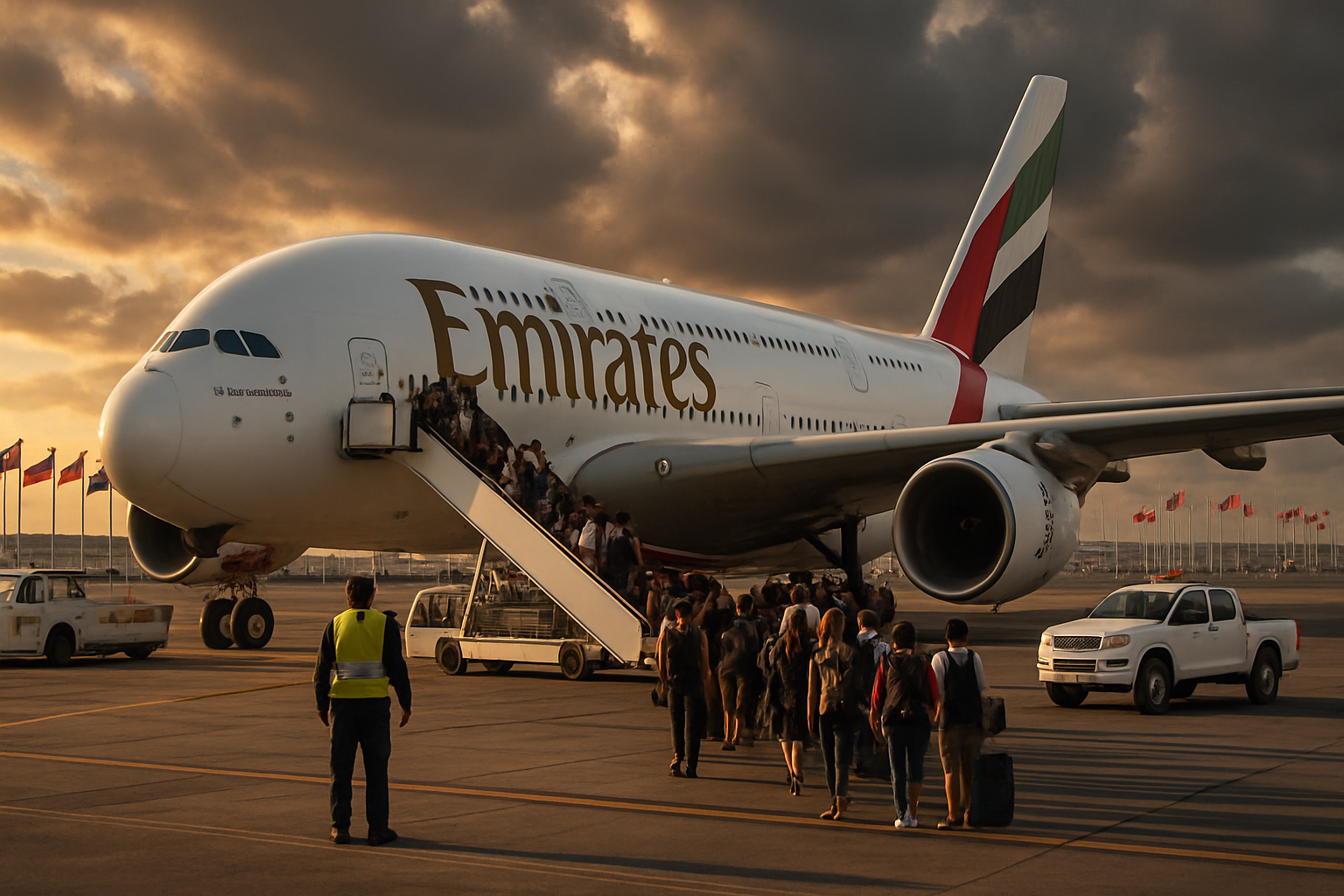
Multiple European nations have successfully completed emergency evacuation operations from the Middle East, repatriating over 2,000 citizens in what officials are calling the largest coordinated European evacuation effort since the Arab Spring of 2011.
The evacuations represent a historic milestone in European crisis management, with Cyprus activating its ESTIA evacuation plan for the first time in the nation's history—a watershed moment that demonstrates the EU's enhanced capacity for coordinated international emergency response.
Nordic Leadership in Crisis Response
Scandinavian countries have emerged as leaders in the evacuation efforts, with Denmark, Finland, and Norway conducting multiple successful repatriation flights. According to official sources, Denmark's Foreign Ministry organized special aircraft that successfully landed in Copenhagen from Dubai, carrying 155 Danish nationals to safety.
Finland's Foreign Ministry coordinated evacuation flights from Oman that landed at Helsinki-Vantaa Airport early Monday morning, with evacuees expressing relief at returning home safely. "It's really nice to be here," one returning citizen told local media upon arrival.
Norway's government confirmed that aircraft carrying Norwegian nationals from Oman had successfully landed, with the Foreign Ministry announcing the completion of operations just after midnight on Monday. Portuguese authorities also confirmed that 61 passengers arrived safely from Saudi Arabia in the early morning hours.
Cyprus ESTIA Plan: A European First
The activation of Cyprus's ESTIA (Emergency Support Through Integrated Assistance) evacuation plan marks a pivotal moment in European Union crisis management capabilities. This represents the first-time implementation of the comprehensive framework designed to coordinate the evacuation of EU nationals and third-country citizens during international emergencies.
Foreign Minister Constantinos Kombos coordinated emergency sessions with EU partners, successfully extracting over 2,000 registered nationals from the UAE through coordinated charter flights with British authorities. The operation demonstrated unprecedented levels of European solidarity and coordination during a volatile international crisis.
Aviation Crisis Creates Unprecedented Challenges
The evacuations are taking place against the backdrop of the most severe aviation crisis since the COVID-19 pandemic. Over 18,000 flights have been cancelled worldwide, with eight Middle Eastern countries simultaneously closing their airspace—Iran, Iraq, Israel, UAE, Qatar, Syria, Kuwait, and Bahrain.
Dubai International Airport, the world's busiest with over 86 million passengers annually, remains completely shut down due to missile damage, eliminating a critical Europe-Asia transportation hub. Major carriers including Emirates, Air France-KLM, Wizz Air, and Bulgaria Air have suspended Middle East operations indefinitely, affecting hundreds of thousands of passengers globally.
Energy Security Implications
Parallel to the humanitarian crisis, global energy markets have experienced severe disruption. Oil prices have surged over 10% past $80 per barrel as Iran declared the Strait of Hormuz—through which 40% of global oil transits—"unsafe" for shipping operations.
Natural gas prices have increased by 24% in Europe and 78% in the United States, while major shipping companies Maersk and MSC have suspended operations with over 150 tankers stranded in the Persian Gulf, representing billions of dollars in stranded cargo.
Diplomatic Context and International Response
The evacuation crisis stems from the complete breakdown of US-Iran nuclear negotiations, despite achieving a "broad agreement on guiding principles"—the most significant progress since the JCPOA collapse in 2018. The diplomatic impasse over Iran's ballistic missiles and proxy forces ultimately led to the largest coordinated military operation in the Middle East since 2003.
The international community has responded with emergency UN Security Council sessions, while multiple European governments have issued comprehensive travel warnings and activated emergency protocols. The crisis represents the most significant test of multilateral cooperation and crisis management in the modern era.
Individual Stories of Resilience
Behind the statistics lie personal stories of resilience and international solidarity. Estonian tourists expressed relief upon arriving in Tallinn after a week of uncertainty, while other European citizens described the professional coordination and support they received from their governments during the evacuation process.
The human cost of the crisis extends beyond inconvenience—one Swedish traveler reportedly paid 6,000 kronor ($560) for alternative routing from Paris to Australia, demonstrating the extreme measures and costs citizens faced to reach safety.
Template for Future Crisis Management
The successful completion of European evacuation operations provides a valuable template for 21st-century crisis management. The coordination demonstrated between member states, the sharing of evacuation schedules and resources, and the activation of prepared frameworks like Cyprus's ESTIA plan represent enhanced European crisis capabilities that could serve as models for future international emergencies.
Unlike weather-related disruptions with predictable timelines, the current crisis depends entirely on military operations resolution and diplomatic normalization. This uncertainty has forced a fundamental reconsideration of route planning, risk assessment, and international cooperation frameworks in an increasingly volatile geopolitical environment.
Long-term Implications
The crisis has exposed fundamental vulnerabilities in global transportation networks, particularly the over-dependence on Middle Eastern hubs for Europe-Asia connectivity. With Russian and Ukrainian airspace already closed due to the ongoing conflict, the additional closure of Middle Eastern routes has created unprecedented challenges for international aviation.
This situation is expected to accelerate discussions about route diversification, enhanced contingency planning, and reduced dependency on single regional hubs for critical international connectivity.
As European nations conclude their evacuation operations, the international community faces ongoing challenges in managing the broader regional crisis. The successful repatriation of European citizens demonstrates the strength of international cooperation mechanisms while highlighting the need for continued diplomatic efforts to address the underlying conflict.
The template-setting nature of these operations will likely influence international emergency response protocols for years to come, providing a framework for civilian protection in an increasingly volatile multipolar world.