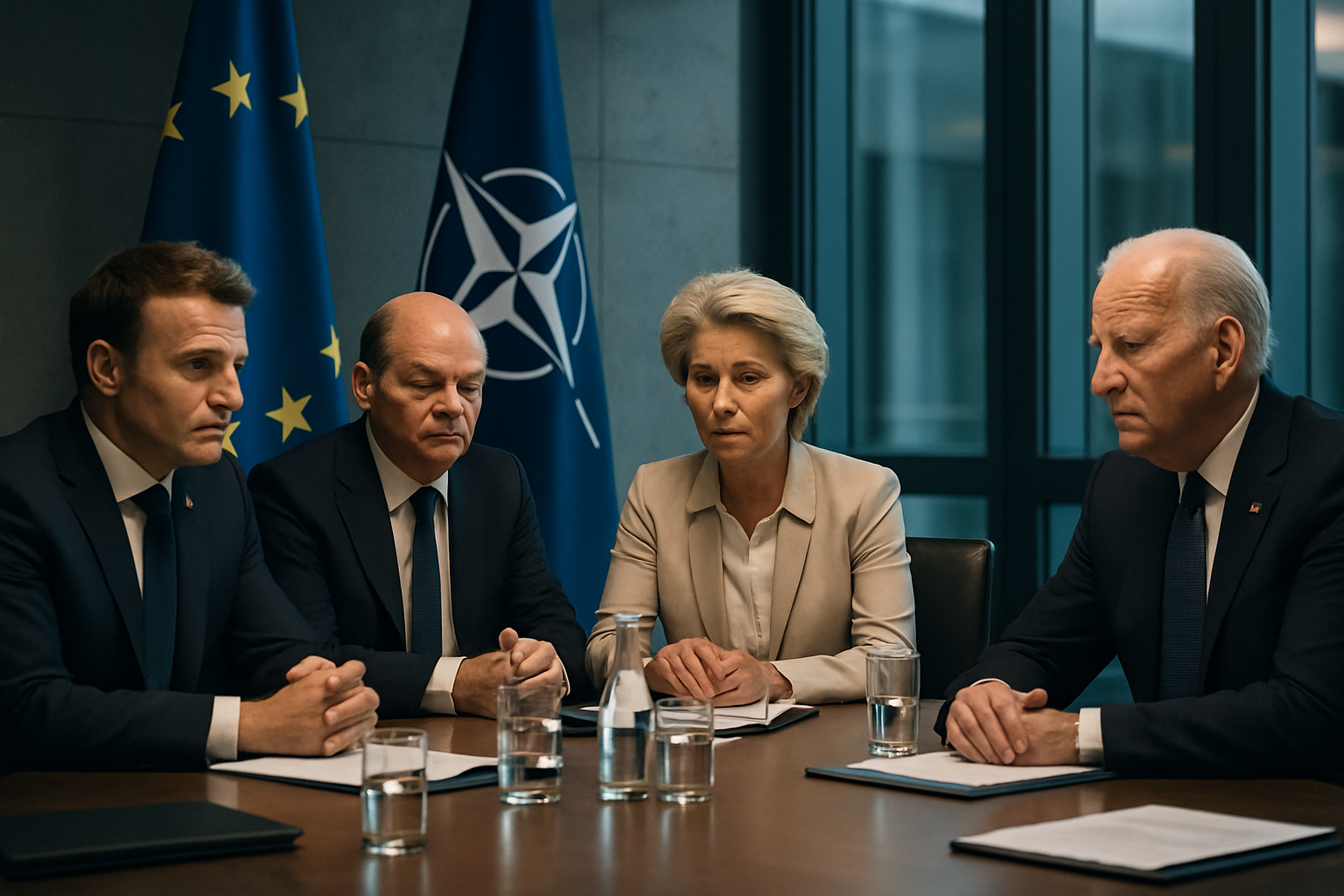
European allies are quietly exploring closer nuclear deterrence ties with France amid mounting concerns about the long-term reliability of U.S. security guarantees, marking the first serious discussions about alternative nuclear arrangements since the end of the Cold War.
German Chancellor Friedrich Merz confirmed Friday that he is in direct talks with French President Emmanuel Macron about nuclear deterrence cooperation, representing a dramatic shift in European strategic thinking. The discussions come as European leaders express unprecedented doubts about American commitment to NATO's Article 5 collective defense provision under the current U.S. administration.
According to multiple sources familiar with the discussions, Germany and Poland have acknowledged early-stage talks with Paris about expanding France's nuclear deterrent role. Finland has also been identified as participating in preliminary conversations about European nuclear cooperation frameworks, though Helsinki maintains strict confidentiality about its nuclear policy details.
French Nuclear Deterrent Opens Dialogue
President Macron has opened the door to what officials describe as "strategic dialogue" on nuclear deterrence, though he has stopped short of offering a formal nuclear umbrella to European partners. The French position represents a carefully calibrated approach that acknowledges European security concerns while maintaining France's traditional nuclear independence.
Sources indicate that French officials have been conducting discrete consultations with European counterparts following the Munich Security Conference, where European strategic autonomy emerged as a dominant theme. The conversations mark the first time since the Cold War's end that European capitals are seriously exploring nuclear deterrent capabilities beyond the existing NATO framework.
The French nuclear force, while considerably smaller than those of the United States or Russia, consists of approximately 290 nuclear warheads deployed across submarine-launched ballistic missiles and air-launched cruise missiles. This arsenal has historically been viewed as insufficient to provide extended deterrence for multiple European nations, though French strategic planners are reportedly reassessing these calculations.
Transatlantic Relations Under Strain
These discussions occur against the backdrop of severely strained transatlantic relations, particularly following controversial statements from U.S. officials that have raised questions about American reliability. European officials privately describe the current period as representing the deepest crisis in alliance solidarity since NATO's founding.
The nuclear deterrent conversations gained momentum following the Munich Security Conference, where European leaders emphasized the need for "strategic autonomy" and reduced dependence on American security guarantees. Chancellor Merz's public acknowledgment of nuclear discussions with Macron represents an unprecedented departure from traditional European reluctance to discuss nuclear arrangements openly.
German officials stress that these conversations do not represent an attempt to withdraw from NATO but rather to develop additional security options. However, the very existence of such discussions signals European recognition that alternative arrangements may become necessary if American commitment continues to waver.
Technical and Political Challenges
Expanding French nuclear deterrence to cover additional European nations would present significant technical, legal, and political challenges. Unlike the U.S. nuclear umbrella, which has been formalized through decades of treaty arrangements and military integration, any European nuclear cooperation would require entirely new frameworks.
Nuclear experts note that France's current arsenal, while modern and capable, was designed primarily for national deterrence rather than extended deterrence across multiple countries. Expanding this mission would likely require significant modifications to French nuclear doctrine and potentially additional weapons systems.
The legal complexities are equally daunting. Any formal nuclear guarantee arrangement would require parliamentary approval in participating countries and would need to comply with existing NATO commitments and international non-proliferation treaties. French constitutional law also presents obstacles, as nuclear decision-making authority rests exclusively with the president.
Finnish Participation Signals Broader Interest
Finland's involvement in these discussions is particularly significant given its recent NATO membership and shared border with Russia. Finnish officials have maintained strict confidentiality about their nuclear policy positions, but sources confirm Helsinki's participation in preliminary European nuclear deterrent conversations.
Finnish security analysts note that their country's strategic position makes nuclear deterrence particularly relevant. The 830-mile Finnish-Russian border represents NATO's longest frontier with Russia, making Finland especially vulnerable to nuclear coercion. Traditional reliance on U.S. extended deterrence may prove insufficient given geographical and political realities.
European security experts suggest that Finnish interest reflects broader Nordic concerns about American reliability. Sweden, despite its recent NATO membership, has historically maintained policies that could accommodate alternative security arrangements if transatlantic relations continue deteriorating.
Strategic Implications for European Security
The emergence of European nuclear deterrent discussions represents a fundamental shift in post-Cold War security architecture. For decades, European nations have relied almost exclusively on American nuclear guarantees, with France maintaining its independent deterrent primarily for national purposes.
These conversations occur amid multiple security crises that highlight European vulnerability. The ongoing conflict in Ukraine, aggressive Russian behavior in the Baltic region, and concerns about Chinese military expansion have combined to create what European officials describe as the most challenging security environment since the 1960s.
NATO's nuclear deterrence has traditionally rested on American and British nuclear forces, with France maintaining its independent capability outside formal alliance structures. The prospect of European nations turning to France for additional deterrent arrangements would represent the most significant change in Western nuclear arrangements since NATO's founding.
Regional Response and Alliance Dynamics
The discussions have generated mixed responses across Europe. Eastern European nations, particularly those with direct Russian threats, express strong interest in any additional deterrent arrangements. However, some allies worry that pursuing alternatives to American nuclear guarantees could become self-fulfilling prophecies that weaken transatlantic bonds.
British officials have remained largely silent on the European nuclear discussions, though London's post-Brexit position complicates its role in continental European security arrangements. The UK's own independent nuclear deterrent could theoretically provide similar extended deterrence, but political and practical obstacles make such arrangements unlikely.
Russian officials have predictably condemned any expansion of nuclear deterrent arrangements, characterizing such discussions as "escalatory" and threatening unspecified countermeasures. Moscow's response suggests recognition that alternative European nuclear arrangements could significantly complicate Russian strategic planning.
Future Trajectory and Implementation Challenges
European officials emphasize that these discussions remain in very preliminary stages and may not result in formal agreements. The technical, legal, and political obstacles to implementing alternative nuclear arrangements are formidable and could prove insurmountable.
However, the very fact that such conversations are occurring openly represents a watershed moment in European strategic thinking. For the first time since NATO's establishment, European leaders are seriously considering nuclear deterrence arrangements that do not depend primarily on American guarantees.
The timeline for any potential agreements remains unclear. French officials suggest that even preliminary frameworks would require years to develop and implement. More immediate concerns focus on maintaining existing alliance structures while developing contingency options for potential future scenarios.
Implications for Global Nuclear Order
The European nuclear deterrent discussions occur within a broader context of global nuclear governance challenges. The recent expiration of the New START Treaty between the United States and Russia has created the first gap in bilateral nuclear arms control in over 50 years, while China's nuclear expansion complicates traditional deterrence calculations.
Arms control experts worry that any proliferation of nuclear deterrent arrangements, even among close allies, could undermine global non-proliferation efforts. However, European officials argue that such arrangements would represent burden-sharing rather than proliferation, as no new nuclear weapons would be created.
The discussions also reflect broader questions about alliance credibility in an era of changing global power dynamics. As traditional security arrangements face unprecedented strains, allies are increasingly exploring alternative arrangements that could preserve deterrent effects while reducing dependence on potentially unreliable partners.
Whether these preliminary discussions will evolve into concrete nuclear cooperation arrangements remains uncertain. However, their emergence signals a fundamental shift in European strategic thinking that could reshape continental security architecture for decades to come. The success or failure of these initiatives may ultimately determine whether European nations can maintain effective deterrence in an increasingly unpredictable global security environment.