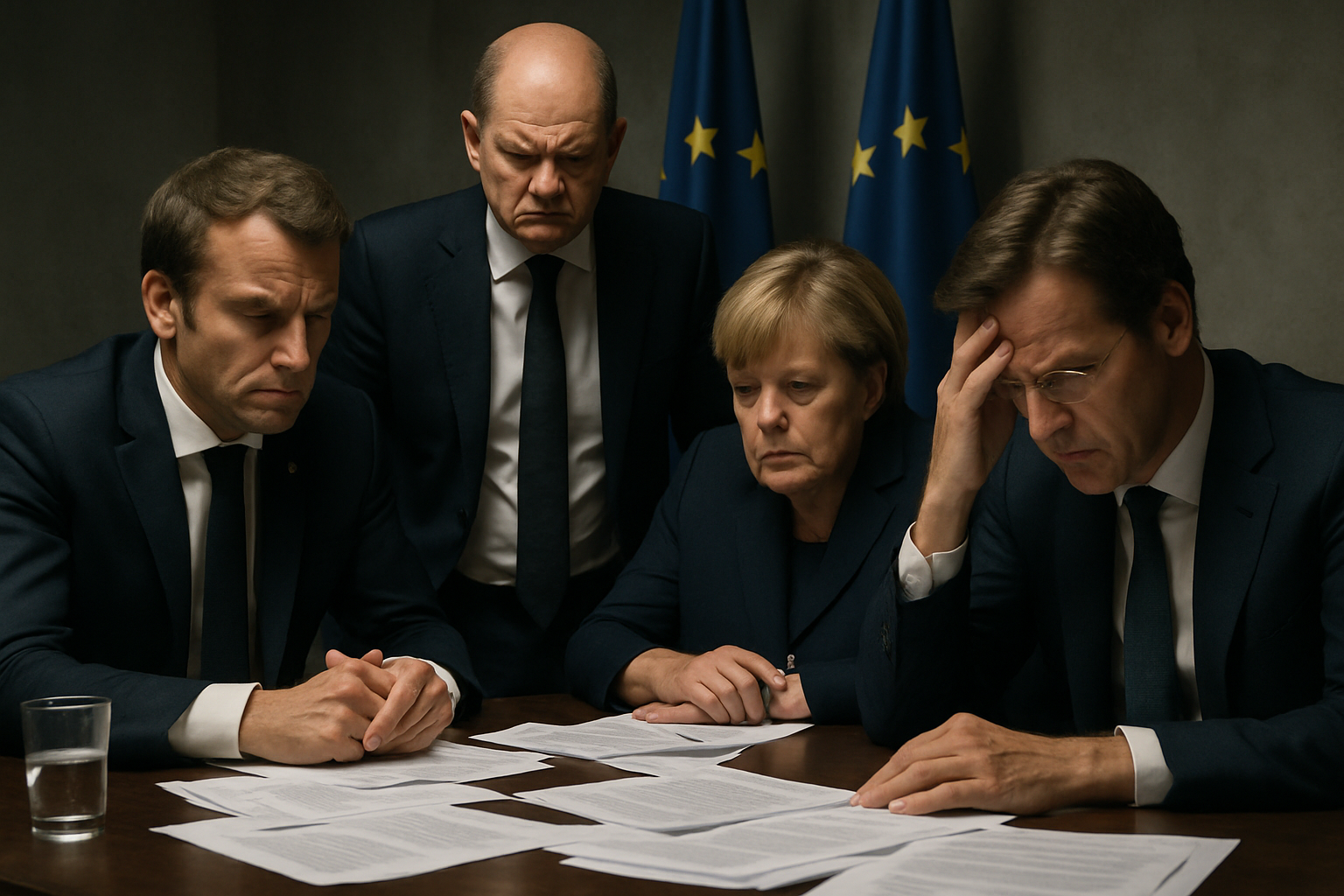
Europe faces its most severe political crisis since World War II, with Hungary on the brink of historic elections amid explosive pipeline sabotage allegations, Germany implementing major military reforms, and multiple nations experiencing coalition instability that threatens the continent's democratic foundations.
Hungary's Electoral Crossroads
The discovery of sophisticated explosive devices near the Balkan Stream pipeline in Serbia has sent shockwaves through Hungarian politics just days before the crucial April 12 parliamentary elections. Serbian President Aleksandar Vučić announced the finding of "devastating force" explosives near the village of Velebit, close to the Hungarian border, targeting critical Russian gas infrastructure.
For Viktor Orbán, Hungary's embattled Prime Minister, the timing could not be more critical. For the first time since 2010, his Fidesz party trails opposition coalitions in polling, with Péter Magyar's Tisza Party organizing the largest opposition demonstration in over a decade - 500,000 participants in what they called the "Greatest National March."
"Ukraine has nothing to do with this incident. This is most likely a Russian operation under false flag as part of Moscow's large-scale interference in Hungary's elections."
— Heorhii Tykhyi, Ukrainian Foreign Ministry Spokesperson
The pipeline incident has become a flashpoint in Hungary's relationship with the European Union. Orbán continues to block the EU's historic €90 billion Ukraine aid package over the ongoing Druzhba pipeline crisis, leading Lithuanian Foreign Minister Kestutis Budrys to warn that "the EU cannot become Budapest's hostage."
Germany's Military Modernization Challenge
While Hungary grapples with electoral uncertainty, Germany faces its own institutional challenges as it modernizes its military for contemporary threats. Brigadier General Stephan Willer, speaking about training Generation Z officers at the Army Officer School, noted that young soldiers now view their profession with unprecedented seriousness.
"The soldiers look at our profession more existentially," Willer explained, describing how 18-year-olds filling out military questionnaires now understand the gravity of their commitment in ways previous generations might not have.
The German military's challenges reflect broader European concerns about defense readiness. The Bundeswehr faces recruitment difficulties while implementing new regulations requiring young men to seek approval for extended foreign travel - a measure that has sparked debate about the balance between security needs and personal freedoms.
Widespread Political Instability
The crisis extends far beyond Hungary and Germany. In Bulgaria, President Rumen Radev has refused to participate in leadership debates with the Progressive Bulgaria party, stating he will not debate with people "who lie and manipulate." This comes as the country prepares for elections amid growing political fragmentation.
Greece is experiencing its own political upheaval, with MP Katerina Papakosta announcing she will not participate in upcoming elections and requesting the lifting of her parliamentary immunity amid corruption allegations related to the OPEKEPE agricultural agency. Recent polling shows significant erosion in support for the ruling New Democracy party, with 74% of Greeks stating that "the government does not understand their concerns and needs."
Romania faces governance challenges as political parties navigate between EU fiscal requirements and domestic spending pressures. The ongoing crisis has exposed fundamental disagreements within ruling coalitions across multiple European capitals.
Foreign Interference and Democratic Resilience
Intelligence sources have confirmed Russian interference operations in Budapest supporting Orbán's Fidesz party, representing the first concrete evidence of Kremlin operatives actively participating in European electoral campaigns. This foreign interference combines with American political backing - including Trump administration endorsements and diplomatic visits by Marco Rubio - creating an unprecedented international dimension to domestic European politics.
France 24 expert Dr. Marc Roscoe Loustau observed that "next to Viktor Orbán, the person who stands to lose the most in case of a Fidesz party loss is Vladimir Putin," highlighting the geopolitical stakes of Hungary's election outcome.
Despite these challenges, European institutions have demonstrated fundamental resilience. The European Parliament has approved the €90 billion Ukraine aid package with a strong majority (458-140-44), and discussions of enhanced cooperation mechanisms to bypass Hungarian vetoes show the EU's capacity for institutional adaptation.
The Swedish Exception and Nordic Realignment
Sweden provides a stark example of how political norms are shifting across the continent. The Liberal Party's abandonment of decades-long opposition to cooperation with the Sweden Democrats marks the most significant Swedish political realignment since the Social Democratic establishment. This development breaks the Nordic consensus of marginalizing extremist movements and reflects broader patterns of "authoritarian innovation" - sophisticated far-right movements operating within democratic systems while gradually eroding liberal norms.
Energy Security and Geopolitical Vulnerabilities
The pipeline incidents highlight Europe's continued vulnerability to energy disruption. The Balkan Stream carries 15.75 billion cubic meters of gas annually through the Turkey-Bulgaria-Serbia-Hungary route, making it a critical component of Central European energy security. Enhanced security protocols have been implemented along the entire pipeline route, with increased military patrols and surveillance.
These vulnerabilities are particularly acute for Hungary and Slovakia, the only EU countries still dependent on Russian oil under special exemptions. Alternative routes, including Croatian Mediterranean alternatives and Ukrainian Odessa-Brody proposals, would require months or years to implement, leaving both countries exposed to supply disruptions.
Democratic Institutions Under Pressure
According to the latest Eurobarometer polling, 89% of Europeans demand greater EU unity, yet political reality shows increasing fragmentation. Traditional coalition mathematics are breaking down across the continent, making stable governance increasingly difficult.
The crisis tests fundamental questions about European integration capacity during multiple simultaneous challenges. As one senior EU official noted, Europe is "writing the template for 21st-century crisis management, with the world watching whether democratic institutions can adapt while preserving European values."
Looking Ahead: April 12 and Beyond
Hungary's April 12 elections represent more than a domestic political contest - they will determine whether the EU can maintain unity in the face of internal opposition and external pressure. An opposition victory would likely restore Hungarian alignment with EU policies and remove one of Brussels' most persistent internal critics. An Orbán victory, especially one achieved with documented foreign interference, could embolden similar operations continent-wide and further strain European institutions.
The broader implications extend to European security architecture, international law enforcement, and the credibility of democratic governance in an era of great power competition. Success in channeling political tensions through electoral competition while preserving institutional integrity would strengthen the European model globally. Failure could accelerate fragmentation and undermine the foundational cooperation principles that have underpinned European success since 1945.
As Europe navigates this unprecedented period of democratic stress, the coming weeks will prove decisive not just for individual nations, but for the future trajectory of the European project itself. The stakes could not be higher - both for Europe and for the global precedent it sets for democratic resilience in the 21st century.