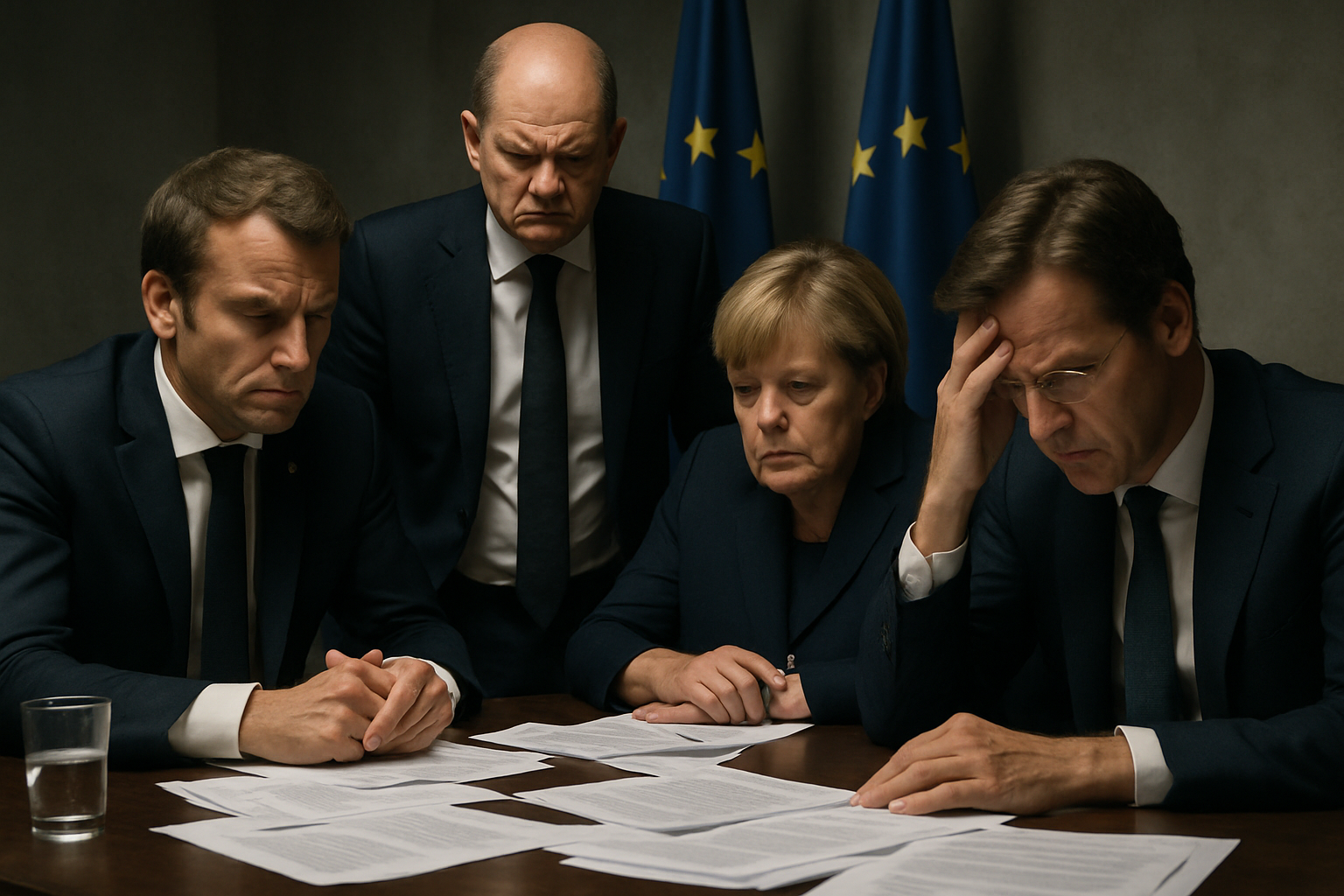
European political institutions are experiencing unprecedented strain as multiple member states grapple with coalition crises, presidential succession questions, and the continuing challenge of containing far-right movements within democratic frameworks.
From Austria's speculation about its first female president to Spain's deteriorating coalition negotiations, April 2026 has emerged as a critical juncture for European democracy, with traditional political arrangements under severe pressure across the continent.
Austria's Historic Presidential Possibilities
Austria stands on the brink of potentially electing its first female federal president, with political parties engaged in intense deliberations over candidates. The speculation centers on prominent figures including Beate Meinl-Reisinger and Alma Zadić, representing what observers describe as "surprising variants" in Austrian presidential politics.
This development comes as Austria's political landscape continues to evolve following the consolidation of SPÖ leadership under Andreas Babler, who secured an overwhelming 81.51% mandate from delegates in March. The potential for a female president would mark a historic moment for the Alpine republic, which has been governed exclusively by male presidents since its establishment as a modern democracy.
Spanish Coalition Dynamics Deteriorate
Spain's governing coalition faces mounting tensions as negotiations between the Popular Party (PP) and Vox reach a critical impasse. Alberto Núñez Feijóo, leader of the PP, has delivered an unprecedented "ya está bien" (enough is enough) ultimatum to Vox leader Santiago Abascal, demanding immediate resolution of regional government agreements in Extremadura, Aragón, and Castilla y León.
The tensions have escalated following Vox's enhanced negotiating position after recent electoral gains, with the far-right party demanding four key ministries plus the vice-presidency in several regions. This development reflects broader European challenges in managing coalition arrangements with far-right parties that have gained significant electoral ground.
"The relationship between Feijóo and Abascal has reached a breaking point over regional coalition arrangements."
— Spanish Political Analyst
German Political System Under Stress
Germany continues to grapple with the aftermath of the CSU mask affair, as former politician Alfred Sauter speaks out about his role during the COVID-19 pandemic and his deteriorated relationship with Bavarian leader Markus Söder. Sauter's comments highlight ongoing tensions within the Christian Social Union about accountability and leadership during crisis periods.
The mask procurement controversy has become emblematic of broader questions about political responsibility and transparency in German governance, particularly as the country faces upcoming electoral challenges and coalition management difficulties at both federal and state levels.
Romania's Governance Crisis Deepens
Romanian political analysts warn that the Social Democratic Party (PSD) may be preparing to exit the governing coalition, despite electoral preferences suggesting voters oppose such a move. Political commentator Florin Negruțiu argues that the crisis isn't about "our austerity, but their austerity," referring to efforts by Prime Minister Ilie Bolojan to restrict financial flows to local power brokers.
Claudiu Pândaru adds a crucial observation: "The paradox is that PSD voters don't want to exit governance, but the leaders are preparing it. Not for voters, but for interests within the system." This analysis reveals the disconnect between public preferences and internal party calculations that has become characteristic of contemporary European politics.
Hungary's Opposition Momentum
Meanwhile, Hungarian politics shows signs of potential transformation as social researchers predict an "landslide victory for Hungary's opposition wouldn't surprise" them, based on social media analysis of user expressions about opposition leader Péter Magyar. This development occurs as Viktor Orbán faces his most serious electoral challenge in over a decade.
Serbia's Democratic Resistance
In Serbia, political fragmentation continues as the New Democratic Party of Serbia (New DSS) and the Movement for the Kingdom of Serbia (Monarchists) announced they will not participate in consultations with President Aleksandar Vučić. This decision reflects broader opposition strategies of non-cooperation with what they view as illegitimate political processes.
Broader European Context
These developments occur within what observers have characterized as "the most challenging period for continental democracy since World War II." According to recent Eurobarometer polling, 89% of Europeans demand greater EU unity, yet the political reality demonstrates increasing fragmentation and sovereignty assertions across member states.
The pattern of "authoritarian innovation" continues to manifest across Europe, with far-right movements demonstrating sophisticated electoral strategies that work within democratic systems while gradually eroding liberal norms. This approach differs from historical extremism by using electoral politics rather than revolutionary violence to achieve political transformation.
Democratic Resilience Under Test
Despite unprecedented challenges, European democratic institutions continue to demonstrate fundamental resilience. Elections proceed with high democratic standards, constitutional governance is maintained, and peaceful political transitions continue even amid significant pressure and polarization.
The success or failure of European democracies in managing these current tensions will establish crucial precedents for 21st-century democratic governance under pressure. International observers are monitoring developments closely, as the European experience could provide templates for other democracies facing similar challenges globally.
Stakes for European Integration
The outcome of these political crises carries implications far beyond individual national borders. European integration, international cooperation frameworks, and democratic governance credibility in an increasingly multipolar world all hang in the balance.
Whether Europe can successfully navigate this period of political stress while strengthening democratic institutions will determine the continent's trajectory for decades to come. The current moment represents both a critical test of institutional resilience and an opportunity for democratic innovation in response to 21st-century challenges.
As one senior EU official recently observed: "Europe is writing the template for 21st-century crisis management, with the world watching how institutional adaptation can preserve values while enabling effective governance in a complex global environment."