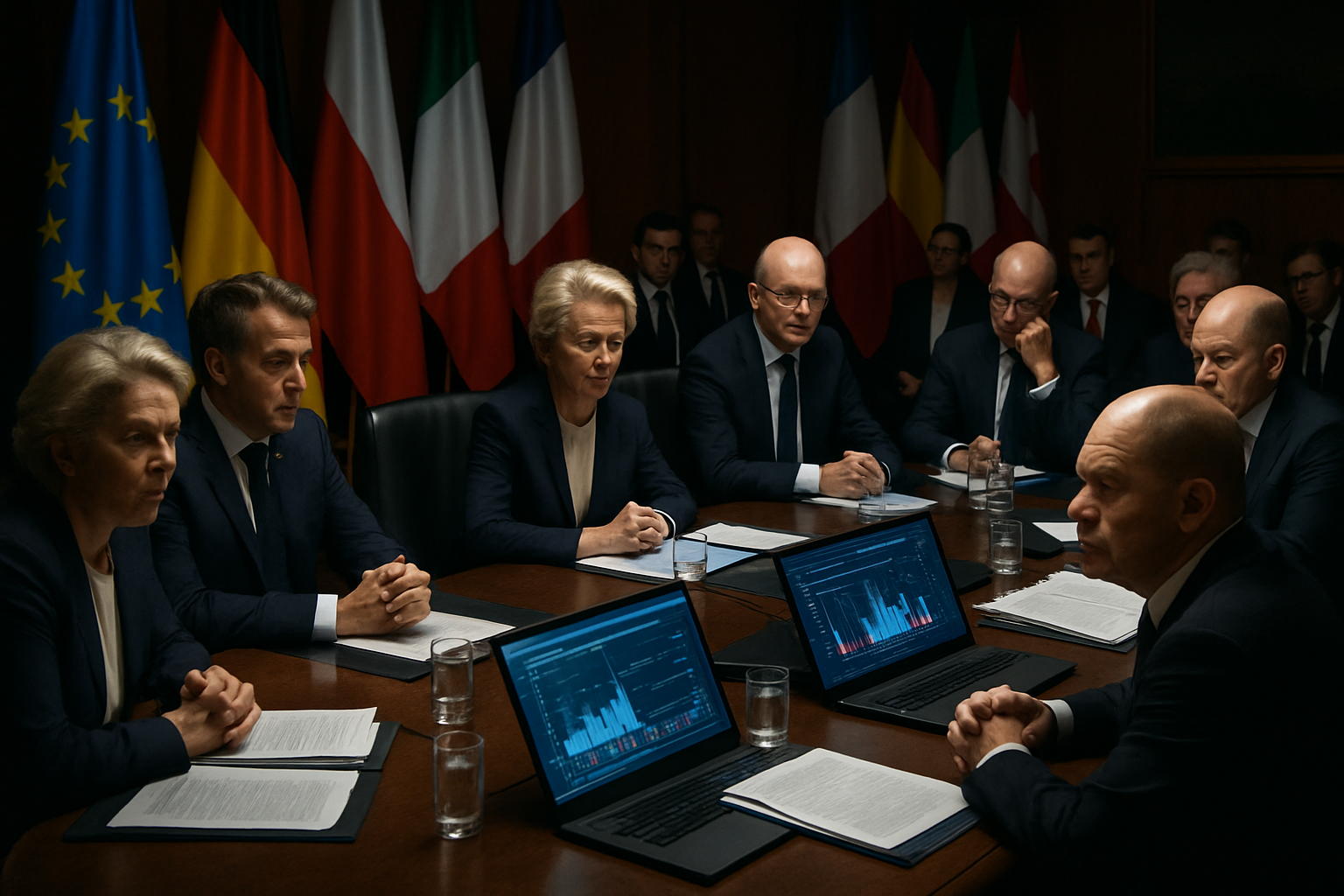
Europe is experiencing a wave of significant political developments across multiple nations, from government resignations in Bosnia and Herzegovina to high-profile judicial cases in Slovakia, highlighting the complex challenges facing democratic institutions across the continent in March 2026.
Bosnia and Herzegovina Government Crisis
The political landscape in Bosnia and Herzegovina dramatically shifted on March 6, when the Assembly of Kantonal Sarajevo accepted the resignation of Premier Nihad Uk and his entire government by a decisive vote of 29 in favor, with no abstentions or opposing votes. The resignation followed extensive parliamentary debate about the tragic tram accident that claimed the life of young Erdoan Morankić, which Uk cited as his motivation for stepping down as an act of "moral responsibility."
The dramatic session unfolded over several hours, with opposition parties—including the SDA, Party for Bosnia and Herzegovina, and the Democratic Front—holding a press conference during the proceedings to criticize the resignation as essentially "a farce." Opposition leaders emphasized that their goal was to ensure the outgoing government remains in a caretaker capacity until new elections, expressing particular concerns about the problems plaguing GRAS, the public transport company that had received significant investment from the ruling coalition.
Under procedural rules, the government now operates in a technical mandate, continuing to function until a new administration is elected. This development represents a significant shift in the political dynamics of the Sarajevo Canton, one of the most important administrative divisions in the Federation of Bosnia and Herzegovina.
French Political Realignments
Meanwhile, in France, political alliances are undergoing significant changes ahead of upcoming electoral cycles. The outgoing mayor of Montluçon, Frédéric Laporte from Les Républicains, found his political support dramatically altered when Emmanuel Macron's Renaissance party withdrew its backing. The withdrawal came after Laporte secured simultaneous support from both Eric Zemmour's Reconquête party and the traditional center-right coalition.
Renaissance party officials cited their policy of maintaining "no agreements or links with extremes" as justification for the withdrawal, subsequently suspending the member who appeared on Laporte's electoral list alongside a Reconquête candidate. This development reflects the ongoing challenges facing French centrist politics in navigating relationships with parties on both ends of the political spectrum.
The situation in Montluçon exemplifies broader tensions within the French political system as traditional party boundaries become increasingly fluid, forcing politicians and parties to make difficult choices about coalition building and ideological consistency.
Judicial Independence Under Scrutiny
Slovakia has become the latest European nation to grapple with questions of judicial independence and legal procedure. A significant judicial controversy emerged when Prosecutor's Office representatives filed a detention motion with what judicial authorities deemed to be the incorrect court. The case involves Ján Čurilla and Pavol Ďurka, who were ultimately released after a judge declined to order their detention.
The presiding judge questioned both the procedural validity of the prosecutor's detention request and the substantive basis for the charges brought against the defendants. This development adds Slovakia to a growing list of European Union member states where questions about prosecutorial procedures and judicial independence have become matters of public debate.
The case has drawn attention not only for its procedural irregularities but also for its potential implications for public confidence in Slovakia's judicial system. Legal experts are closely monitoring how Slovak institutions respond to these procedural challenges and whether reforms might be necessary to prevent similar incidents.
Iceland's European Union Deliberations
In a significant development for European integration, Iceland is preparing to hold a referendum on August 29 to determine whether the nation should resume European Union membership negotiations. The referendum, announced by government officials, would represent a potential reversal of Iceland's 2015 decision to withdraw its EU application.
The timing of this referendum reflects changing geopolitical realities in the North Atlantic region, where climate change is opening new shipping routes and strategic considerations are evolving. Iceland's potential return to EU membership discussions would have significant implications for Arctic policy, fisheries management, and regional security arrangements.
The referendum outcome will be closely watched across Europe, as it could signal a broader shift in public opinion about European integration among Nordic countries. Iceland's unique position as a small island nation with significant natural resources makes its relationship with the EU a matter of considerable strategic importance.
Luxembourg's Diplomatic Engagement
Luxembourg continues to demonstrate its commitment to international diplomatic engagement through high-level official visits. During the second day of their official visit to Spain, Grand Duke Guillaume and Grand Duchess Stéphanie visited IE University in Madrid, where they engaged with institutional leadership and students in discussions about educational cooperation and international partnerships.
The visit, conducted despite challenging weather conditions, underscores Luxembourg's dedication to maintaining strong bilateral relationships within Europe. The educational focus of the visit reflects broader European priorities around academic cooperation and student mobility programs that have become central to European integration efforts.
These diplomatic activities illustrate how smaller European nations continue to play important roles in fostering international cooperation and maintaining the web of relationships that underpin European stability and collaboration.
Broader European Context
These diverse political developments occur against a backdrop of broader challenges facing European democratic institutions. From judicial independence questions in Slovakia to government instability in Bosnia and Herzegovina, European nations are grappling with fundamental questions about democratic governance and institutional effectiveness.
The complexity of these simultaneous developments—spanning different types of political systems, legal traditions, and regional contexts—highlights the diverse nature of challenges facing European democracies in 2026. Each case represents unique circumstances, yet collectively they illustrate common pressures on democratic institutions across the continent.
The varying responses to these challenges, from institutional reforms to political realignments, will likely influence European political development for years to come. The ability of European institutions to adapt and respond effectively to these pressures will be crucial for maintaining democratic stability and public confidence in governance structures.
Future Implications
As these political developments continue to unfold, their implications extend beyond national borders. The resolution of Bosnia and Herzegovina's governmental crisis, the outcome of Iceland's EU referendum, and the evolution of judicial procedures in Slovakia will all contribute to the broader narrative of European political development in the coming months.
These events serve as reminders that European democracy remains a dynamic and evolving project, requiring constant attention to institutional health and democratic practices. The diversity of challenges and responses across different European nations demonstrates both the resilience and ongoing vulnerabilities of democratic governance in the 21st century.
Political observers and citizens alike will be watching closely as these various situations develop, understanding that their outcomes will help shape the future direction of European politics and democracy more broadly.