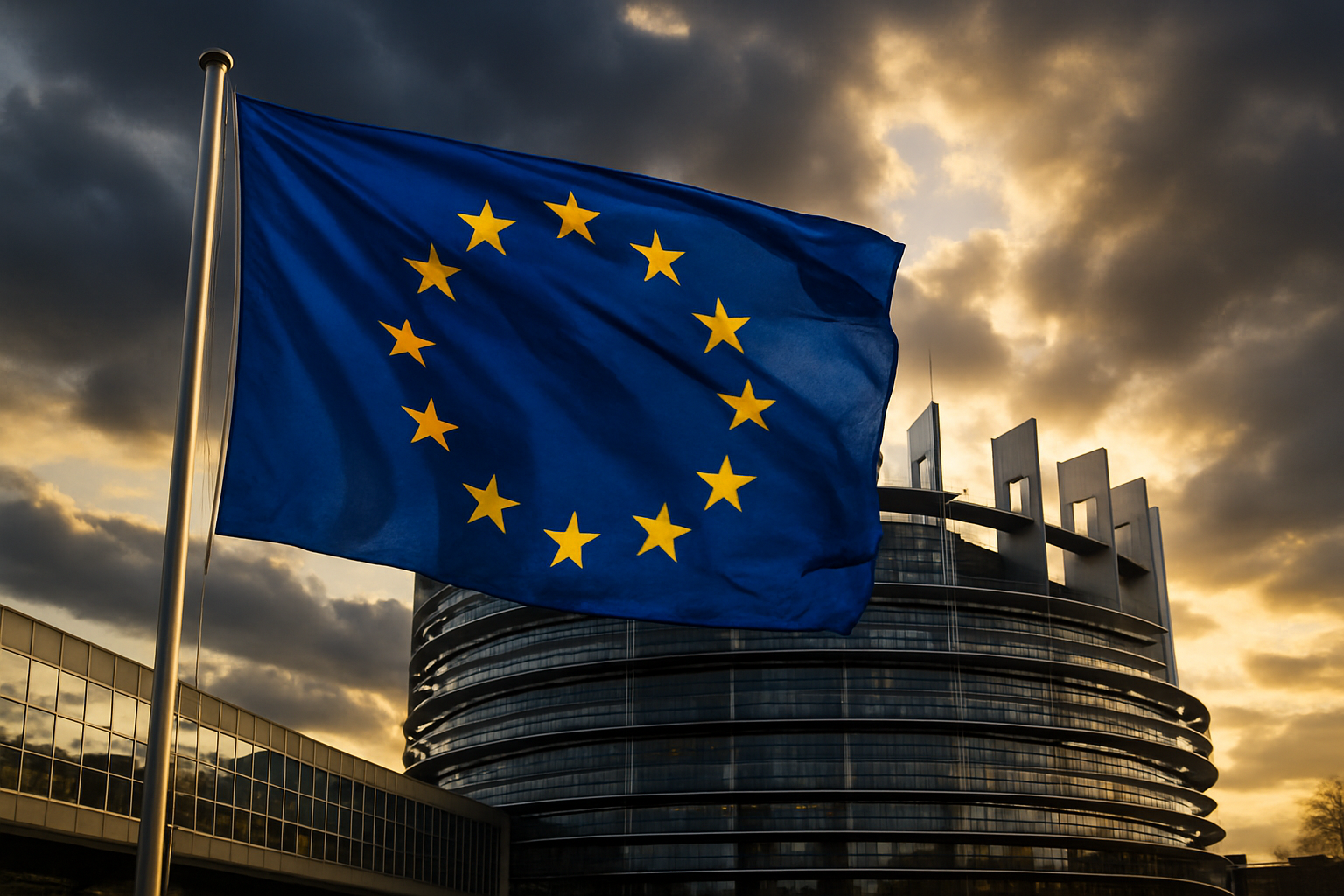
A comprehensive analysis of recent European political developments reveals a continent grappling with demographic shifts, environmental challenges, and evolving security concerns while public support for deeper EU integration reaches unprecedented levels.
Cyprus Emerges as EU Security Bellwether
Cyprus has positioned itself at the forefront of European security discourse, with a February 2026 Eurobarometer survey revealing that 73% of Cypriots express greater confidence than the EU average in the bloc's ability to strengthen Europe's defense and security. This confidence level significantly exceeds the continental average of 52%, positioning Cyprus as a key supporter of enhanced European security cooperation.
The survey findings indicate that 75% of Cypriots feel their country is under threat, placing the island nation among member states with the highest threat perception, alongside France (80%) and Denmark and the Netherlands (both 77%). This heightened security awareness comes amid broader European concerns, with 68% of Europeans believing their countries face threats.
"The most notable result is that more than two thirds of Europeans (68 per cent) believe their country is under threat"
— European Commission Statement
Demographic Transformation Across the Union
The latest Eurostat data reveals significant demographic shifts across Europe, with Cyprus experiencing one of the most dramatic aging trends. The island's median age has increased by four years since 2015, rising from 37 to 41 years, placing it alongside Slovakia among countries recording the largest increases in population age.
Malta presents a contrasting narrative, emerging as one of only two EU countries—alongside Germany—where the median age actually declined by 0.4 years since 2015. This demographic divergence highlights the varying population dynamics across member states, with implications for economic policy, social services, and political priorities.
Across the EU, the median age has reached 44.9 years, representing a 2.1-year increase since 2015. Ireland maintains the youngest population at 39.6 years, while Italy tops the aging scale at 49.1 years, illustrating the breadth of demographic challenges facing European policymakers.
Environmental Leadership and Climate Action
Cyprus has demonstrated notable progress in environmental policy implementation, ranking third among EU member states in greenhouse gas emissions reduction during the third quarter of 2025. The island achieved a 5.2% reduction compared to the previous quarter, significantly outperforming the EU-wide trend of a 1.1% increase in emissions.
However, the country faces environmental challenges alongside its successes. Cyprus records the highest rate of food waste in the EU, prompting Environment Commissioner Antonia Theodosiou to acknowledge the problem while promoting circular economy initiatives.
"Cyprus is already implementing a circular economy national action plan to reduce waste, make better use of resources and support viable practices"
— Environment Commissioner Antonia Theodosiou
Finnish Government Transitions
Political developments in Finland suggest significant ministerial changes approaching the end of the current government term. Analysis indicates varying workloads among ministers within the same ministry, with expectations of two new ministerial appointments to address governance challenges and policy implementation needs.
German-French Tensions Over EU Debt Policy
Germany finds itself at the center of European fiscal policy debates, with Chancellor Friedrich Merz facing pressure from multiple directions regarding EU debt arrangements. French President Emmanuel Macron continues advocating for eurobonds, while even the Bundesbank has publicly disagreed with Merz's position against new common EU debt instruments.
This tension reflects broader questions about European fiscal integration and the balance between national sovereignty and collective financial responsibility, particularly as the EU faces mounting challenges requiring coordinated responses.
Migration Policy Complexities
Lithuania's implementation of the EU's solidarity mechanism for migration reveals the complex realities of European asylum policy. Under the approved framework, Lithuania will accept portions of migrants while some neighboring countries received exemptions from both accepting migrants and paying alternative contributions, creating policy asymmetries across the union.
The situation underscores ongoing challenges in developing coherent, equitable migration policies that balance member state concerns with humanitarian obligations and European solidarity principles.
Enhanced Cooperation Mechanisms Gain Momentum
Recent memory analysis reveals that EU leaders are increasingly embracing "enhanced cooperation" mechanisms to bypass national vetoes and accelerate decision-making amid multiple crises. This represents a shift toward a "Europe of multiple speeds" where core countries can advance integration on specific policies while others remain outside initially.
The approach has proven successful in areas like the European Public Prosecutor's Office and PESCO defense cooperation, suggesting potential for broader application as traditional unanimity requirements face practical limitations in an enlarged EU.
Public Support for Deeper Integration
Despite political complexities, public support for European integration remains remarkably strong. Recent Eurobarometer surveys consistently show 89% of Europeans demanding greater EU unity, with 86% wanting a stronger global voice for Europe. These figures provide a democratic mandate for ambitious integration efforts, even as political leaders navigate institutional and sovereignty concerns.
The disconnect between strong public support for European unity and the practical challenges of achieving consensus among 27 member states reflects the ongoing tension between democratic aspirations and institutional realities in contemporary European governance.
Climate and Energy Security Intersections
European climate policy has become increasingly intertwined with security considerations, particularly regarding critical materials dependence. EU auditors warn that climate goals face serious risks due to China's control of 60% of critical materials production and 90% of global refining capacity—materials essential for renewable energy infrastructure.
These supply chain vulnerabilities highlight the intersection of environmental policy, economic security, and geopolitical strategy in European decision-making, requiring coordinated responses that balance climate ambitions with strategic autonomy concerns.
Looking Ahead: Institutional Adaptation
The various developments across Europe in February 2026 illustrate a union adapting to complex, interconnected challenges requiring innovative institutional responses. From demographic transitions to security threats, environmental policies to fiscal coordination, European leaders face pressures demanding both unity and flexibility.
The success of enhanced cooperation mechanisms, strong public support for integration, and demonstrated resilience in addressing diverse challenges suggest European institutions retain capacity for evolution and adaptation. However, the coming months will test whether this adaptability can match the scale and urgency of contemporary European challenges while maintaining democratic legitimacy and effectiveness across diverse national contexts.