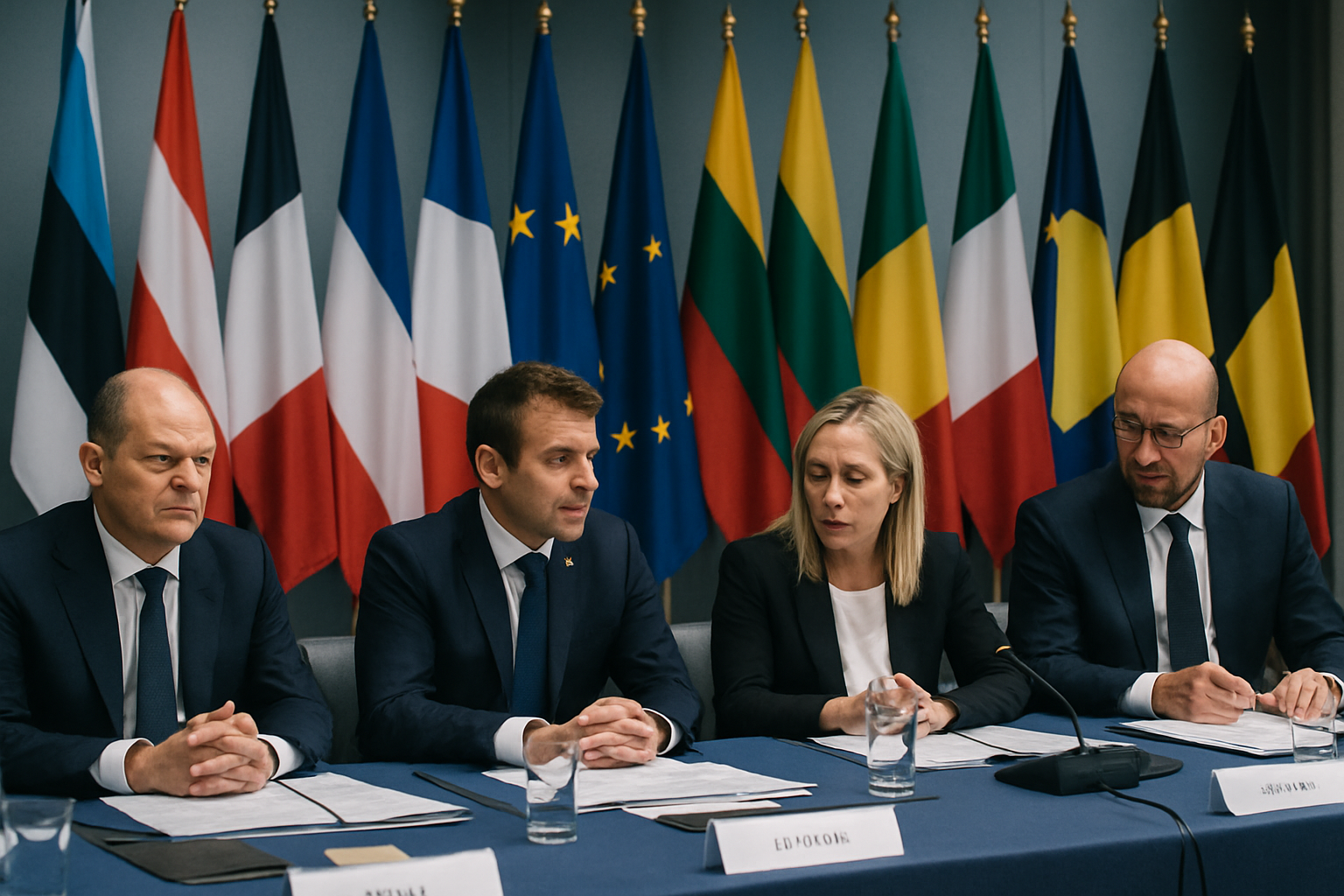
European political dynamics are undergoing significant transformation as Hungary's opposition presents its most comprehensive challenge to Viktor Orban's rule in over a decade, while Italy grapples with fracturing within its right-wing coalition ahead of crucial electoral cycles.
The Hungarian opposition party TISA (Respect and Freedom Party) has unveiled an ambitious 240-page electoral program that represents a stark departure from Prime Minister Viktor Orban's nationalist policies. Led by former Orban insider Péter Magyar, TISA promises to introduce wealth taxes for the rich, adopt the euro currency, and strengthen Hungary's ties with the European Union and NATO if victorious in April's parliamentary elections.
This comprehensive policy platform marks the most significant electoral challenge to Orban's Fidesz party since its decisive victory in 2010, according to Reuters analysis. The timing is particularly significant as recent polling shows Orban's party trailing for the first time since taking power, creating genuine uncertainty about Hungary's political future.
Hungary's Opposition Presents EU Integration Vision
TISA's program represents a fundamental shift toward European integration, directly contradicting Orban's sovereignty-focused governance approach that has frequently clashed with Brussels over rule of law concerns and democratic institutions. The party's commitment to euro adoption would end Hungary's monetary independence, a cornerstone of Orban's economic nationalism.
The wealth tax proposal signals a significant departure from Hungary's current fiscal approach, potentially affecting the country's business-friendly tax environment that has attracted international investment. Magyar's background as a former member of Orban's inner circle lends credibility to TISA's understanding of governmental operations while positioning the party as offering experienced leadership with dramatically different policy priorities.
According to earlier reporting, Trump's endorsement of Orban in February has added international dimensions to the Hungarian electoral contest. The U.S. President's "complete and unconditional support" for Orban came at a time when multiple polling organizations showed opposition coalitions leading, creating anxiety within the Prime Minister's political circle.
Italian Right-Wing Coalition Under Strain
Meanwhile, Italy's political landscape is experiencing its own upheaval as General Roberto Vannacci has officially registered "Futuro Nazionale" (National Future) as a new political movement, directly challenging the Lega party from which he emerged. Speaking in Chiavari, Vannacci declared that "other Lega leaders will follow me," suggesting potential significant defections from Matteo Salvini's party.
The formation of Futuro Nazionale represents more than typical Italian political maneuvering—it signals potential fracturing within the right-wing coalition that has shaped Italian politics in recent years. Vannacci's military background and nationalist rhetoric have attracted significant attention, but his break with Lega could redistribute political support across Italy's fragmented party system.
This development occurs amid broader challenges for European populist movements, which face pressure from changing voter priorities and internal organizational tensions. The Italian case demonstrates how personality-driven politics can lead to rapid organizational changes that reshape electoral mathematics.
Broader European Context and Implications
These political developments unfold against the backdrop of significant European challenges, including ongoing tensions over EU budget allocations, disagreements on migration policy, and differing approaches to relations with Russia and China. Hungary's potential policy reversal toward EU integration would remove one of Brussels' most persistent critics from within the Union.
Recent Eurobarometer polling shows 89% of Europeans demanding greater EU unity, with 86% wanting a stronger global voice and 72% worried about conflicts near EU borders. This public sentiment provides favorable conditions for pro-EU political movements like TISA, while creating challenges for parties advocating national sovereignty approaches.
The timing of Hungary's April elections coincides with broader European electoral cycles and policy debates that will shape the continent's direction. A TISA victory would represent a significant shift in Central European politics, potentially influencing similar movements in Poland, Czech Republic, and other countries that have experienced tensions between national governments and EU institutions.
Electoral Dynamics and Strategic Implications
For Hungarian voters, the choice between continuity under Orban's Fidesz and transformation under TISA represents more than typical electoral alternatives. The decision will determine Hungary's relationship with European institutions, its monetary policy independence, and its position in ongoing geopolitical tensions between Russia and the West.
TISA's pro-NATO stance directly contradicts Orban's more ambiguous approach to the military alliance, particularly regarding support for Ukraine. The party's commitment to strengthening Western ties could significantly alter Hungary's role in regional security arrangements and its relationship with the United States under the Trump administration.
In Italy, Vannacci's new movement may struggle to achieve significant electoral success given the country's high threshold for parliamentary representation and established party loyalties. However, his defection from Lega could weaken Salvini's position and potentially benefit other right-wing parties or centrist alternatives.
International Reactions and Future Scenarios
European institutions are closely monitoring both Hungarian and Italian political developments, as changes in either country could affect EU decision-making processes and policy implementation. Hungary's potential shift toward euro adoption would require extensive negotiations with European Central Bank officials and compliance with strict fiscal criteria.
The broader implications extend beyond immediate electoral outcomes. These political movements reflect deeper questions about European identity, sovereignty, and the balance between national interests and continental integration. Success for pro-EU forces in Hungary would demonstrate that populist nationalism can be reversed through democratic processes, providing encouragement for similar movements across Europe.
Conversely, continued fragmentation in Italy's political system could lead to governance challenges that affect the country's economic recovery and its role in European leadership alongside France and Germany.
Looking Ahead
As Hungary approaches its April elections and Italy navigates political realignments, these developments will significantly influence European political trajectories. The outcomes will determine whether the continent moves toward greater integration and institutional strengthening or continued tensions between national sovereignty and supranational governance.
For European voters and political observers, these contests represent critical tests of democratic resilience and the ability of established political systems to adapt to changing public preferences while maintaining institutional stability and international cooperation.