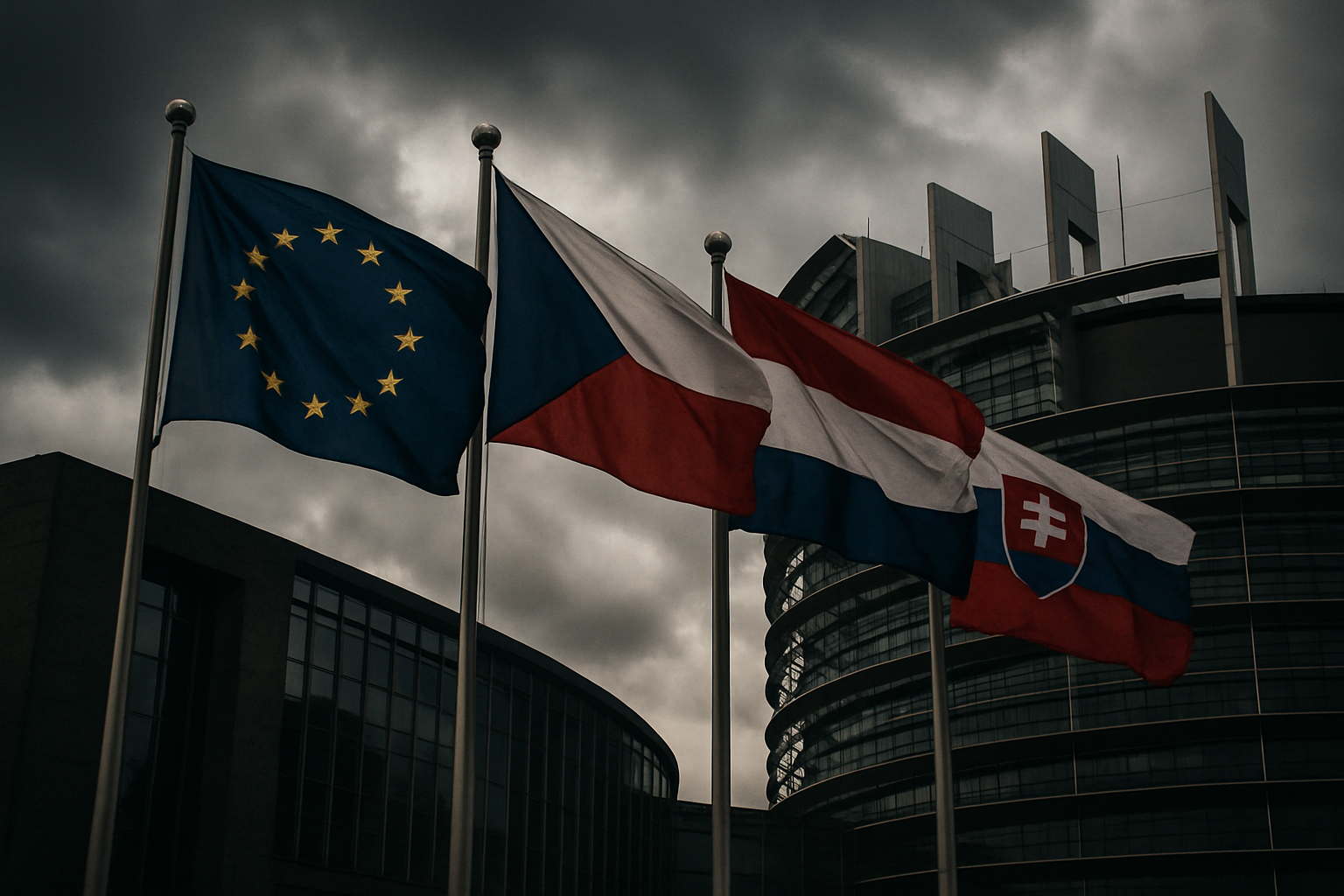
Political tensions have reached critical levels across Central Europe as governments in the Czech Republic, Slovakia, and the Netherlands grapple with coalition disputes, no-confidence votes, and parliamentary deadlock that threaten institutional stability.
The latest wave of political upheaval demonstrates the fragility of democratic institutions across the region, where traditional party structures face mounting pressure from populist movements, economic challenges, and shifting public sentiment in an era of global uncertainty.
Czech Republic's Government Standoff Ends—For Now
In Prague, a dramatic political crisis that had gripped the Czech Republic for weeks concluded with what observers are calling a temporary victory for Prime Minister Andrej Babiš. The populist leader's government survived a no-confidence vote following an extraordinary 22-hour parliamentary debate session, representing a significant political triumph amid ongoing tensions with President Pavel.
The marathon parliamentary session, one of the longest in Czech history, highlighted deep divisions within the country's political establishment. Babiš, the billionaire businessman-turned-politician who leads the ANO party, managed to retain sufficient support to keep his coalition government intact, though the narrow victory has done little to resolve underlying tensions that have plagued Czech politics for months.
The standoff between Babiš and President Pavel reflects broader questions about executive power and democratic governance in post-communist Europe. While the immediate crisis has passed, political analysts warn that the fundamental issues driving the conflict remain unresolved, setting the stage for potential future confrontations.
Slovakia's Parliament Cuts Short No-Confidence Debate
In neighboring Slovakia, the political landscape appears equally volatile as Prime Minister Robert Fico's government faced its own parliamentary crisis. The ruling coalition parties—Smer, Hlas, and SNS—successfully moved to prematurely end debate on a motion of no confidence, effectively shutting down opposition efforts to challenge the government's legitimacy.
The decision to truncate parliamentary debate has drawn sharp criticism from opposition parties and civil society groups, who argue that the move undermines democratic principles and parliamentary oversight. Opposition leader Rudolf Huliak and his allies were present in parliament to press their case, but the governing coalition's procedural maneuver prevented a full airing of their grievances.
Fico's government, which took office amid promises to restore Slovakia's sovereignty and resist what it characterizes as EU overreach, has faced mounting pressure over economic policy, corruption allegations, and its stance on international relations. The premature end to the no-confidence debate suggests a government increasingly unwilling to subject itself to sustained parliamentary scrutiny.
Netherlands Finalizes New Cabinet Structure
Meanwhile, in the Netherlands, political stability of a different sort has emerged as the coalition of D66, VVD, and CDA successfully finalized the distribution of ministerial posts in what will be known as the Jetten I Cabinet. The new government structure includes 28 members: 18 Ministers and 10 State Secretaries, representing a carefully negotiated balance among the three coalition partners.
The successful formation of the Dutch cabinet stands in stark contrast to the turmoil elsewhere in Central Europe, though even here, challenges remain. Previous reporting has indicated that the coalition faces parliamentary pressure, with D66's Rob Jetten having come under attack from PVV's Geert Wilders during major debates, highlighting the coalition's vulnerability in building broader parliamentary support.
The Netherlands' ability to form a stable government demonstrates that democratic coalition-building remains possible even in an era of political fragmentation, though the long-term durability of such arrangements remains to be tested against future economic and social pressures.
"The current political turbulence reflects deeper questions about governance, democratic accountability, and the balance between national sovereignty and European cooperation that are reshaping politics across the continent."
— European Political Analysis, February 2026
Broader European Context
These political developments occur against a backdrop of significant challenges facing European democracies. Recent Eurobarometer polling shows that 89% of European citizens demand greater EU unity, while 86% want a stronger global voice for Europe. Yet this popular demand for integration coexists with rising nationalist sentiment and resistance to Brussels in many member states.
The political tensions in Central Europe also unfold amid broader regional challenges, including the ongoing war in Ukraine, energy security concerns following the disruption of Russian gas supplies, and economic pressures stemming from inflation and post-pandemic recovery efforts.
Historical context suggests that periods of political instability in Central Europe often reflect broader European trends. The region's experience with democratic transition since 1989 has created political systems that remain vulnerable to populist appeals and institutional stress, particularly during times of economic uncertainty or external pressure.
Institutional Resilience Under Test
The current crises serve as a test of institutional resilience for democracies that are still relatively young by European standards. While the Czech Republic, Slovakia, and the Netherlands have all maintained constitutional order despite political tensions, the sustainability of democratic norms under pressure remains an open question.
Political scientists note that the ability of these systems to manage conflict through established procedures—parliamentary votes, coalition negotiations, and constitutional frameworks—demonstrates the maturation of democratic institutions. However, the increasing frequency of such crises and the apparent unwillingness of some political actors to abide by traditional norms of parliamentary democracy raises concerns about longer-term stability.
The Netherlands' successful cabinet formation shows that coalition democracy can still function effectively when political parties are willing to compromise and work within established frameworks. In contrast, the situations in the Czech Republic and Slovakia suggest growing polarization and institutional stress that could undermine democratic governance if left unaddressed.
Looking Forward: Challenges and Opportunities
As these political crises unfold, they highlight several key challenges facing European democracies in 2026. Rising populism, economic uncertainty, and external pressures from war and energy insecurity create a volatile environment in which traditional political arrangements struggle to maintain legitimacy.
The success or failure of these governments in addressing public concerns while maintaining democratic institutions will likely influence political developments across the broader European Union. The region's experience may serve as a bellwether for democratic resilience in an era of global political upheaval.
Moving forward, the ability of Central European democracies to maintain stability will depend on their capacity to address underlying economic and social grievances while preserving institutional integrity. This requires not only effective governance but also a renewed commitment to democratic values and procedures from across the political spectrum.
The stakes extend beyond national borders, as political instability in Central Europe could have broader implications for European integration, security cooperation, and the EU's ability to respond effectively to external challenges ranging from Russian aggression to climate change and migration pressures.