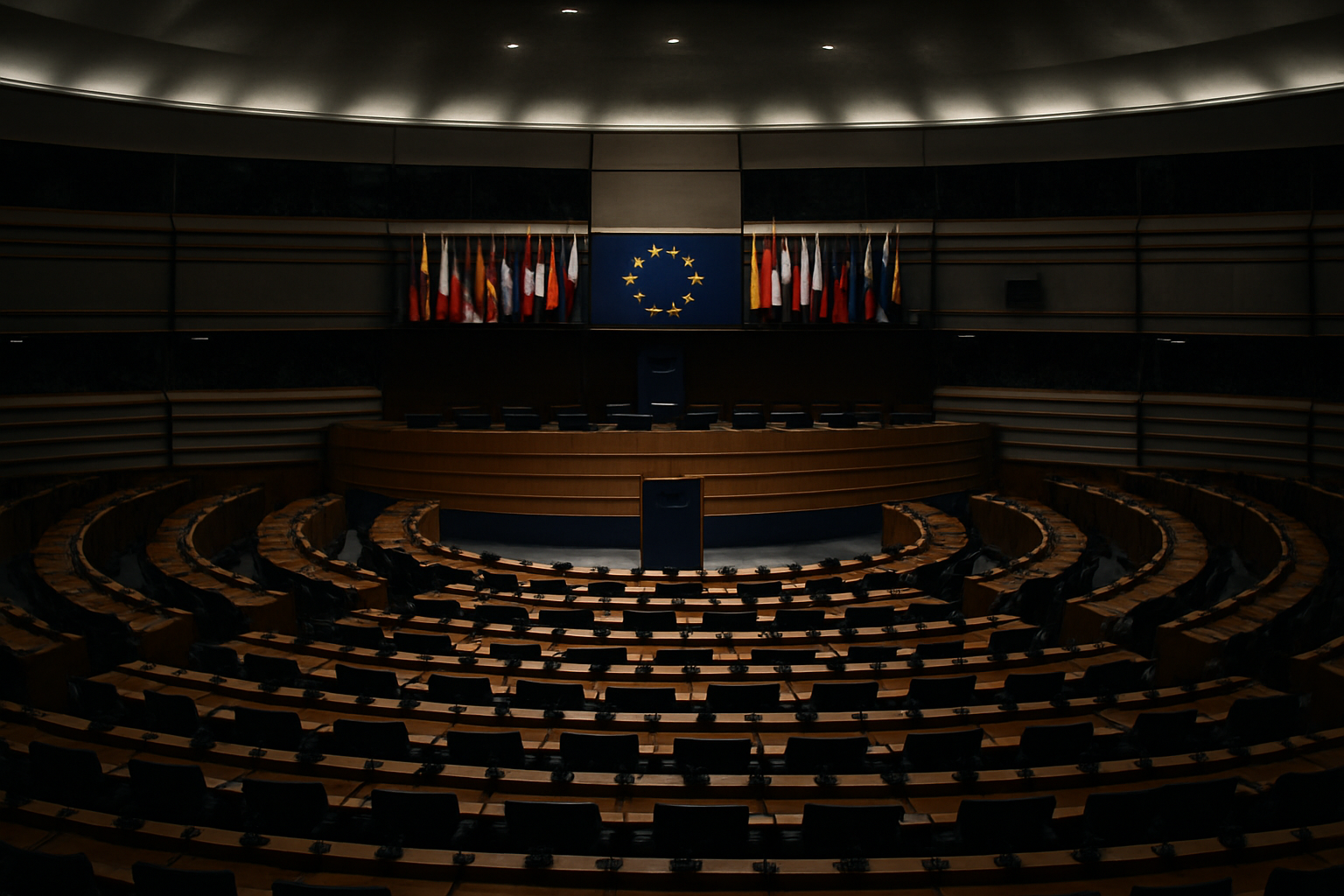
Europe is experiencing its most severe political crisis since World War II as traditional coalition governments fracture, far-right movements gain unprecedented momentum, and violent political confrontations escalate across the continent, threatening the stability of democratic institutions from Vienna to Bucharest.
The crisis reached a deadly crescendo in France, where eleven people have been arrested in connection with the fatal beating of 23-year-old far-right activist Quentin Deranque in Lyon. The killing, which occurred on the margins of a pro-Palestinian conference, has exposed the dangerous escalation of political extremism that is now claiming lives across European democracies.
Austria's Ash Wednesday Battle
Austria's political landscape erupted in unprecedented acrimony during traditional Ash Wednesday political gatherings, with FPÖ leader Herbert Kickl launching what observers called the most vicious political attacks in recent memory. Speaking in Ried im Innkreis, Kickl unveiled his "Phoenix Plan" promising to restore Austria as an "Island of the Blessed" while delivering brutal personal attacks against government officials.
The far-right leader's rhetoric reached new extremes, calling ÖVP politician Wöginger a "jailbird" and SPÖ leader Babler a "little rage packet." Most provocatively, Kickl offered Foreign Minister Beate Meinl-Reisinger to Ukraine as a "material donation," demonstrating how Austrian politics has descended into personal vilification that would have been unthinkable just years ago.
"We only have this Austria once – let's take care of it!"
— Manfred Haimbuchner, FPÖ Deputy Governor
The FPÖ's strategy appears focused on positioning the party as the sole alternative to what Kickl characterizes as a "loser coalition." With Upper Austria's deputy governor Manfred Haimbuchner emphasizing Austrian neutrality and sovereignty, the party is tapping into growing Eurosceptic sentiment while the current government struggles with coalition management.
French Political Violence Turns Deadly
The political crisis took its most alarming turn in France, where the death of student activist Quentin Deranque has become a rallying cry for the far-right National Rally. Among those arrested is Jacques-Elie Favrot, a parliamentary assistant to La France Insoumise deputy Raphaël Arnault, directly linking the violence to France's political establishment.
The incident occurred during violent clashes surrounding a conference featuring pro-Palestinian MEP Rima Hassan, highlighting how international conflicts are now fueling domestic political extremism. Justice Minister Gérald Darmanin's immediate blame of the "ultra-left" and National Rally leader Jordan Bardella's declaration of Jean-Luc Mélenchon's "immense moral responsibility" demonstrate how quickly political deaths become weaponized in France's polarized environment.
The French government's response – announcing restrictions on university political meetings – signals an acknowledgment that democratic institutions are struggling to contain political violence. With municipal elections scheduled for March 2026 and the presidential race approaching in 2027, the killing threatens to fundamentally reshape French political discourse.
Romanian Coalition on the Brink
Romania's governing stability faces an existential threat as Social Democratic Party (PSD) leader Sorin Grindeanu publicly questioned his party's continued participation in the ruling coalition. Speaking on Digi24, Grindeanu emphasized that the PSD is "evaluating" whether to remain in government, contingent on a 4 billion lei social protection package being included in the 2026 budget.
The ultimatum represents a fundamental challenge to Prime Minister Nicolae Bolojan's leadership, with Grindeanu criticizing what he called a "feldsher attitude – first cut, then measure." The dispute over social spending versus fiscal discipline reflects broader European tensions between populist demands for increased spending and technocratic approaches to budget management.
"As long as the measures we propose don't enter the budget, the evaluation is negative."
— Sorin Grindeanu, PSD President
Should the PSD withdraw from the coalition, Romania would join the growing list of European countries struggling to maintain stable governance amid competing political pressures and economic constraints.
Germany's Political Theater
Even Germany, traditionally Europe's most stable democracy, witnessed unprecedented political theater during Ash Wednesday events. The confrontation between political parties reached levels of personal animosity that German observers described as damaging to democratic discourse and institutional respect.
German media coverage emphasized how the politicization of traditional events reflects broader concerns about democratic norms deteriorating across the continent. The February 18 political confrontations occurred against the backdrop of upcoming regional elections that could further fragment Germany's political landscape.
Continental Patterns of Crisis
These developments represent more than isolated national crises – they reflect systematic challenges to European democratic governance. Several concerning patterns emerge across affected countries:
Traditional coalition mathematics are breaking down as populist parties gain ground and established parties struggle to maintain governing majorities. The rise of personality-driven politics over institutional governance is evident from Austria's Kickl to France's increasingly polarized leadership.
Political violence and extremist rhetoric have become normalized, with personal attacks reaching levels that threaten the basic civility required for democratic governance. The weaponization of international conflicts – from Ukraine to Palestine – for domestic political advantage is destabilizing national political systems.
EU Response and Democratic Resilience
The European Union finds itself in the unprecedented position of watching member states experience simultaneous governance crises. While EU institutions maintain formal neutrality in domestic political affairs, the scale of instability threatens the bloc's decision-making capacity and international credibility.
Recent Eurobarometer polling showing 89% of Europeans demanding greater EU unity contrasts sharply with the political reality of increasing institutional friction and sovereignty assertions. This disconnect between public support for European cooperation and political reality represents one of the most significant challenges facing the continent.
Democratic institutions are being tested by forces they were not designed to handle: the intersection of social media-driven political mobilization, international conflict spillover effects, economic pressures, and the erosion of shared democratic norms that previously constrained political behavior.
Implications for European Integration
The political crisis has profound implications for European integration, with several member states potentially unable to fulfill their EU commitments due to domestic political instability. The traditional Franco-German partnership that has driven European development for decades faces pressure as both countries navigate internal political challenges.
The success or failure of European democracies in addressing these challenges will determine whether the current crisis represents a temporary period of political adjustment or a fundamental threat to the European project. The stakes extend beyond individual national politics to the future of democratic governance in an increasingly complex global environment.
Looking Forward
As Europe enters a critical period with multiple elections scheduled across member states, the continent faces choices that will shape its political future for decades. The resolution of current crises – through democratic means or through further institutional breakdown – will establish precedents for how European societies address the intersection of global challenges with local democratic governance.
The coming months will test whether European democratic institutions retain the flexibility and resilience to adapt to 21st-century pressures while preserving the fundamental values and processes that have underpinned continental stability since 1945. The stakes could not be higher for Europe's democratic future.