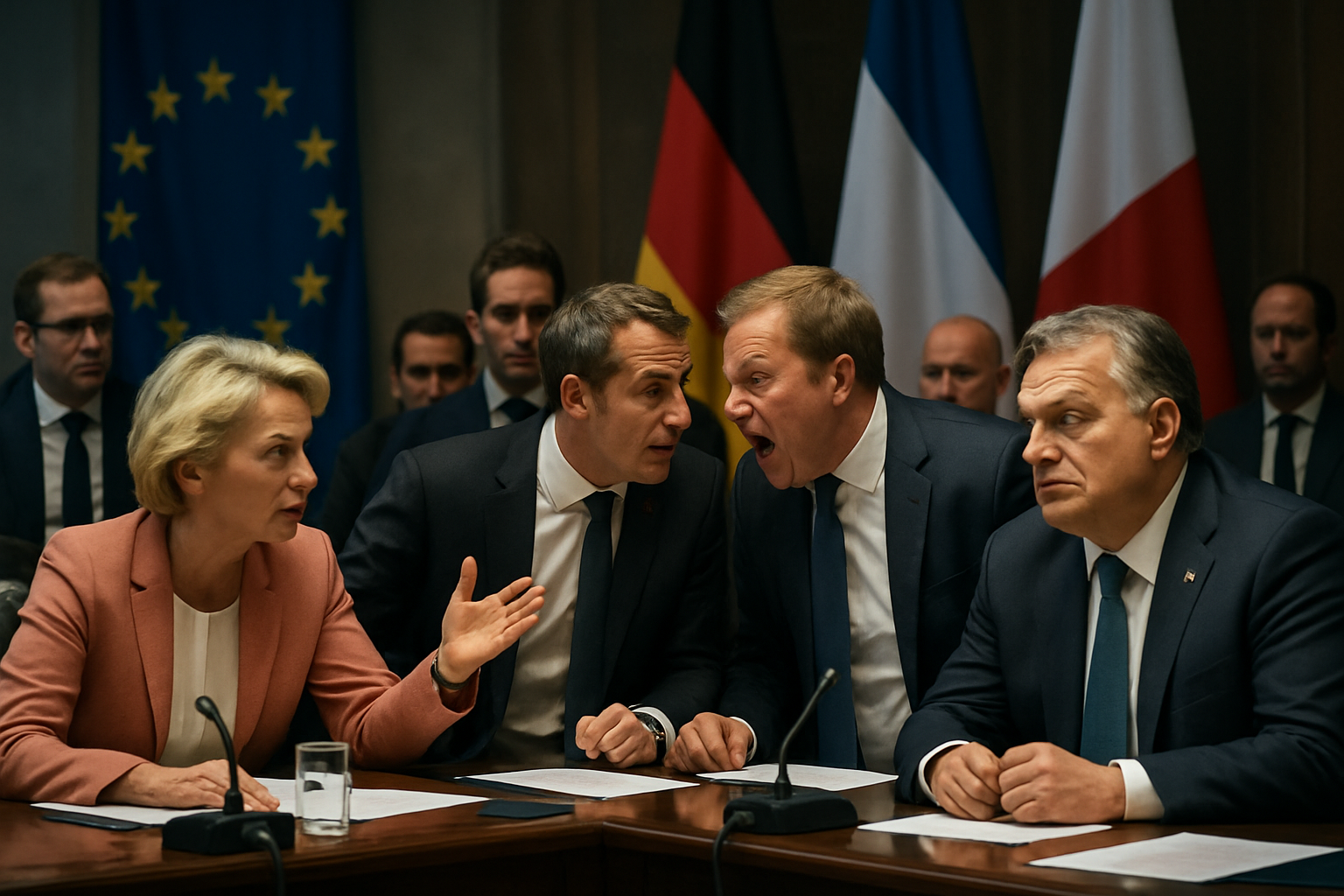
A wave of electoral contests and political developments across Europe in February 2026 has exposed deep fractures in the continent's democratic landscape, with foreign interference threats, historic party victories, and rising extremism reshaping traditional political alignments from Denmark to Germany.
The month's most striking development came in the United Kingdom, where the Green Party achieved a stunning breakthrough in the Gorton and Denton by-election. Hannah Spencer, a 34-year-old plumber and plasterer who entered politics just three years ago, became the first Green Party MP elected in northern England, defeating both Labour and Reform UK candidates in a constituency Labour had held since 1935.
Spencer's victory, with 14,980 votes and a 4,000+ majority, relegated the governing Labour Party to a humiliating third place behind Reform UK. The result compounds Prime Minister Keir Starmer's deepening crisis amid ongoing scandals and represents the most significant electoral defeat for a governing party in decades.
Foreign Interference Threatens Democratic Integrity
Meanwhile, Denmark's intelligence services issued unprecedented warnings about foreign powers seeking to interfere in the country's March 24 general election. The Danish Security and Intelligence Service identified Russia as the primary threat but also flagged potential interference from the United States and China, marking a rare acknowledgment of allied nations as sources of electoral manipulation.
The warning comes as Prime Minister Mette Frederiksen called snap elections to capitalize on public support for her firm stance against Trump administration pressure over Greenland. The Danish intelligence assessment highlights how traditional notions of foreign interference have expanded beyond adversarial nations to include complex pressures from allies pursuing their own strategic interests.
"It is highly likely that Denmark is a prioritized target for Russian influence activities due to the Nordic nation's support for Ukraine."
— Danish Security and Intelligence Service
The Danish case exemplifies broader concerns about electoral integrity across Europe, where democratic institutions face unprecedented pressure from both external manipulation and internal political polarization. France, Germany, and the UK have all grappled with similar challenges as foreign actors employ increasingly sophisticated techniques to influence domestic political processes.
German Democracy Under Stress
In Germany, political tensions surrounding the far-right Alternative for Deutschland (AfD) reached new heights following a controversial court ruling. The Cologne Administrative Court dealt a setback to federal intelligence services' surveillance of the AfD, though the ruling emphasized that democratic boundaries remain firmly in place.
The German case reflects broader European struggles with how democratic institutions should respond to parties that operate within legal frameworks while promoting anti-democratic ideologies. Recent polling shows the AfD continuing to gain ground in eastern German states, posing challenges for traditional parties ahead of crucial regional elections.
Chancellor Friedrich Merz's Christian Democratic Union has faced mounting pressure to clarify its position on potential future cooperation with the AfD, with party leadership maintaining a strict firewall while grassroots supporters express growing frustration with immigration and economic policies.
UK Immigration Reforms Amid Political Crisis
The United Kingdom implemented sweeping immigration reforms even as the government faces its worst political crisis since taking office. Home Secretary Shabana Mahmood announced plans to press ahead with Danish-style restrictions on asylum seekers despite the devastating by-election defeat in Gorton and Denton.
The reforms include mandatory Electronic Travel Authorization requirements for all European visitors, effectively ending freedom of movement privileges that survived the immediate Brexit transition period. The £16 digital application fee affects 85 countries and represents a significant hardening of UK immigration policy.

Rising Extremism Across the Continent
The February developments reveal concerning patterns of political extremism gaining mainstream acceptance across multiple European democracies. In Austria, far-right FPÖ leader Herbert Kickl delivered unprecedented personal attacks during traditional Ash Wednesday political events, calling opponents "jailbirds" and offering to donate a government minister to Ukraine as "material donation."
France experienced its own political violence with the fatal beating of a 23-year-old far-right activist in Lyon, leading to eleven arrests including a parliamentary assistant to a left-wing deputy. The incident prompted government restrictions on university political meetings ahead of municipal elections, highlighting how political polarization increasingly spills into physical confrontation.
Romania's governing coalition faced potential collapse as the Social Democratic Party threatened withdrawal over budget disputes, while Spain's regional elections demonstrated continued far-right gains despite efforts by mainstream parties to contain populist momentum.
Democratic Resilience and Innovation
Despite these challenges, European democracies have also demonstrated remarkable resilience and innovation. The Netherlands successfully completed complex government formation talks, with Rob Jetten becoming the country's youngest-ever Prime Minister and first openly gay head of government, representing a milestone for both generational change and LGBTQ+ representation.
Portugal conducted presidential elections despite severe Atlantic storm damage that killed over 14 people and prompted the largest peacetime rescue operation in the country's history. The election proceeded with only limited delays, demonstrating how democratic institutions can adapt to extreme weather events that climate change is making increasingly common.
"The challenge for 2026 is not to identify the problem, but to assume responsibility for solving it."
— Portuguese Environmental Analyst Luís R. Vieira
Implications for European Unity
The February political developments occur against the backdrop of ongoing challenges to European unity, from Hungary's continued confrontation with EU institutions to debates over burden-sharing for Ukraine support. Recent Eurobarometer polling shows 89% of Europeans demanding greater EU unity, yet political realities demonstrate increasing friction between national sovereignty and European integration.
The month's events highlight fundamental tensions within European democratic systems: how to balance security concerns with civil liberties, manage immigration while maintaining humanitarian commitments, and preserve democratic norms while accommodating populist demands for change.
Looking Ahead
As Europe heads into a crucial period of elections and political transitions, the February developments provide important insights into the continent's democratic trajectory. The success of outsider parties like the Greens in the UK and various populist movements across Europe suggests voters are increasingly willing to reject established political alternatives.
The foreign interference warnings from Denmark, combined with similar concerns across multiple European nations, underscore the urgent need for enhanced electoral security measures and international cooperation to protect democratic processes. Traditional concepts of sovereignty and non-interference are being tested as geopolitical competition intensifies and new technologies enable more sophisticated influence operations.
The coming months will test whether European democratic institutions can adapt to these pressures while maintaining their fundamental character. Success will require balancing legitimate security concerns with democratic openness, managing social tensions without abandoning pluralistic values, and strengthening international cooperation while respecting national sovereignty.
The stakes extend far beyond individual national elections to encompass the future of democratic governance in an era of great power competition, technological disruption, and climate change. Europe's response to these challenges will likely influence democratic development worldwide and determine whether liberal democratic values can thrive in an increasingly complex global environment.