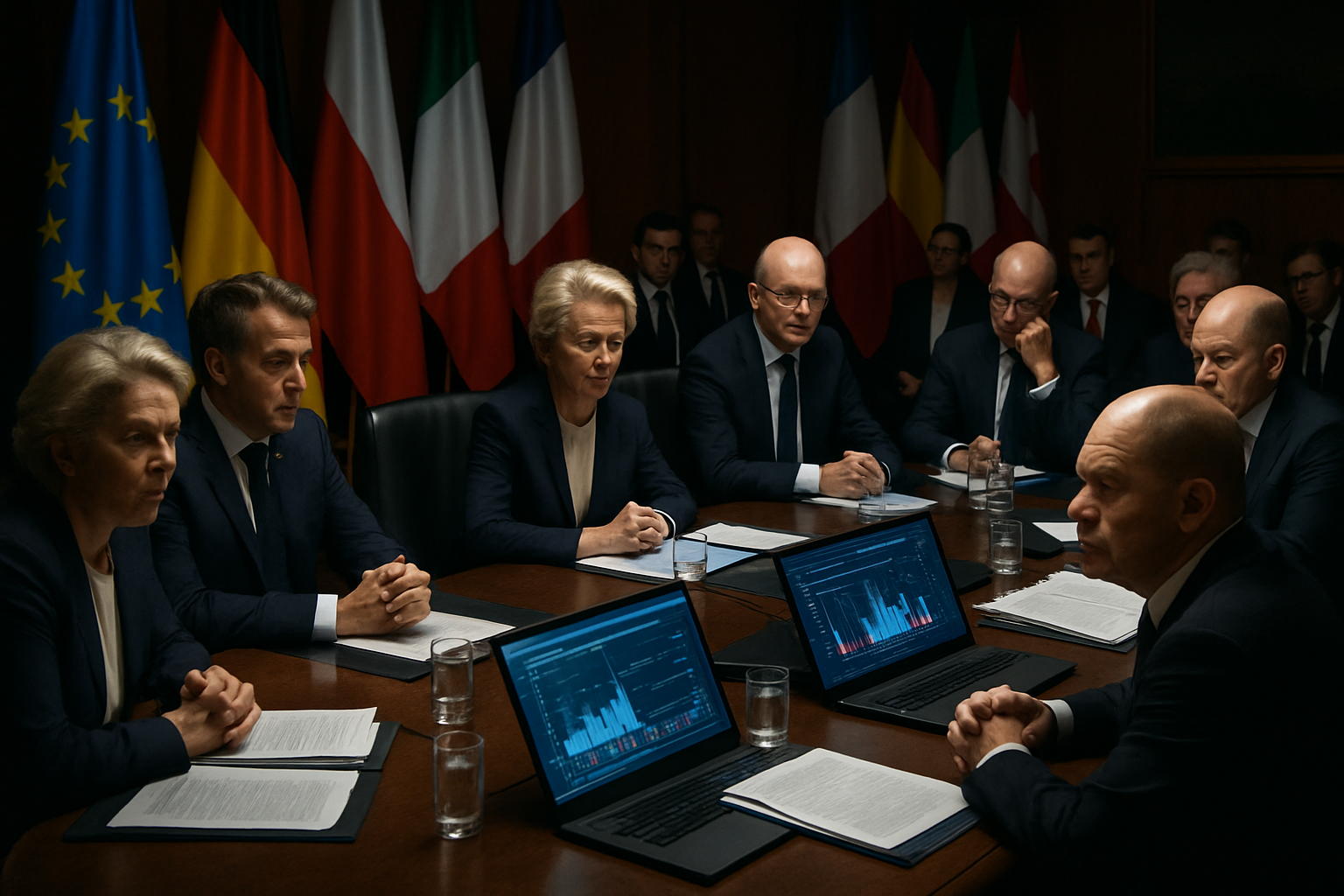
European political institutions face unprecedented stress as March 2026 developments across France, Germany, Netherlands, and Romania demonstrate the continent's deepest democratic crisis since World War II, with traditional coalitions fracturing amid rising extremism and institutional challenges.
French Municipal Elections: A Crucible of Democratic Tensions
France's municipal elections have emerged as the focal point of European political transformation, serving as a critical preview for the 2027 presidential race. The campaign has been overshadowed by the February death of Quentin Deranque in Lyon, which intensified political polarization and provided ammunition for Marine Le Pen's National Rally in their unprecedented urban breakthrough strategy.
President Emmanuel Macron issued stark warnings about political extremism, declaring that "extremes pose danger to France" as candidates prepared for the second round of voting. This marked the first time a French president has made such explicit statements during municipal campaigns, reflecting the gravity of the political moment.
"The current political climate represents the most significant challenge to French democracy since the Fourth Republic,"
— Political analyst, speaking on condition of anonymity
The Interior Ministry's controversial reclassification of La France Insoumise from "left" to "extreme left" for electoral purposes triggered legal challenges at the Council of State, raising concerns about administrative manipulation of democratic processes. This administrative decision has created tensions between government neutrality and electoral oversight.
Germany's Strategic Positioning Under Chancellor Merz
German Chancellor Friedrich Merz delivered a significant policy statement to the Bundestag ahead of the European Council meeting in Brussels, emphasizing Europe's need for greater self-assertion and unity. His declaration that "as long as the war continues, we will not participate" regarding certain military operations reflects Germany's careful balance between alliance obligations and domestic political considerations.
Merz's government statement emphasized that Europe must no longer "sell itself short," advocating for a more confident and unified European approach to global challenges. This positioning comes as Germany navigates complex relationships with both the United States and China while maintaining its central role in European integration.
The Chancellor's remarks received cross-party attention, with coalition partners praising his "self-assertion against America" while maintaining commitments to NATO and transatlantic cooperation. This delicate balance reflects Germany's evolving role as Europe seeks greater strategic autonomy.
Dutch Democratic Participation and Innovation
The Netherlands demonstrated democratic resilience with its municipal elections, featuring innovative approaches to civic engagement. Political leaders across the spectrum participated in voting, with turnout figures showing gradual increases throughout the day despite ongoing political fragmentation.
Dutch electoral authorities implemented several democratic innovations, including extended polling hours and enhanced accessibility measures, reflecting the country's commitment to inclusive democratic participation even amid broader European challenges.
Romanian Coalition Tensions Escalate
Romania's governing coalition faced severe internal strains as budget discussions revealed fundamental disagreements between coalition partners. The Social Democratic Party (PSD) threatened to block the 2026 state budget unless it includes their "Solidarity Package," creating a potential governmental crisis.
PSD President Sorin Grindeanu declared his party would not yield to "blackmail," while Liberal Party (PNL) officials accused their coalition partners of making "under-the-table deals" with the far-right AUR party. These tensions reflect broader challenges facing coalition governments across Europe.
"PSD risks throwing away everything we have achieved so far through the difficult measures taken by the Ilie Bolojan government,"
— PNL Secretary General Dan Motreanu
The budget crisis comes at a critical time for Romania, as the country seeks to balance domestic social spending demands with European Union fiscal requirements and economic recovery priorities.
Broader European Democratic Challenges
These developments occur within the context of what observers describe as "the most challenging period for continental democracy since WWII." Despite 89% of Europeans demanding greater EU unity according to recent Eurobarometer surveys, political reality shows increasing fragmentation and institutional friction.
The rise of far-right movements across the continent, from Sweden's Liberal-SD cooperation discussions to Spain's Vox surge in Aragón, demonstrates a pattern of "authoritarian innovation" where extremist movements work within democratic systems while gradually eroding liberal norms.
International Implications and Democratic Resilience
International observers are closely monitoring these European developments as templates for democratic governance under pressure. The success or failure of European institutions in channeling political extremism through electoral rather than extra-legal means will establish crucial precedents for democratic societies worldwide.
The current crisis tests whether European democratic institutions can adapt to 21st-century pressures while preserving fundamental values. The resolution of conflicts in France, Germany, Netherlands, and Romania will influence approaches to coalition building, extremist integration, and institutional reform across the continent.
Looking Forward: The Stakes for European Integration
As Europe grapples with these multiple challenges simultaneously, the coming weeks will prove decisive for the continent's political trajectory. The French municipal second round on March 22, ongoing German policy implementations, Dutch coalition stability, and Romanian budget negotiations will all contribute to determining whether Europe can navigate its current crisis while strengthening democratic institutions.
The outcome of these political developments will not only affect national governance but also influence European integration, international cooperation, and the global credibility of democratic governance models in an increasingly multipolar world.