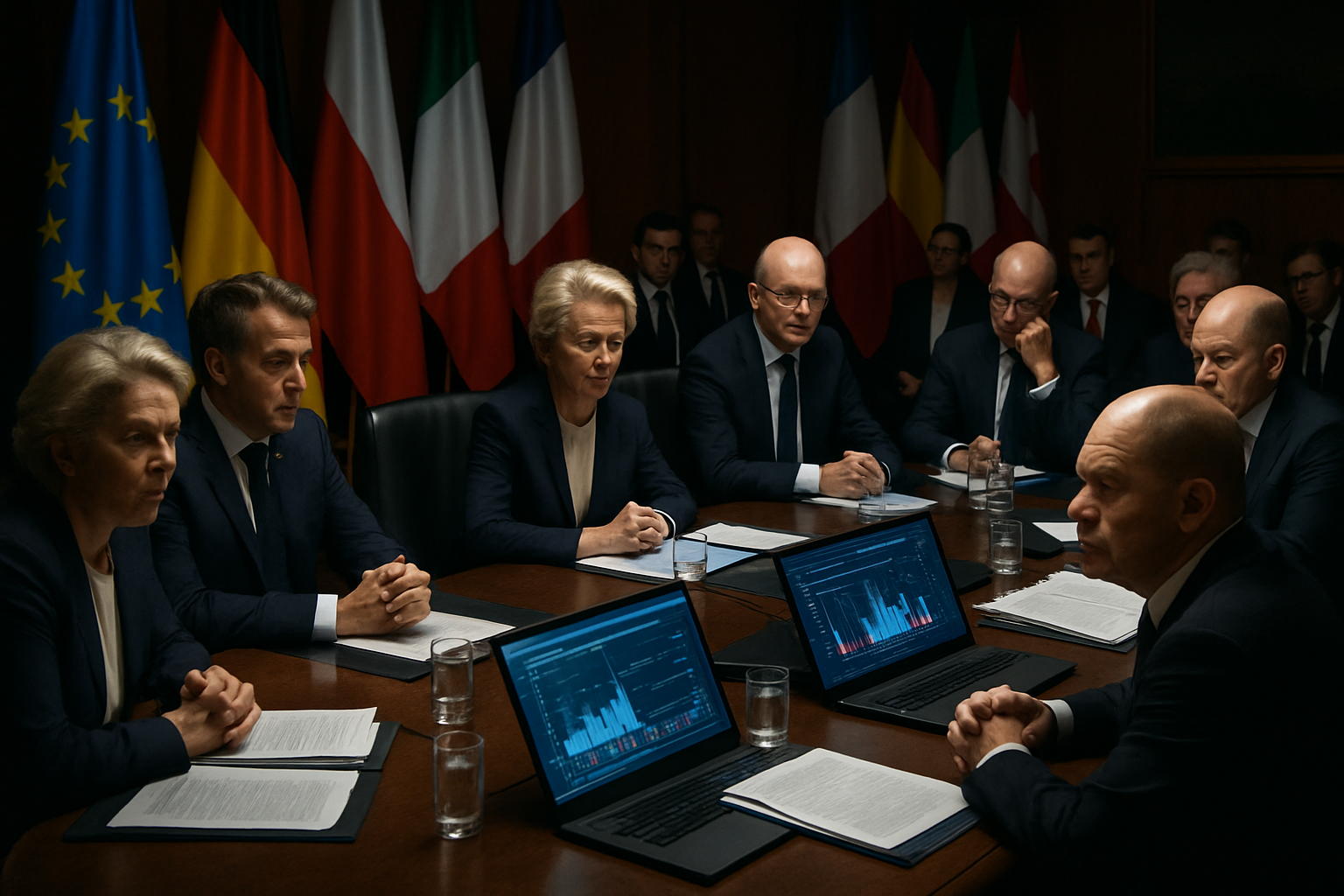
European democracies face unprecedented institutional strain as leadership crises and political scandals emerge simultaneously across multiple nations, from Canada's NDP existential crisis to Portugal's constitutional confrontations, revealing deep vulnerabilities in contemporary democratic governance.
The convergence of political upheavals across Canada, Denmark, Greece, and Portugal represents a critical stress test for democratic institutions already weakened by years of polarization and economic uncertainty. These developments occur against the backdrop of what observers have termed "the most challenging period for continental democracy since World War II."
Canada's Democratic Crisis Deepens
The New Democratic Party's national convention in Winnipeg has become a symbol of institutional decay, with the party struggling to maintain relevance after losing official status in the House of Commons. Leadership candidates face the daunting task of rebuilding a movement that has suffered record-low popular support and questions about its fundamental viability in Canada's political landscape.
Manitoba Premier Wab Kinew's welcoming address to delegates highlighted the existential nature of the crisis facing Canada's third-largest political party. The convention, intended to chart a path forward, instead underscored the depth of organizational and ideological challenges confronting progressive politics in North America.
"The NDP faces an unprecedented existential challenge that goes beyond typical electoral cycles,"
— Political Analyst
The timing of this crisis is particularly significant as it occurs while Prime Minister Mark Carney's Liberal government faces mounting economic pressures and competence questions, creating unusual political dynamics that limit the NDP's ability to capitalize on anti-government sentiment.
Danish Cannabis Scandal Rocks Liberal Alliance
Denmark's Liberal Alliance confronts its most serious political scandal in recent memory as allegations emerge linking politician Cecilie Liv Hansen's exclusion from the party to her partner's cannabis sales activities. Political commentator Anders Langballe described the revelations as "deeply critical" for the party's future, highlighting how personal conduct controversies can destabilize entire political organizations.
The scandal, first revealed through Facebook posts by Hansen's partner, represents more than typical political misconduct—it strikes at the core of Liberal Alliance's law-and-order positioning and threatens to undermine the party's credibility on justice issues. The timing coincides with broader European concerns about drug policy reform and the intersection of personal behavior with political representation.
Danish political observers note that such scandals can have outsized impacts in smaller European democracies, where individual politicians often carry greater weight in shaping party fortunes and policy directions.
Greek Socialist Consolidation Amid European Fragmentation
PASOK's 4th Congress achieved remarkable unanimity, approving its manifesto, political positions, and party program with overwhelming support. The congress implemented significant constitutional reforms, including term limits for parliamentary deputies—a "cutter" mechanism designed to ensure regular renewal of political representation.
This institutional strengthening occurs as Greek politics navigates complex European integration challenges and Eastern Mediterranean security concerns. PASOK's organizational discipline contrasts sharply with the fragmentation visible in other European socialist movements, suggesting potential lessons for center-left parties struggling across the continent.
Portugal's Constitutional Confrontation
Portugal faces a constitutional crisis as tensions escalate between the Socialist Party and the ruling PSD government over Constitutional Court representation. Carlos César's warnings that excluding the PS from the Constitutional Court poses a "danger to democracy" reflect deeper institutional vulnerabilities in Portuguese governance.
The confrontation stems from José Luís Carneiro's admission of potential government rupture, creating uncertainty about Portugal's political stability. The Socialist Party's concerns about being marginalized from constitutional oversight mechanisms echo broader European worries about democratic backsliding and institutional capture.
"Ignoring PS in the Constitutional Court is a risk for the regime itself,"
— Carlos César, Portuguese Socialist Leader
Meanwhile, Carneiro's unopposed position in the PS Congress demonstrates internal party unity even as external political pressures mount. This consolidation may provide the organizational strength necessary to navigate the constitutional confrontation while maintaining democratic legitimacy.
Broader European Democratic Stress
These simultaneous crises reflect systemic pressures affecting democratic institutions across the continent. The convergence of leadership challenges, corruption scandals, constitutional disputes, and organizational crises suggests deeper structural problems beyond typical political cycles.
European democracies face unprecedented challenges from multiple directions: economic inequality, migration pressures, climate change impacts, technological disruption, and geopolitical tensions. Traditional political mechanisms appear increasingly inadequate for addressing these complex, interconnected challenges.
The patterns emerging across these nations—institutional fragility, party system instability, constitutional tensions—mirror broader concerns about democratic resilience in the 21st century. Success in managing these crises will determine whether European democratic institutions can adapt to contemporary pressures while maintaining their fundamental legitimacy and effectiveness.
Implications for Democratic Governance
The convergence of political crises across multiple European nations raises fundamental questions about institutional resilience and democratic adaptation. Traditional mechanisms for managing political conflict—coalition building, constitutional procedures, party discipline—appear under severe strain.
International observers note that successful navigation of these crises could strengthen democratic institutions through tested adaptation, while failure risks accelerating trends toward political fragmentation and institutional breakdown. The stakes extend beyond national boundaries to influence broader patterns of democratic development globally.
As European nations grapple with these challenges, the coming months will prove decisive in determining whether democratic institutions can evolve to meet contemporary pressures or whether current strains will lead to more fundamental systemic changes. The resolution of these crises will establish precedents for democratic governance in an increasingly complex and unstable global environment.