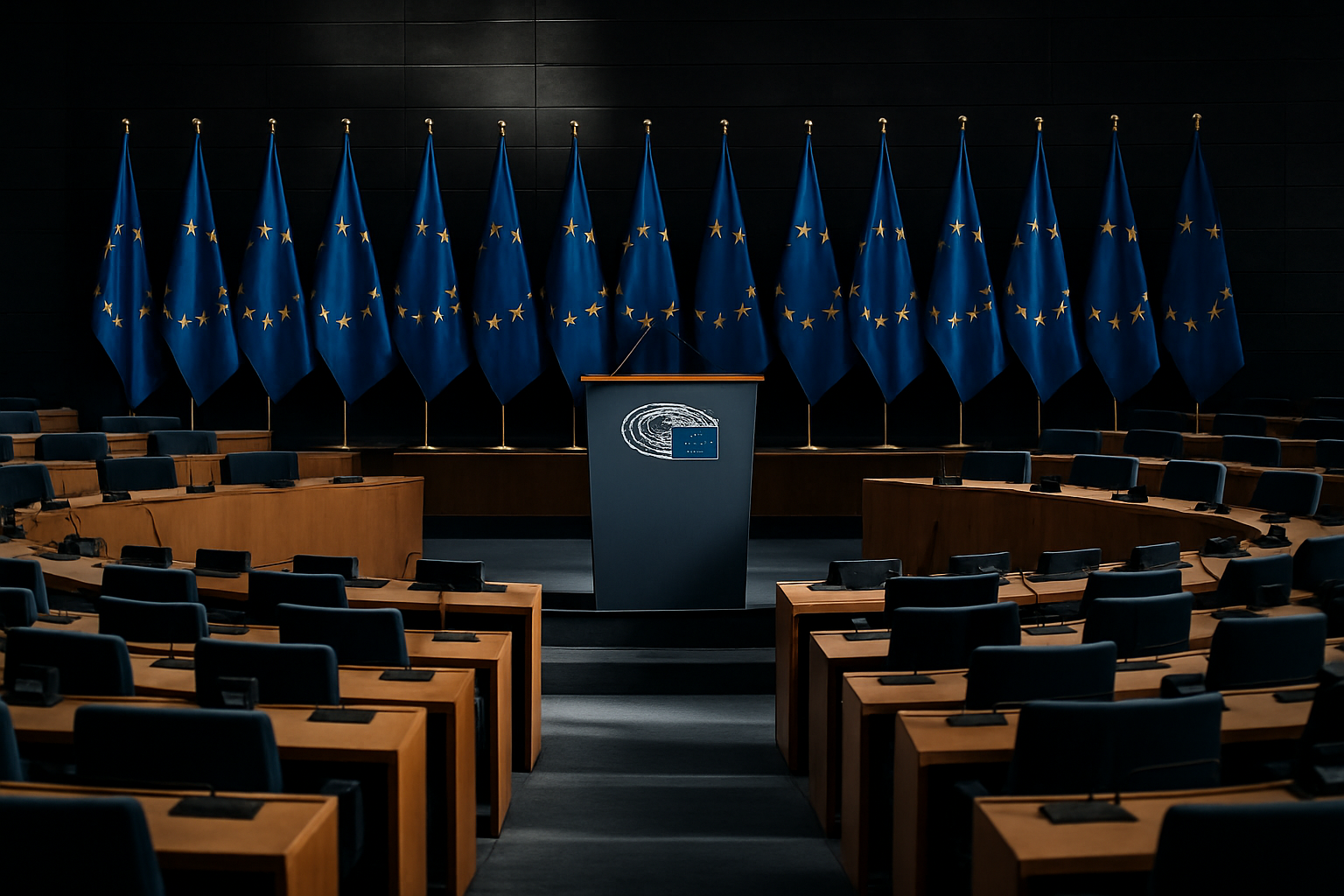
European political institutions faced mounting pressure on February 11, 2026, as multiple member states grappled with leadership crises, institutional challenges, and growing tensions between national sovereignty and European integration. From Austria's Social Democratic Party rejecting a former chancellor's comeback bid to Poland's stark warnings about potential EU departure, the continent's political landscape revealed deep structural strains.
Austria's SPÖ Rejects Kern's Political Comeback
Austria's political establishment was shaken when former Chancellor Christian Kern announced his decision not to pursue the leadership of the Social Democratic Party (SPÖ), citing a lack of consensus within the party ranks. The decisive blow came from Vienna's powerful party leadership, who gave Kern "the cold shoulder," effectively ending his political comeback aspirations.
The rejection clears the path for current party leader Andreas Babler's uncontested re-election as SPÖ chairman, consolidating his control over Austria's main opposition party. This development comes amid broader challenges for Austrian social democracy, which has struggled to regain relevance following successive electoral defeats.
Political observers note that the Vienna party organization's opposition to Kern reflects deeper ideological divisions within Austrian social democracy about the party's future direction and leadership style.
Poland's Existential Warning to European Union
In perhaps the most alarming development for European unity, Polish Prime Minister Donald Tusk issued a stark warning about a "real risk" of Poland leaving the European Union. Speaking on Wednesday, Tusk attributed this potential catastrophe to internal political battles, particularly his confrontations with President Karol Nawrocki, which could ultimately lead to Europe's "destabilization."
"Fundamentally, there is a real risk - and I'm talking about the possibility that Poland could leave the European Union due to internal struggles,"
— Donald Tusk, Polish Prime Minister
Tusk's warning represents one of the most serious acknowledgments by a sitting EU leader about the fragility of European integration. The admission comes at a time when Eurobarometer polling shows 89% of Europeans demanding greater EU unity, highlighting the disconnect between public sentiment and political realities.
The Polish situation exemplifies broader challenges facing European democracies, where domestic political conflicts increasingly threaten continental stability and integration projects that have defined European politics for decades.
Slovakia Challenges EU Whistleblower Framework
Adding to institutional tensions, the European Commission initiated formal proceedings against Slovakia over changes to its whistleblower protection office. Brussels argues that Slovakia's modifications violate EU law, creating another flashpoint in the ongoing debate over national sovereignty versus European legal standards.
The Commission is now awaiting the Slovak government's response to its concerns, with the case potentially escalating to the European Court of Justice if no resolution is reached. This dispute reflects broader patterns of EU member states challenging Brussels' authority over domestic institutional arrangements.
Slovakia's whistleblower protection reforms have been controversial domestically, with critics arguing they weaken protections for those exposing government wrongdoing. The EU's intervention underscores the complex balance between respecting national governance and maintaining European legal standards.
Spain's Regional Coalition Tensions
Meanwhile, Spain's regional politics demonstrated the complex negotiations required for democratic governance. In Extremadura, the Popular Party (PP) faces significant challenges in forming a government with Vox, as Santiago Abascal's party demands four key ministries and a vice-presidency.
The PP's regional leadership no longer rules out another electoral repetition, reflecting the difficulties of coalition building in an increasingly fragmented political landscape. The first investiture session for María Guardiola is scheduled for March 3, coinciding with election campaigns in Castilla y León.
These coalition negotiations occur against the backdrop of similar challenges in Aragón, where PP and Vox are also seeking agreement. Regional sources suggest that while Aragón's negotiations may conclude quickly, Extremadura's talks could extend to the maximum possible timeframe.
Agricultural Policy Successes and Challenges
Amid political turbulence, Slovakia reported significant success in agricultural funding absorption, achieving 99.25% utilization of Rural Development Program resources by the end of 2025. However, this success came with political controversy, as Agriculture Minister Takáč's claims faced criticism from opposition leader Remišová, who reminded him of millions of euros in lost funding.
This agricultural policy debate reflects broader questions about EU funding effectiveness and member state capacity to maximize European development opportunities while managing domestic political accountability.
Broader European Context and Implications
These developments unfold against a backdrop of unprecedented challenges to European integration. Recent memory recalls reveal patterns of political fragmentation, institutional stress, and growing tensions between national identity and European solidarity across the continent.
The convergence of leadership crises in Austria, existential warnings from Poland, legal challenges from Slovakia, and coalition difficulties in Spain suggests that European democracy faces systemic pressures that transcend individual national politics.
Particularly concerning is the gap between public support for European unity—with 89% of citizens favoring greater EU cooperation according to recent Eurobarometer data—and the political reality of increasing institutional friction and sovereignty assertions by member state governments.
Looking Forward: Democratic Resilience Under Test
As Europe approaches crucial decision points in 2026, these political developments test the resilience of democratic institutions across the continent. The ability of European leaders to manage domestic pressures while maintaining continental cooperation will likely determine the trajectory of European integration for the coming decade.
The Polish Prime Minister's warning about potential EU departure represents more than a domestic political calculation—it signals the fragility of the European project when national political systems come under stress. Similarly, the institutional challenges in Slovakia and Austria reflect broader questions about the sustainability of European governance frameworks under pressure.
Success in navigating these challenges will require political innovation, institutional adaptation, and renewed commitment to democratic principles that have underpinned European success since World War II. The stakes extend far beyond individual member states to encompass the future of democratic governance in an increasingly turbulent global environment.