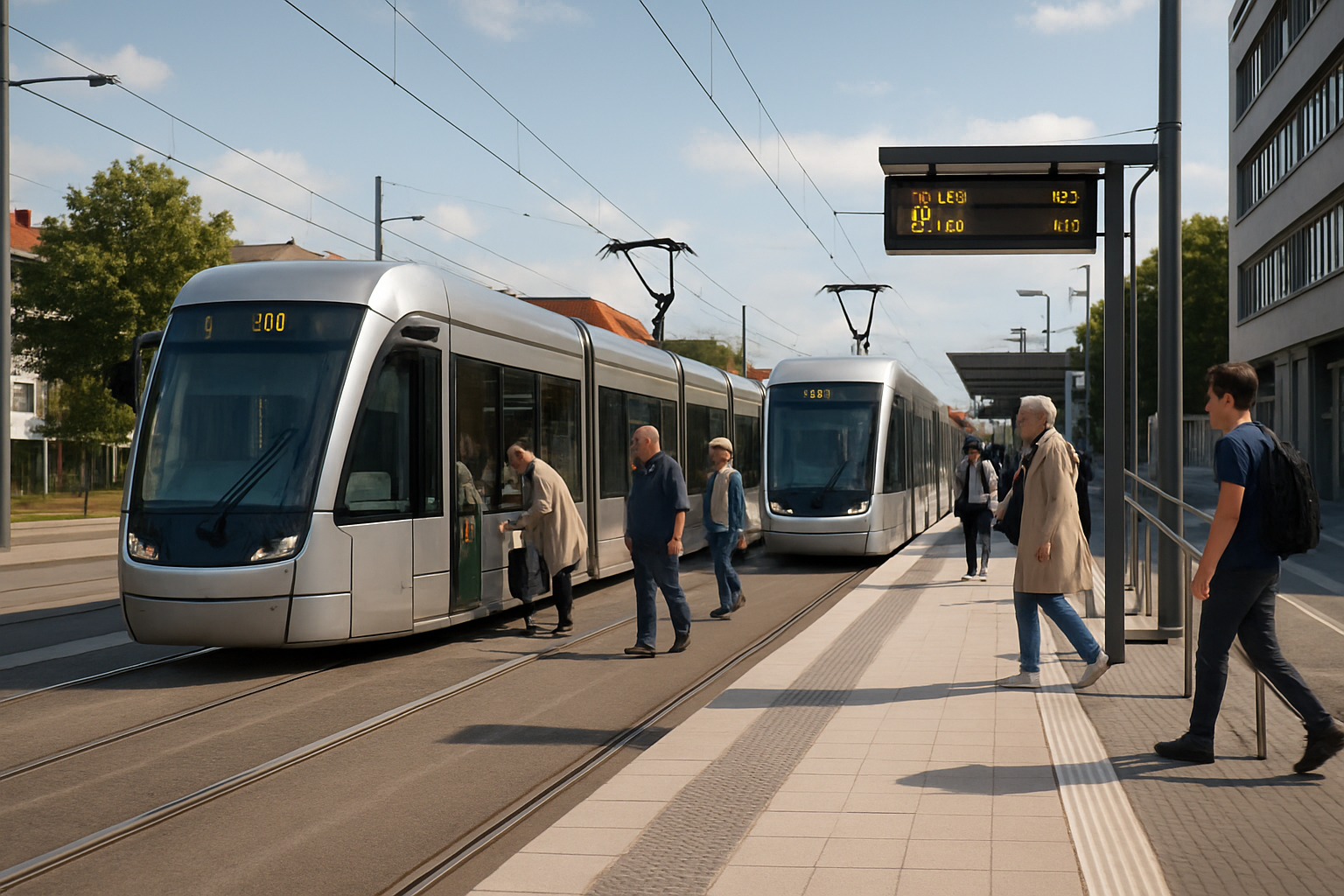
European cities are experiencing a transformative wave of public transportation modernization, with Estonia's Tallinn upgrading tram infrastructure and Luxembourg's rail network achieving record ridership of 31.4 million passengers in 2025, marking a new era of sustainable urban mobility across the continent.
The modernization efforts span from the Baltic states to Western Europe, reflecting a coordinated approach to urban transportation that prioritizes accessibility, efficiency, and environmental sustainability. These developments are part of an unprecedented €570+ billion global infrastructure surge that has positioned Europe as a leader in sustainable transportation innovation.
Infrastructure Upgrades Transform Urban Networks
In Tallinn, Estonia's capital, the public transport company has launched a comprehensive overhaul of the tram system's aging infrastructure. Starting March 7, 2026, workers will replace worn tram rails near the Lubja stop on Tartu maantee, a critical section that has long challenged the efficiency of Estonia's sustainable transport network.
The Lubja stop modernization project, scheduled for completion by May 31, represents more than routine maintenance—it's part of Estonia's broader leadership in sustainable urban transport. The nation already boasts 88% renewable electricity usage and operates Europe's largest battery storage system, powering 90,000 households while maintaining an impressive 99.25% EU funding absorption rate, the highest among member states.
This infrastructure renewal connects to Estonia's ongoing Pelguranna tram route development, which extends through the innovative "Pollinator Highway"—a project that demonstrates how modern urban planning balances operational efficiency with environmental stewardship and community acceptance.
Luxembourg Railway Sets European Passenger Records
Luxembourg's impressive public transportation success story continues to evolve, with the national railway company CFL (Chemins de Fer Luxembourgeois) reporting 31.4 million passengers in 2025—a 0.57% increase from 2024 that consolidates the previous year's record achievements.
"The sustained growth in passenger numbers demonstrates the effectiveness of our integrated approach to public transportation modernization and cross-border connectivity."
— CFL Transportation Authority
The Luxembourg model has become a template for European urban transport integration, featuring comprehensive cross-border railway cooperation with French and German representatives under Mobility Minister Yuriko Backes. This Greater Region integration approach addresses the complex transportation needs of a metropolitan area that spans multiple national boundaries.
Luxembourg's success stems from strategic investments in digital monitoring systems, real-time information networks, and integrated payment platforms that connect broader transportation networks. The country's approach exemplifies the sophisticated technology integration that has become standard in modern European public transport development.
Continental Modernization Addresses Climate Goals
The European transportation transformation occurs within the context of urgent climate action requirements. With January 2026 marking the 18th consecutive month of temperatures exceeding 1.5°C above pre-industrial levels, public transportation improvements represent a critical component of continental emissions reduction strategies.
Modern European transport projects incorporate climate adaptation as a central design requirement, including enhanced drainage systems, weather-resistant materials, and backup power infrastructure. The recent experience with extreme weather events—including Storms Kristin, Leonardo, and Marta—has highlighted the vulnerability of traditional transportation networks and accelerated the adoption of climate-resilient design principles.
Technology Integration Drives Service Quality
Across European cities, public transportation authorities are implementing sophisticated technological solutions that fundamentally improve passenger experience and operational efficiency. These systems include:
- Real-time passenger information displays and mobile applications
- Predictive maintenance systems using sensors and AI analytics
- Integrated digital payment platforms accepting multiple forms of electronic transactions
- Environmental monitoring systems that optimize energy consumption
- Automated operations that enhance safety and reliability
The technology integration extends beyond passenger-facing improvements to include comprehensive data analytics that enable transportation authorities to optimize routes, reduce energy consumption, and anticipate maintenance needs before system failures occur.
Accessibility Enhancements Transform Urban Mobility
European cities are implementing comprehensive accessibility improvements that ensure public transportation serves all community members regardless of physical capabilities or economic circumstances. These enhancements include:
Modern stations feature tactile guidance systems for visually impaired passengers, wheelchair-accessible platforms with appropriate height adjustments, and audio announcements in multiple languages reflecting Europe's diverse urban populations. The approach goes beyond legal compliance to create genuinely inclusive transportation networks that serve aging populations and diverse communities.
The accessibility focus reflects broader European Union priorities for social inclusion and demonstrates how infrastructure investment can simultaneously address transportation efficiency and social equity objectives.
Regional Integration Strengthens Continental Connectivity
The European transportation modernization emphasizes cross-border integration that strengthens the EU single market through physical connectivity. Projects like Luxembourg's Greater Region cooperation and Estonia's participation in the Rail Baltica initiative demonstrate how local improvements contribute to continental integration objectives.
Cross-border coordination requires sophisticated approaches to standardized maintenance schedules, compatible communication systems, and coordinated service planning across national boundaries. Success depends on sustained political commitment, transparent governance frameworks, and adaptive management strategies that balance national sovereignty with regional cooperation benefits.
Economic Impact Extends Beyond Transportation
The economic implications of European transportation modernization extend far beyond construction employment and passenger convenience. Enhanced connectivity reduces logistics costs, improves regional competitiveness, and supports tourism development while creating permanent employment in maintenance, operations, and system management.
Luxembourg's record passenger growth demonstrates how effective public transportation attracts ridership, reduces private vehicle dependence, and supports urban economic development. Similarly, Estonia's infrastructure improvements position the country as a model for other EU member states seeking to maximize development fund utilization while advancing climate objectives.
"Investment in public transportation creates multiplier effects throughout the economy, from reduced healthcare costs due to improved air quality to increased property values near transit nodes."
— European Transport Infrastructure Analysis
Challenges and Implementation Strategies
Despite significant progress, European transportation modernization faces ongoing challenges including semiconductor shortages affecting control systems, construction cost inflation creating negative developer margins, and the complexity of coordinating improvements while maintaining existing services.
Success factors identified across European projects include comprehensive community engagement, transparent procurement processes, adaptive management approaches that respond to changing conditions, and sustained political commitment that transcends electoral cycles. The most successful projects demonstrate sophisticated project management that combines international best practices with local expertise and community input.
Future Trajectory and Global Influence
The European approach to public transportation modernization increasingly serves as a global model for sustainable urban mobility. The combination of technological innovation, environmental sustainability, social inclusion, and regional integration provides templates for transportation authorities worldwide.
As climate challenges intensify and urban populations continue growing, the European experience demonstrates how coordinated investment in public transportation can simultaneously address environmental protection, economic development, and social connectivity objectives. The success of projects in Estonia, Luxembourg, and across the continent establishes precedents that will influence transportation policy globally for decades ahead.
The ongoing transformation represents more than infrastructure improvement—it embodies a comprehensive vision of sustainable urban development that positions European cities at the forefront of 21st-century mobility solutions. With continued investment and international cooperation, European public transportation modernization continues setting global standards for accessible, efficient, and environmentally responsible urban mobility.