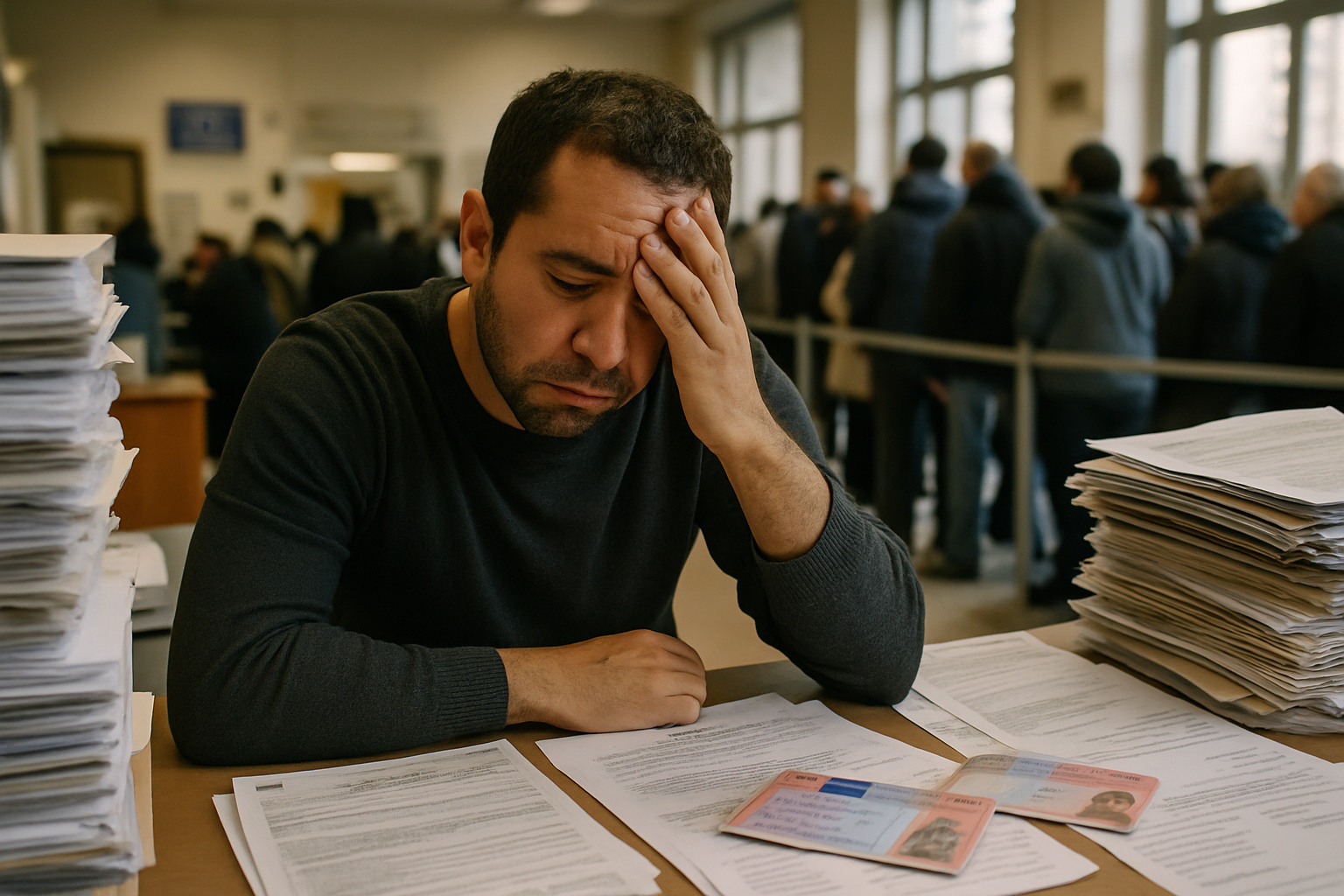
Foreigners across Europe are experiencing what many describe as a "bureaucratic nightmare" as severe delays in processing residency cards leave millions in legal limbo, with their lives effectively on hold while administrative systems struggle to cope with mounting backlogs.
The crisis, which spans multiple European Union member states including France, Germany, Italy, and Spain, has created unprecedented challenges for long-term residents, skilled workers, and family members of EU citizens who find themselves unable to access basic services, maintain employment, or travel freely while waiting for critical documentation.
The Scope of the Crisis
According to reports from The Local media outlets across Europe, bureaucratic backlogs and rule changes on residency rights are having an increasing impact on the lives of foreigners living throughout the continent. The situation has deteriorated significantly since early 2026, with processing times extending well beyond statutory limits in many countries.
The delays affect various categories of residence permits, from initial applications for newcomers to renewals for established residents. Many applicants report waiting periods of six months to over a year for documents that legally should be processed within 90 days. During these extended waiting periods, individuals often cannot work legally, access healthcare, rent accommodation, or travel outside their host country.
Administrative Breakdown Across Europe
The crisis appears to stem from multiple converging factors that have overwhelmed immigration systems across Europe. Post-Brexit documentation requirements have added complexity to residency procedures, while the digitization of immigration systems—including the implementation of new biometric requirements—has created technical bottlenecks.
France has been particularly affected, with citizenship applications doubling in December 2025 as foreigners scrambled to meet new B2 French language requirements implemented in January 2026. Even applicants who submitted before the deadline still face the language test requirement, creating what many describe as an impossible situation.
Germany's immigration system has also experienced significant strain despite the country's recognition that it requires 288,000 foreign workers annually to prevent a 10% workforce contraction by 2040, according to the Bertelsmann Foundation. The contradiction between economic necessity and administrative capacity has created a critical gap in processing capabilities.
Human Cost of Bureaucratic Failures
The human impact of these delays extends far beyond administrative inconvenience. Families report being unable to reunite with relatives, skilled professionals cannot take up employment opportunities, and students risk losing their academic status due to documentation gaps.
Healthcare access has become a particular concern, with many individuals unable to register for insurance or access medical services during processing delays. The situation has created a two-tiered system where those with valid documentation can access services while those caught in the bureaucratic backlog face exclusion from basic rights and services.
"Many say they have been left in legal limbo with their lives effectively on hold."
— European Immigration Reports
Technological Promises, Administrative Reality
The European Union's Entry/Exit System (EES), which detected over 4,000 overstayers in its first four months of operation, demonstrates that technological solutions can be effective when properly implemented. However, the same system has also created significant processing delays, requiring partial summer suspensions due to infrastructure limitations at older airports.
The contrast between technological success in border control and failures in residency processing highlights the uneven implementation of digital immigration systems across Europe. While border technology has improved detection capabilities, back-office processing systems have failed to keep pace with demand.
Economic Implications and Labor Market Impact
The residency card delays are creating significant economic consequences across multiple sectors. Construction, healthcare, and agriculture—industries already facing severe labor shortages—are being further impacted by the inability of qualified workers to obtain proper documentation.
In contrast, countries like Albania have successfully integrated 27,000 foreign nationals to address workforce gaps, demonstrating that effective immigration processing can support economic needs. The stark difference in outcomes highlights how administrative efficiency can be achieved with proper resource allocation and political commitment.
European Policy Context
The residency card crisis occurs against a backdrop of significant changes in European migration policy. The European Parliament approved historic asylum changes in February 2026, allowing deportations to "safe" third countries through a center-right/far-right alliance, representing the most significant shift in migration policy since the 2015-16 refugee crisis.
These policy changes, combined with enhanced cooperation mechanisms that enable smaller member state groups to advance restrictive policies without unanimity, have created a complex environment where legitimate residents face increasing bureaucratic barriers even as enforcement measures are strengthened.
International Responses and Solutions
Some European countries have begun implementing emergency measures to address the crisis. Digital delegation systems, fast-track processing for critical cases, and enhanced coordination between national and local authorities represent potential solutions that could be scaled across the continent.
However, the fundamental issue remains one of resource allocation and political will. The crisis demonstrates that effective immigration administration requires sustained investment in both technology and human resources, not just enforcement mechanisms.
Looking Forward: Reform Imperatives
The current crisis highlights the urgent need for comprehensive reform of European residency processing systems. Key requirements include adequate funding for immigration services, streamlined procedures that balance security with efficiency, and enhanced coordination between member states to prevent administrative gaps.
The situation also underscores the importance of maintaining humanitarian considerations in immigration policy. While security concerns are legitimate, the current delays create human suffering that undermines the fundamental European values of dignity and fair treatment.
As European leaders grapple with climate displacement pressures—March 2026 marked the 19th consecutive month of temperatures exceeding 1.5°C above pre-industrial levels—the need for functional immigration systems becomes even more critical. The current administrative failures not only harm individuals caught in the bureaucratic maze but also weaken Europe's capacity to respond to future migration challenges.
The resolution of the residency card crisis will serve as a template for European nations' ability to balance legitimate security concerns with humanitarian obligations and economic needs. Success in reforming these systems will determine whether Europe can maintain its values while effectively managing complex migration flows in the 21st century.