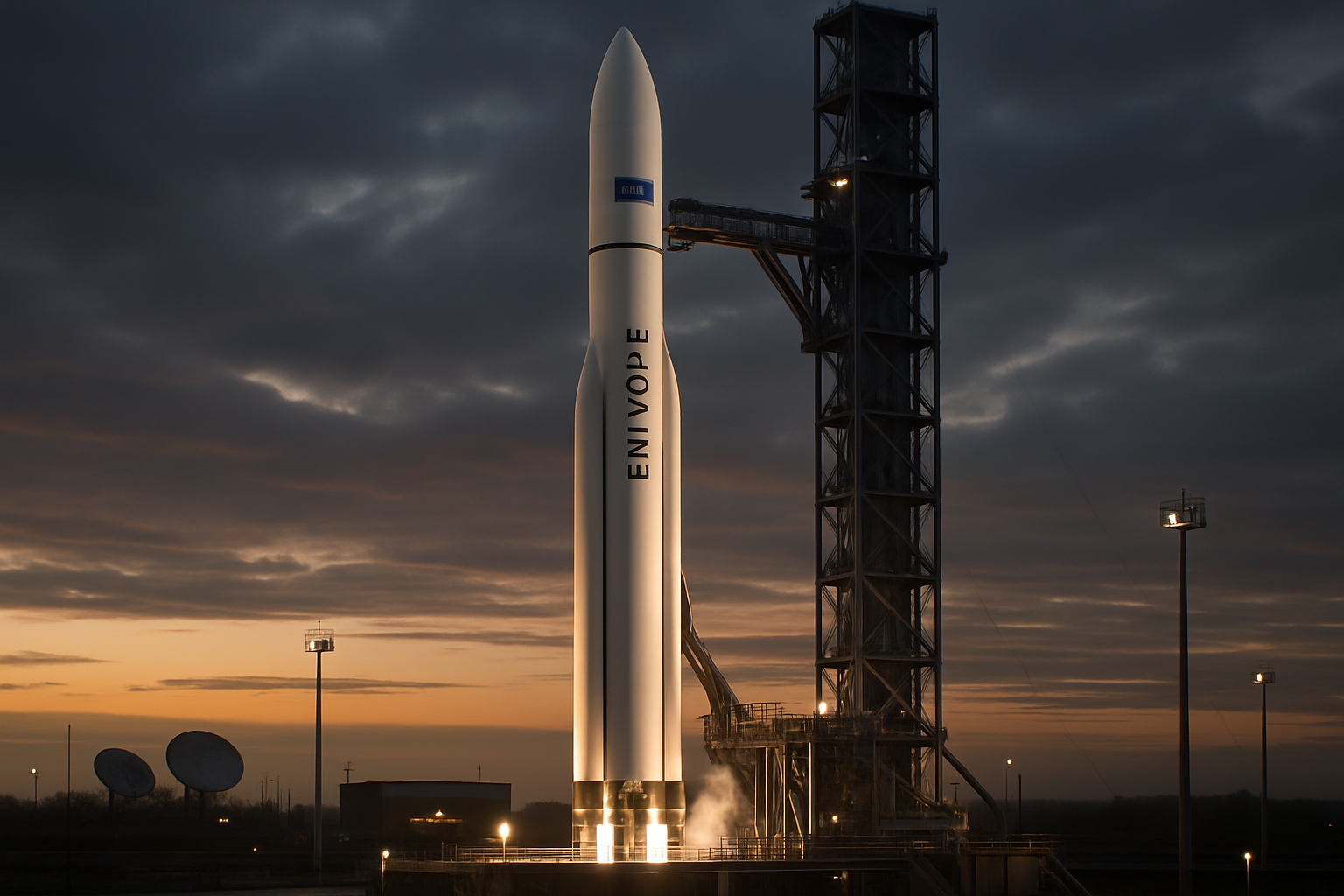
European space technology companies encountered significant challenges this week as Germany's Isar Aerospace aborted its second test flight attempt, highlighting the persistent technical hurdles facing the continent's ambitious space independence drive during an increasingly competitive global market.
The German aerospace company Isar Aerospace was forced to cancel the launch of its Spectrum rocket just moments before liftoff, marking another setback in Europe's quest for sovereign space capabilities. The cancellation occurred without disclosed reasons, adding to growing concerns about the technical challenges facing European space ventures as they compete with established players like SpaceX and emerging powerhouses from China.
Norway Secures Strategic Space Partnership
In a contrasting development, Norwegian Trade Minister Cecilie Myrseth signed a significant agreement in Brussels ensuring Norway's participation in the European Union's massive satellite communication program. The timing proved particularly notable, coming just one day after a failed rocket launch at the Andøya Space Center, demonstrating Norway's commitment to space technology despite recent setbacks.
The agreement represents a strategic pivot toward collaborative space infrastructure development, positioning Norway as a key player in Europe's answer to American satellite dominance. This move aligns with broader European Union initiatives to establish technological sovereignty in critical space-based communications systems.
Swedish Aerospace Success Story
While Germany and Norway faced challenges, Sweden provided a bright spot for European aerospace capabilities. Defense contractor Saab successfully unveiled the first Gripen E fighter aircraft manufactured in Brazil, demonstrating the global reach and technological sophistication of Swedish aerospace engineering.
The Brazilian-built Gripen E represents a significant milestone in international aerospace cooperation, showcasing Sweden's ability to transfer advanced manufacturing capabilities to partner nations. This achievement underscores the potential for European aerospace companies to compete globally, even as space technology ventures face mounting technical and competitive pressures.
Global Space Economy Context
These developments occur during what industry analysts describe as the "space economy golden age," with global space infrastructure investments projected to exceed $1 trillion by 2030. However, this growth brings intensified competition from multiple fronts, including China's advancing Shenlong spacecraft program, SpaceX's preparation for a potential trillion-dollar IPO in June 2026, and emerging space capabilities from nations like Pakistan, which recently selected astronauts for China's Tiangong space station.
European space independence efforts face particular urgency as global supply chain disruptions affect critical components. The ongoing semiconductor crisis, with memory chip prices increasing sixfold, has prompted exploration of space-based data centers as alternative solutions. This technological shift could fundamentally alter the economics of space-based computing and communications infrastructure.
Technical Challenges and Safety Protocols
The Isar Aerospace test flight abortion reflects the complex safety protocols governing modern space operations. European space companies, like their counterparts worldwide, have adopted rigorous safety-first approaches following lessons learned from historical space program tragedies. These methodical approaches, while sometimes causing delays, ensure the long-term viability of space technology development.
The technical challenges facing European space ventures mirror broader industry trends, where weather dependency, sophisticated systems integration, and economic sustainability pressures create significant operational hurdles. Unlike government programs with flexible timelines, commercial space companies require predictable launch schedules for financial sustainability.
Strategic Implications for European Space Policy
The mixed results across European space initiatives highlight the complex nature of achieving technological sovereignty in an increasingly competitive global market. Norway's successful EU satellite program participation demonstrates the potential for collaborative approaches, while Germany's Isar Aerospace setbacks underscore the technical challenges of independent capabilities development.
European space strategy increasingly emphasizes specialized capabilities rather than comprehensive hardware manufacturing, recognizing that smaller nations can achieve significant impact through targeted investments in specific technologies. This approach allows for strategic positioning in the emerging trillion-dollar space economy while managing resource constraints.
International Competition and Cooperation
The current European space landscape reflects broader themes of international cooperation and competition. While collaboration continues through programs like the International Space Station and various bilateral partnerships, competitive dynamics intensify around launch capabilities, satellite infrastructure, and space-based services.
China's recent advancement with its fourth Shenlong spacecraft launch, combined with expanding partnerships including Pakistan's astronaut program, demonstrates the global democratization of space capabilities. This trend requires European nations to balance collaborative approaches with competitive positioning to maintain relevance in the rapidly evolving space economy.
Future Outlook and Strategic Positioning
Despite current setbacks, European space companies continue building toward long-term objectives including lunar exploration support, satellite constellation deployment, and space-based manufacturing capabilities. Success in these endeavors requires sustained investment in technology development, operational infrastructure, and international partnerships.
The convergence of artificial intelligence, space technology, and global communications infrastructure creates unprecedented opportunities for European aerospace companies that can successfully navigate current technical challenges. The integration of AI systems with autonomous space operations, as demonstrated by recent NASA Mars rover missions, points toward future operational models that could benefit European space ventures.
As the space economy transitions from experimental to essential infrastructure, European success will depend on resolving current technical challenges while maintaining competitive positioning against established and emerging global players. The coming months will prove critical in determining whether European space ambitions can achieve the technological sovereignty and commercial viability necessary for long-term success in humanity's expanding cosmic presence.