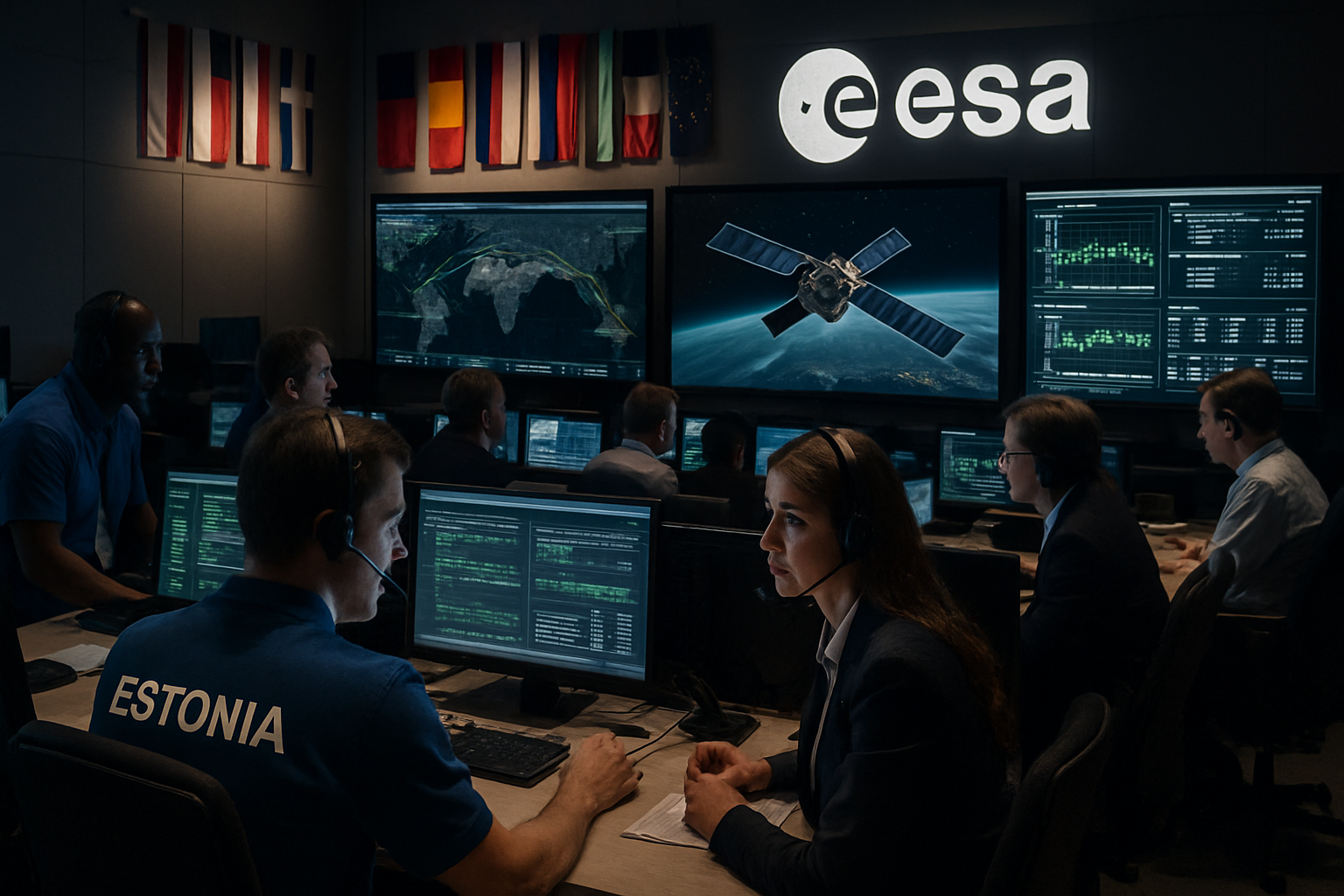
Estonian engineers working at the European Space Agency's research hub in the Netherlands are playing a pivotal role in designing and testing space missions as Europe accelerates its push for technological sovereignty in the rapidly expanding global space economy, now projected to exceed $1 trillion by 2030.
The presence of Estonian specialists at ESA facilities represents a significant milestone for the Baltic nation, which has transformed from a post-Soviet state into a digital innovation leader now extending its technological expertise into space exploration. These engineers are contributing to complex space systems development during what analysts call the "space economy golden age" – a period marked by unprecedented commercial investment and international competition.
Estonia's Strategic Space Positioning
Estonia's involvement in European space initiatives extends far beyond symbolic participation. The country has positioned itself as a key contributor to European space defense architecture, with President Alar Karis emphasizing Estonia's critical role in the continent's space capabilities. This involvement leverages Estonia's world-renowned cybersecurity expertise and advanced digital infrastructure – the nation boasts 99% digital services adoption among its citizens.
The Estonian engineers at ESA are working on multiple fronts, from satellite technology development to mission planning and execution. Their contributions are particularly valuable in areas where Estonia has established global leadership, including cybersecurity applications for space-based systems and digital infrastructure that supports complex space operations.
"Estonia's technological sovereignty through specialized capabilities rather than massive resource investment demonstrates how smaller nations can achieve disproportionate influence in the space sector."
— Space Industry Analysis, April 2026
Blue Origin's Mission Challenges Highlight Industry Complexities
The optimism surrounding European space achievements has been tempered by setbacks in the commercial space sector. Blue Origin, Jeff Bezos's aerospace company, experienced a significant failure during its first satellite deployment mission, with reports indicating that a satellite ended up in the wrong orbital position. This represents a substantial setback for the company as it seeks to compete with SpaceX's established dominance in the commercial launch sector.
The Blue Origin mission failure underscores the technical complexities inherent in space operations, even as the industry has matured significantly. The incident occurred as Blue Origin prepares to challenge SpaceX's market position with its ambitious 51,600-satellite constellation designed to support space-based data centers – a project that could revolutionize computing infrastructure by offering unlimited expansion potential with continuous solar power and no cooling requirements.
European Space Independence Drive
The contrast between Estonia's measured contributions to European space capabilities and Blue Origin's commercial setbacks highlights different approaches to space sector development. Europe is pursuing a strategy of technological sovereignty through coordinated investment and specialized excellence rather than attempting to match the scale of American or Chinese programs.
This approach is exemplified by recent developments across the continent. Germany has announced an unprecedented €35 billion investment in military space defense systems, abandoning decades of restrictive space militarization policies. Sweden continues to host Isar Aerospace facilities that test 30 rocket engines monthly, demonstrating European commitment to independent launch capabilities.
The European strategy reflects lessons learned from other sectors where dependence on foreign technology created vulnerabilities. The space economy's transition from experimental to essential infrastructure – supporting everything from navigation and communications to weather forecasting and financial services – has made technological sovereignty a national security imperative.
Aviation Sector Developments
While space technology captures headlines, developments in aviation continue to demonstrate industry resilience and innovation. The helicopter industry, represented by companies like Core Aviation in New Zealand, is expanding operations and bringing new aircraft technologies to local markets. These developments, though geographically distant from Europe, reflect global aviation industry trends toward consolidation and technological advancement.
The aviation sector's evolution parallels space industry development, with both sectors experiencing pressure to balance innovation with safety, commercial interests with regulatory requirements, and national capabilities with international cooperation. Estonia's digital expertise proves valuable in both domains, particularly in areas involving autonomous systems, data processing, and cybersecurity.
International Competition and Cooperation
Estonia's space contributions occur within a complex international environment characterized by both cooperation and competition. While European nations collaborate through ESA programs, they simultaneously compete with China's systematic space advancement and American commercial dominance. China is planning crewed lunar missions by 2030, while SpaceX prepares for a potentially trillion-dollar IPO in June 2026.
This dynamic creates opportunities for countries like Estonia to leverage their specialized capabilities. Rather than attempting to develop comprehensive space programs independently, Estonia focuses on areas where it can achieve excellence and contribute meaningfully to collective European efforts. This strategy has proven successful in cybersecurity and digital governance, sectors where Estonia has achieved global recognition despite its small size.
Technology Integration Challenges
The space industry faces significant technological challenges that extend beyond launch capabilities and satellite deployment. The global semiconductor crisis, with memory chip prices increasing sixfold, affects both space-based systems and ground infrastructure. This crisis drives interest in space-based computing solutions, where Estonian expertise in digital systems and cybersecurity becomes particularly valuable.
Environmental considerations also influence industry development. Austrian research has documented atmospheric pollution from rocket debris, including tenfold increases in lithium concentrations from launch activities. European space agencies must balance expansion goals with environmental sustainability, requiring sophisticated technical solutions and international coordination.
Future Implications for European Space Leadership
Estonia's contributions to ESA, combined with broader European space investments, position the continent as an increasingly important player in the global space economy. The failure of Blue Origin's mission, while representing a setback for American commercial space efforts, creates opportunities for European alternatives to gain market share and demonstrate technological reliability.
The success of European space initiatives depends on sustained political commitment, continued technological innovation, and effective international coordination. Estonia's model – leveraging specialized expertise rather than pursuing comprehensive capabilities – offers a template for other smaller nations seeking meaningful participation in space activities.
"The space economy's evolution from experimental endeavor to essential infrastructure requires diverse expertise and sustained collaboration. Estonia's specialized contributions demonstrate how nations can achieve significant impact through focused excellence."
— European Space Policy Analysis, 2026
Economic and Strategic Significance
The economic implications of European space development extend far beyond the aerospace sector itself. Space-based infrastructure increasingly supports critical functions including financial services, transportation logistics, agricultural monitoring, and climate research. Estonia's digital economy, already among the world's most advanced, positions the nation to capture significant value from space-based applications and services.
The strategic significance of space capabilities has become evident through recent geopolitical events, including the demonstrated ability of satellite network operators to influence military operations by controlling access to communications infrastructure. This reality reinforces the importance of European technological sovereignty and the value of Estonia's cybersecurity expertise in protecting space-based assets.
As the global space economy continues its rapid expansion, Estonia's combination of digital innovation, cybersecurity leadership, and strategic European partnerships positions the nation to play an increasingly important role in humanity's expansion beyond Earth. The contrast with Blue Origin's recent setbacks highlights the value of measured, collaborative approaches to space technology development over purely commercial ventures seeking rapid market dominance.