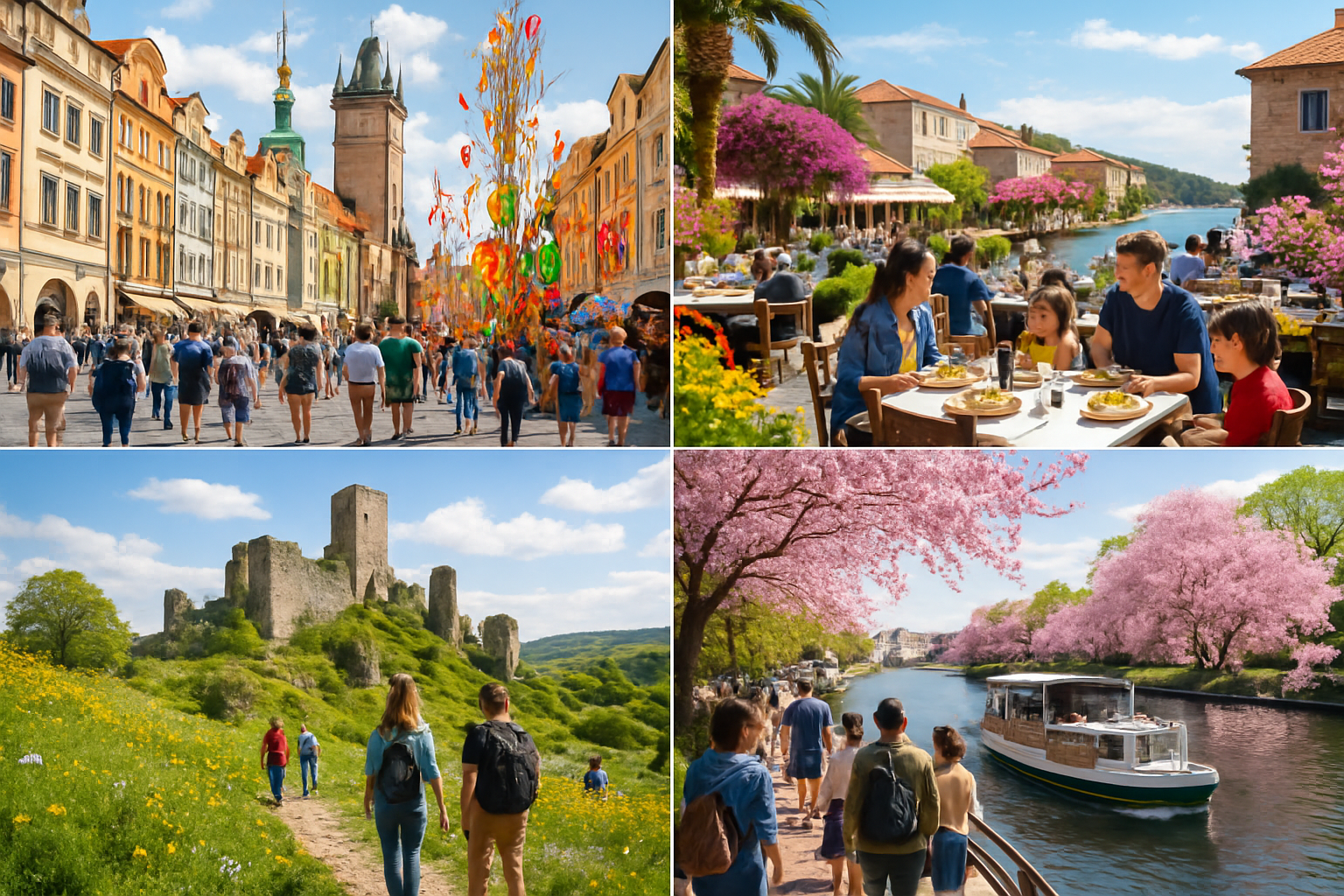
Europe is experiencing a remarkable spring tourism renaissance in 2026, with Croatia's massive new resort developments, Prague's enhanced transportation networks, and innovative cultural destinations across France and Portugal leading a continent-wide transformation that is reshaping global travel patterns.
The spring tourism surge represents more than seasonal growth—it signals a fundamental shift in the European tourism industry toward quality-focused experiences, cultural authenticity, and sustainable development that is attracting travelers worldwide while generating unprecedented economic returns.
Croatia's Tourism Infrastructure Revolution
Croatia has unveiled its most ambitious tourism project in years with the opening of the new Pical Resort 5* in Poreč after 18 months of intensive construction. The massive development, featuring the Pical Event Center and Restaurant Parenzana, represents a cornerstone of Croatia's strategy to position itself as Europe's premier luxury destination beyond traditional coastal tourism.
The resort opening coincides with Croatia's deployment of 62 tourist medical clinics for the 2026 season—Europe's most extensive seasonal healthcare network—demonstrating the country's commitment to comprehensive visitor services. This infrastructure investment is part of a broader €570+ billion global tourism surge that has positioned Croatia as a leader in post-pandemic tourism innovation.
"Croatia's tourism advantages remain strong as travelers increasingly seek safer European alternatives with authentic cultural experiences,"
— Tourism Industry Analysis, March 2026
The healthcare network represents a strategic evolution from volume-based to quality-focused tourism, addressing Generation Z preferences for comprehensive services while maintaining cultural authenticity. Croatia's approach has become a template for destinations worldwide seeking to balance economic growth with community well-being.
Prague's Transportation Renaissance
The Czech Republic capital is welcoming spring 2026 with significant enhancements to its tourism infrastructure, particularly through expanded river ferry services and historic train operations that are revolutionizing how visitors experience the city's cultural treasures.
Prague's river ferry system, captured beautifully in recent tourism photography, now provides seamless connectivity across the Vltava River, offering tourists an authentic way to experience the city's medieval architecture from unique waterside perspectives. The expansion includes both historical steamboat operations and modern passenger vessels designed to reduce street congestion while enhancing visitor experiences.
The historic train services complement Prague's existing cultural offerings, providing access to regional destinations while maintaining the authentic character that has made Czech Republic one of Europe's most sought-after cultural tourism destinations. These transportation improvements support the broader European trend toward sustainable tourism that reduces environmental impact while increasing visitor satisfaction.
France and Portugal: Hidden Gems and Cultural Depth
France continues to reveal lesser-known cultural destinations, with cities like Lublin gaining international attention for their Renaissance facades, modernist architecture, and significant historical sites including medieval old towns and royal castles. These destinations represent France's strategy to distribute tourism benefits beyond Paris while preserving authentic cultural character.
Portugal is showcasing international destinations through innovative partnerships, with recent coverage of Stavanger, Norway highlighting how Portuguese tourism expertise is being applied globally. The focus on unique destinations like Norway's Pulpit Rock and fjord experiences demonstrates Portugal's evolving role as a cultural tourism curator rather than merely a destination.
The Stavanger coverage emphasizes authentic experiences such as traditional scallop harvesting in Norwegian fjords, representing the type of immersive cultural tourism that Generation Z travelers increasingly demand. These experiences combine adventure, cultural learning, and environmental engagement in ways that create lasting memories while supporting local communities.
Industry Transformation and Technology Integration
The European spring tourism renaissance is occurring within the context of massive industry transformation driven by technological innovation and changing consumer preferences. Rome's Trevi Fountain has become a global model with its €2 entry system generating €6 million annually while effectively managing overcrowding and preserving heritage sites.
Venice has expanded its pioneering entry fee system to 60 days in 2026, compared to 29 days during the 2024 pilot phase, demonstrating how technology can enable sustainable tourism management. These digital solutions are being implemented across Europe as destinations seek to balance visitor numbers with quality experiences and community well-being.
The transformation is driven significantly by Generation Z travelers, who made 50% of multiple trips lasting 5+ days in 2025, demanding AI-integrated travel planning combined with authentic cultural experiences. This demographic shift is forcing destinations to enhance technology infrastructure while preserving cultural authenticity—a balance that Europe is achieving more successfully than other regions.
Economic Multiplier Effects and Regional Cooperation
European tourism's spring renaissance extends far beyond immediate hospitality revenues, creating comprehensive economic multiplier effects through infrastructure improvements, cultural industry support, artisan networks, and year-round employment creation. Cyprus achieved record performance with 4.5 million visitors generating €3.6 billion revenue in 2025, demonstrating how strategic development can create sustainable economic foundations.
Regional cooperation is replacing traditional destination competition, with initiatives like Austria's European Marathon Classics featuring eight iconic marathons across different countries. This collaborative approach creates multi-destination experiences that benefit entire regions rather than individual cities, representing a mature approach to tourism development.
The economic benefits extend to cultural preservation and community development. Portugal's "O Turismo acolhe" project connected 123 tourism enterprises with 87 storm-displaced individuals, demonstrating how tourism infrastructure can serve community resilience beyond traditional hospitality functions.
Climate Resilience and Sustainable Development
European tourism development is occurring during critical climate adaptation requirements, with January 2026 marking the 18th consecutive month of global temperatures exceeding 1.5°C above pre-industrial levels. This reality is driving proactive infrastructure design that anticipates extreme weather while maintaining tourism competitiveness.
Austria's success in achieving 28.1% of overnight stays during shoulder seasons demonstrates how sophisticated destination management can redistribute visitor flows to reduce environmental pressure while creating year-round employment. This model is being studied globally as destinations seek sustainable growth strategies.
Climate resilience has become essential for competitiveness, with destinations implementing adaptive infrastructure, alternative transportation networks, and seasonal diversification strategies. Europe's leadership in this area is attracting environmentally conscious travelers while establishing new standards for responsible tourism development.
Future Implications and Global Leadership
The European spring tourism renaissance represents more than seasonal growth—it establishes templates for 21st-century tourism that balances economic objectives with cultural preservation, environmental responsibility, and community benefits. The success factors emerging from 2026 include cultural authenticity preservation, strategic infrastructure investment, meaningful community involvement, and international cooperation.
Europe's approach demonstrates that destinations can enhance offerings while maintaining authentic character, support local professionals, and create sustainable economic foundations. The integration of technology with cultural authenticity, the emphasis on quality over volume, and the focus on comprehensive visitor services are becoming global standards.
As the global tourism industry navigates geopolitical challenges, climate change impacts, and evolving consumer preferences, Europe's spring 2026 renaissance provides a roadmap for sustainable tourism development that serves both visitors and host communities effectively while preserving the cultural and environmental assets that make travel meaningful.