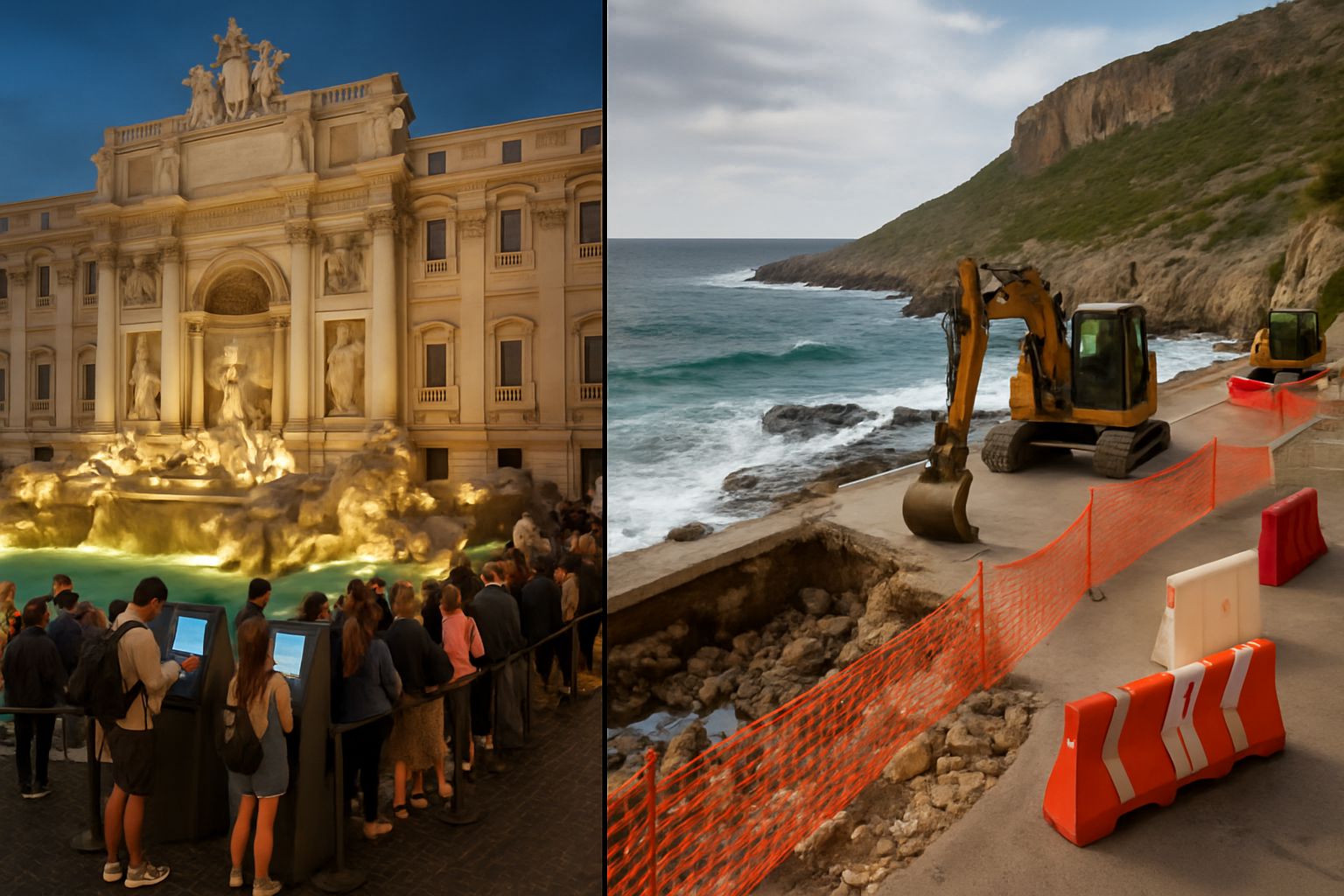
European tourism destinations are taking dramatically different approaches to managing visitor pressures and infrastructure challenges, as Rome implements controversial entry fees at the Trevi Fountain while Malta launches emergency coastal regeneration efforts following severe storm damage.
The divergent strategies highlight the complex balance between revenue generation, crowd control, and disaster recovery that European tourism managers face in 2026, as destinations grapple with overtourism alongside climate-related infrastructure threats.
Rome's Trevi Fountain Fee System Takes Effect
Monday, February 3, marked the official launch of Rome's €2 entry fee system for accessing the iconic Trevi Fountain, representing one of Europe's most significant moves toward paid heritage site access. The fee structure operates during peak hours - weekdays from 11:30 AM to 10:00 PM and weekends from 9:00 AM to 10:00 PM - targeting the busiest tourist periods.
According to data from Il Sole 24 ORE, the first day saw 6,406 visitors enter the controlled area between 9:00 AM and 9:00 PM, with only 86 being Rome residents and metropolitan area locals. The system is projected to generate approximately €6 million annually for monument maintenance and preservation efforts, building on the fountain's record-breaking 10 million visitors in 2025.
The implementation includes advance booking capabilities and digital payment systems, allowing tourists to secure timed entry slots while reducing crowding around the baroque masterpiece. Revenue will be dedicated specifically to Rome's monument preservation program and infrastructure improvements across the city's historic sites.
"This represents a crucial step toward sustainable tourism management for one of the world's most visited monuments,"
— Rome Tourism Authority
Tourist reactions have been mixed, with some expressing frustration at paying for access to historic sites, while others accept the modest fee as reasonable for such an iconic experience. The system represents part of a broader European trend toward user-pay tourism management, following similar initiatives in Venice and other heritage destinations.
Malta Launches Emergency Coastal Regeneration
Meanwhile, Malta is confronting an entirely different tourism management challenge following the devastating impact of Storm Harry in late January 2026. The popular coastal site of Għar Lapsi, valued by both locals and international visitors for its natural beauty and swimming opportunities, suffered severe damage when massive waves caused significant rock instability and terrain shifts.
Infrastructure Minister Chris Bonett has launched a comprehensive public consultation process for the site's regeneration, emphasizing safety as the paramount concern. The minister stressed that strict adherence to warning signs and barriers remains essential, as parts of Għar Lapsi continue to pose dangers due to ongoing geological instability.
The storm damage represents a major blow to Malta's tourism infrastructure, as Għar Lapsi serves as a crucial natural attraction for the Mediterranean island nation. A large chunk of rock broke off onto an area traditionally used by swimmers, highlighting the vulnerability of coastal tourism sites to extreme weather events.
The public consultation aims to develop a comprehensive regeneration plan that balances tourism access with safety requirements, while potentially incorporating climate resilience measures to protect against future storm damage.
Contrasting Management Philosophies
The simultaneous developments in Rome and Malta illustrate two distinct approaches to contemporary European tourism challenges. Rome's proactive fee implementation represents preventive management - using economic tools to control crowds and generate preservation funding before infrastructure reaches crisis point.
Malta's situation demonstrates reactive management - responding to immediate climate-induced damage that threatens tourism infrastructure. The consultation process reflects a more collaborative approach, seeking public input on long-term solutions rather than implementing top-down policies.
Both strategies acknowledge the fundamental tension between maximizing tourism revenue and preserving the assets that attract visitors. Rome's system prioritizes controlled access and financial sustainability, while Malta focuses on infrastructure resilience and community engagement in recovery efforts.
Broader European Tourism Trends
These developments align with broader patterns across European tourism destinations struggling with overtourism, climate impacts, and infrastructure pressures. Venice's day-tripper fees, Amsterdam's visitor caps, and Barcelona's accommodation restrictions all represent variations on the theme of managed tourism access.
The success of Rome's fee system - if sustained beyond initial implementation - could encourage similar measures at other heritage sites across Europe. The projected €6 million annual revenue demonstrates the financial potential of managed access systems, particularly for destinations with consistent high-volume visitation.
Malta's coastal challenges reflect growing concerns about climate resilience in Mediterranean tourism. Rising sea levels, increased storm intensity, and coastal erosion threaten numerous tourism destinations across southern Europe, requiring substantial investment in protective infrastructure and adaptive management strategies.
Economic Implications
The financial stakes involved underscore the critical importance of effective tourism management. Rome's Trevi Fountain alone expects to generate significant revenue that can support broader heritage preservation efforts across the city's numerous historic sites. The fee system creates a sustainable funding mechanism independent of municipal budgets or EU heritage grants.
For Malta, the cost of coastal regeneration at Għar Lapsi represents a different economic challenge - emergency expenditure to restore damaged tourism infrastructure rather than planned revenue generation. The consultation process must balance reconstruction costs against potential tourism revenue losses if the site remains inaccessible.
Both cases demonstrate how tourism management decisions carry substantial economic consequences, influencing everything from local employment to national tourism statistics and destination competitiveness within the European market.
Looking Ahead
The effectiveness of Rome's fee system will likely be measured not just in revenue generation but in visitor satisfaction, crowd management success, and preservation outcomes. Early data showing over 6,400 first-day visitors suggests strong demand despite the new charges, though long-term visitor behavior remains to be observed.
Malta's regeneration consultation represents a critical test of community engagement in tourism infrastructure planning. The outcomes could establish precedents for how Mediterranean destinations approach climate adaptation while maintaining tourism appeal.
As European tourism continues evolving in response to overtourism concerns and climate challenges, the contrasting approaches in Rome and Malta offer valuable case studies in proactive versus reactive management strategies. Success in both locations could influence tourism policy across the continent, shaping how destinations balance visitor access, infrastructure preservation, and community needs in an era of increasing environmental and social pressures.