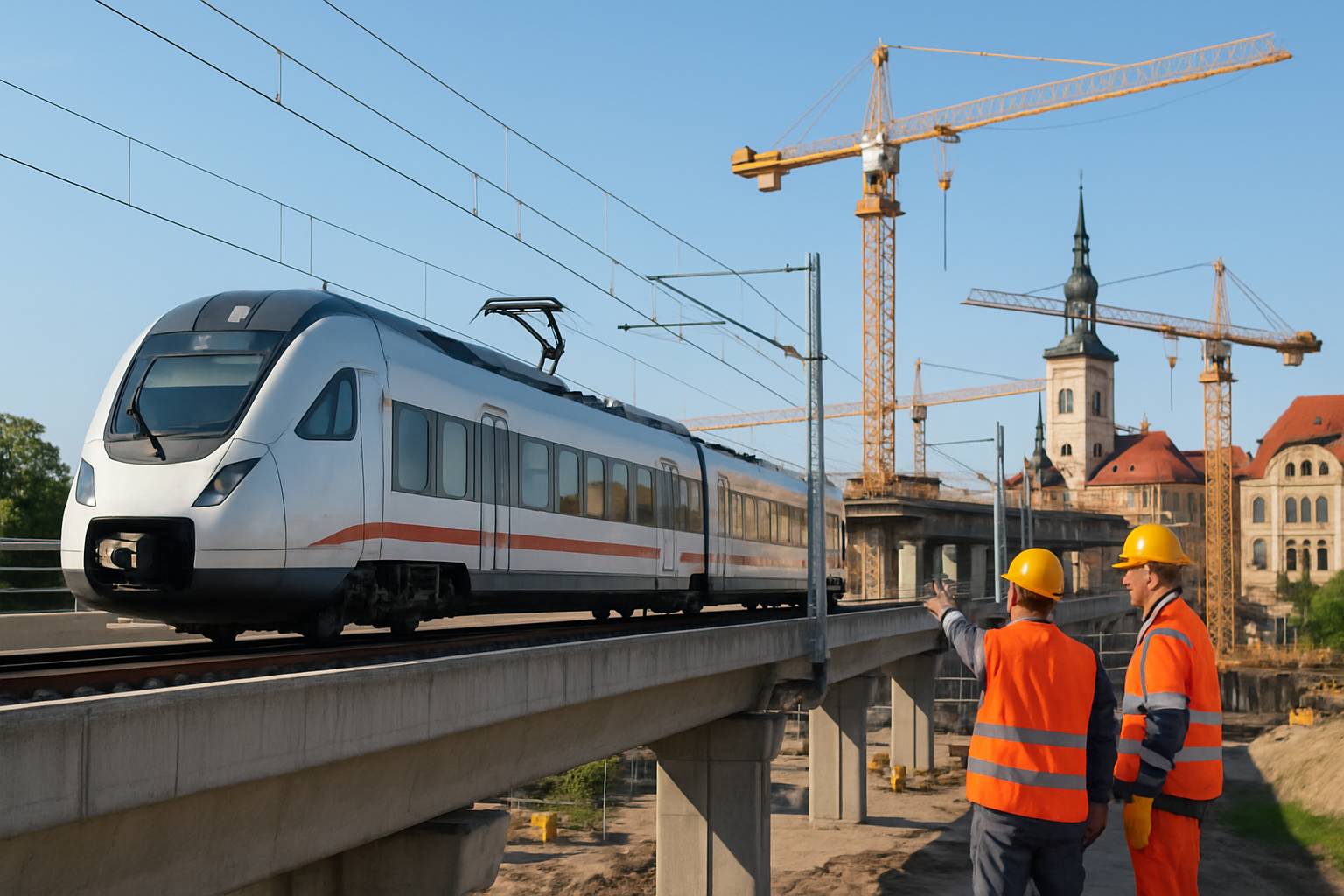
European transportation infrastructure is experiencing a significant transformation as countries across the continent advance major modernization projects, with Albania leading a €90 million railway initiative while Denmark and Estonia address critical urban transit challenges affecting millions of commuters.
Albania's Strategic Railway Revival
Albanian Railway announced this week the opening of international procurement procedures for the rehabilitation of the Durrës-Rrogozhinë railway line, one of the most strategic segments of the national transportation network. The tender announcement was published on the European Union's official public procurement platform (TED) with an open procedure and bid submission deadline in June 2026.
The European Union serves as the primary financier of this transformative project through an agreement signed in April last year, securing a €60.5 million grant from EU funds under the Western Balkans Investment Framework and €30 million loan from the European Investment Bank. According to official documentation, the total fund allocated for this contract is €90 million, covering the main construction and modernization work of the existing line connecting the country's largest port with the interior.
"This project represents a cornerstone of Albania's European integration aspirations, demonstrating our commitment to modern, sustainable transportation infrastructure."
— Infrastructure Development Official
The Durrës-Rrogozhinë line serves as a critical link in Albania's broader connectivity strategy, supporting both domestic economic development and regional integration objectives. The rehabilitation project aligns with the Trans-European Transport Network (TEN-T) priorities and the recent Tirana Joint Declaration signed by Foreign Ministers from Albania, Bulgaria, Italy, North Macedonia, and Romania advancing the pan-European Corridor VIII initiative.
Denmark Addresses Copenhagen Transit Bottlenecks
Denmark is advancing solutions to persistent railway congestion issues, with authorities announcing new infrastructure developments at Ringsted Station designed to resolve critical transportation bottlenecks affecting the broader Copenhagen metropolitan area. The project involves creating additional railway connections and improved traffic flow management systems.
This initiative reflects Denmark's commitment to maintaining one of Europe's most efficient public transportation networks while addressing growing passenger demand and the need for climate-resilient infrastructure. Danish authorities have emphasized the importance of preventive maintenance and systematic upgrades to avoid the service disruptions that have affected other European networks during recent extreme weather events.
Estonia's Tram Route Controversy
Tallinn's municipal government is navigating community tensions over proposed changes to the future Pelguranna tram line, with plans to reroute the system through the Pollinator Highway. City officials argue the modification would save both time and construction costs while improving overall system efficiency, but local residents remain divided on the proposal's impact on their neighborhoods.
The controversy highlights the complex balance between operational efficiency and community acceptance that characterizes modern urban transportation planning. Estonia has emerged as a leader in sustainable transport development, with 88% renewable electricity powering its networks and Europe's largest battery storage facility supporting 90,000 households.

Broader European Infrastructure Context
These developments occur within an unprecedented €570+ billion global infrastructure investment surge that has fundamentally reshaped transportation planning across Europe. The continent has witnessed major projects including Rail Baltica construction advancing despite cost variations between participating countries, the Netherlands-Belgium agreements for new cross-border rail links, and Portugal's digital railway solutions partnerships.
Recent infrastructure challenges have highlighted the urgent need for climate-resilient design. The devastating storm succession of Kristin-Leonardo-Marta-Nils throughout February 2026 exposed vulnerabilities in transportation networks designed for historical rather than current climate conditions. Portugal's A1 highway viaduct collapse and widespread railway suspensions demonstrated the critical importance of adaptive infrastructure planning.
Technology Integration and Smart Systems
Modern European transportation projects increasingly incorporate sophisticated digital systems from the initial design phase rather than as retrofitted additions. These include real-time analytics, automated operations, predictive maintenance capabilities, and integrated payment systems that enhance both operational efficiency and passenger experience.
The integration of smart technology addresses multiple objectives simultaneously: improving service reliability, reducing environmental impact through optimized energy consumption, and providing resilience against extreme weather events that have become increasingly frequent across the continent.
Financing Innovation and International Cooperation
The Albanian railway project exemplifies the evolution of infrastructure financing toward sophisticated partnerships combining EU structural funds, international development cooperation, and national investment strategies. This model has proven successful across multiple European projects, enabling countries to undertake major modernization initiatives while maintaining fiscal responsibility.
"The success of these infrastructure investments depends not only on engineering excellence but also on meaningful community engagement and environmental sustainability."
— European Transportation Planning Expert
Cross-border coordination has become essential for maximizing investment impact, with projects like Corridor VIII demonstrating how regional cooperation can address connectivity challenges that individual nations cannot solve independently. The recent diplomatic initiatives involving multiple Balkan and European countries reflect this collaborative approach to infrastructure development.
Climate Adaptation Imperatives
February 2026's extreme weather events have accelerated discussions about climate adaptation requirements for transportation infrastructure. The contrast between Estonia's proactive sustainability measures and the widespread disruptions experienced across Western Europe illustrates the importance of forward-thinking design standards.
Success factors for climate-resilient transportation include incorporating renewable energy systems, designing for extreme weather tolerance, implementing backup systems for critical operations, and ensuring that emergency response capabilities can maintain essential connectivity during crisis periods.
Economic and Social Multiplier Effects
Transportation infrastructure investments create substantial economic multiplier effects extending far beyond immediate construction employment. The Albanian railway rehabilitation is expected to reduce logistics costs, enhance market access, and support tourism development while strengthening the country's position in regional trade networks.
Similarly, Denmark's railway improvements will reduce commuter travel times, improve business productivity, and support the transition to sustainable transportation modes essential for meeting EU climate targets. Estonia's tram expansion, despite community concerns, will provide long-term connectivity benefits for urban development and quality of life improvements.
Future Outlook and Strategic Significance
The transportation infrastructure developments of February 2026 establish important precedents for European integration, climate adaptation, and community engagement in major public works projects. Success in these initiatives will influence infrastructure planning approaches across the continent for decades to come.
The convergence of significant financial investment, technological advancement, environmental awareness, and international cooperation represents a unique opportunity to create transportation systems that serve immediate mobility needs while preparing for future challenges including climate change, demographic shifts, and evolving economic patterns.
As European leaders continue to balance immediate infrastructure needs with long-term sustainability objectives, the lessons learned from Albania's railway revival, Denmark's transit solutions, and Estonia's community engagement challenges will provide valuable guidance for the continent's ongoing transportation transformation. The €570+ billion global infrastructure surge of which these projects form a part represents a fundamental shift toward viewing connectivity as strategic infrastructure essential for economic competitiveness, climate resilience, and social cohesion in the 21st century.