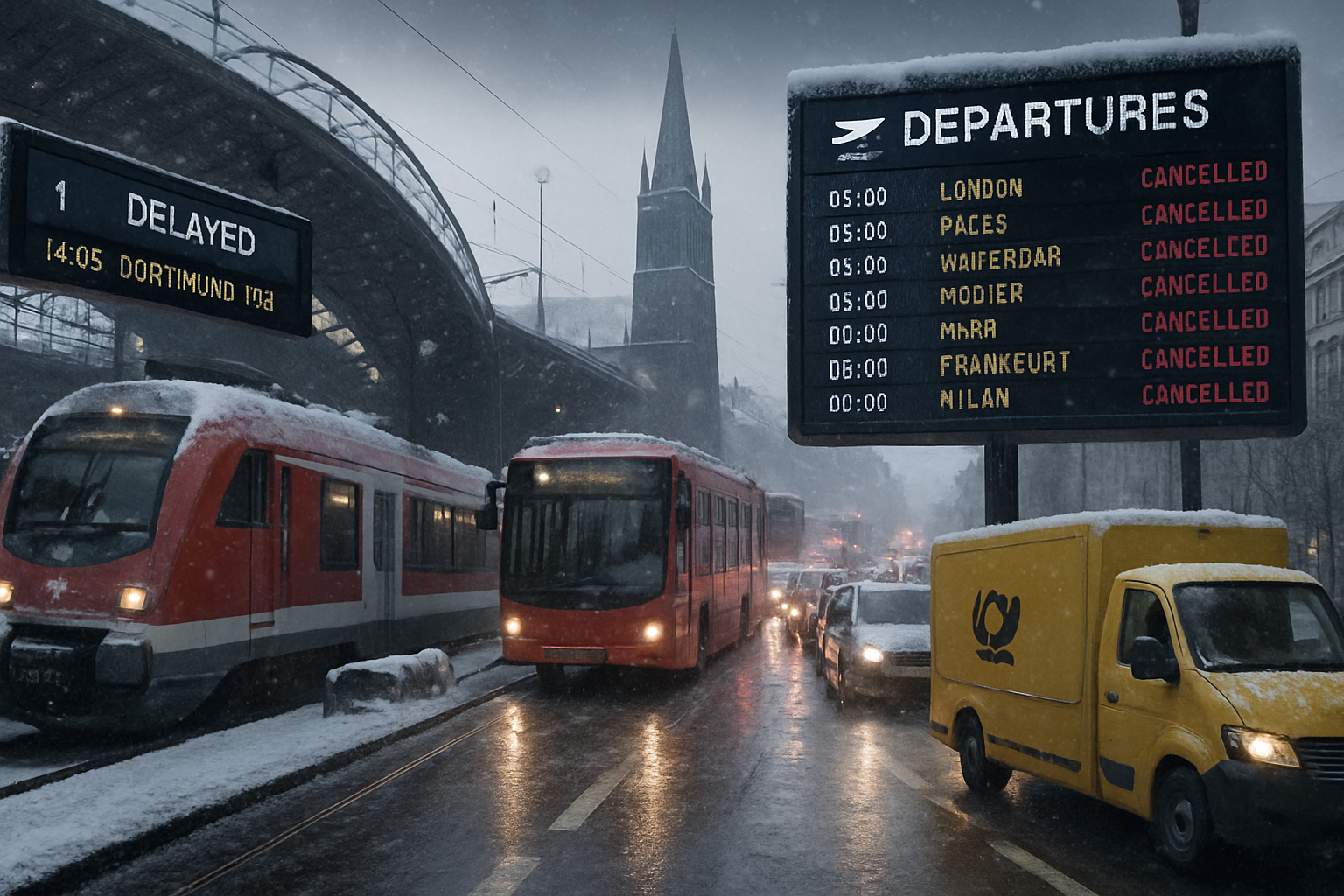
A coordinated wave of labor strikes and infrastructure emergencies swept across European transportation networks on April 7, 2026, affecting postal services, railways, and public transport systems in multiple countries from Belgium to Norway.
The disruptions began in Belgium, where postal workers in Flanders launched renewed strike actions to protest Bpost's proposed working hour changes. At distribution centers across Flemish Brabant, a majority of staff downed tools, while approximately 300 postal workers in West Flanders refused to work. "Enough is enough," workers declared, highlighting mounting frustrations over workplace conditions.
German Transport Networks Under Pressure
In Germany, the powerful Ver.di union continued its nationwide warning strikes, causing "massive restrictions" across the country's transportation infrastructure. The strikes, part of an ongoing campaign demanding 20% wage increases and improved working conditions, particularly affected Bavaria and Saarland regions, despite some progress in negotiations leading to strike cancellations elsewhere.
The German strikes represent a continuation of broader labor unrest that has plagued European transportation since early 2026. Previous Ver.di actions in February affected over 100,000 transport workers, forcing complete shutdowns of major airports and public transit systems across multiple cities.
Norwegian Railway Emergency
Norway faced a different but equally serious transportation crisis when a major fire broke out on a train traveling the Bergen Railway line between Bergen and Oslo. The blaze, which erupted in a train car carrying passengers, forced immediate evacuation procedures and spread to surrounding terrain.
Railway traffic came to a complete standstill between Nesbyen and Flå stations due to smoke development, with emergency services working to contain both the train fire and the resulting brush fires. Vy railway company confirmed the evacuation was completed successfully, though the incident highlighted vulnerabilities in Norway's critical transportation corridors.
Italian Weekend Disruptions Loom
Italy braced for significant weekend transportation chaos beginning Friday, April 10th, with coordinated strikes planned to hit both air and rail transport on consecutive days. The coordinated labor actions threatened to paralyze the country's transportation networks during a crucial travel period, affecting millions of passengers and causing substantial economic disruption.
Technical Failures in Latvia
Latvia experienced its own transportation challenges when contact line damage disrupted train services on the Tukuma line Tuesday afternoon. AS "Pasažieru vilciens" (Passenger Train) reported the technical failure was resolved, but the incident demonstrated the fragility of aging electrical infrastructure supporting European rail networks.
"The frequency and severity of transportation disruptions across Europe in 2026 represents a systemic challenge requiring coordinated international response."
— European Transport Policy Institute
Context of Broader European Transport Crisis
These April disruptions occur within a broader pattern of European transportation instability that has characterized 2026. Since February, the continent has experienced an unprecedented succession of weather-related infrastructure failures, labor disputes, and technical breakdowns affecting every major transportation mode.
The year has been marked by severe winter weather that damaged critical infrastructure, including the collapse of Portugal's A1 highway viaduct near Coimbra and widespread railway suspensions across Northern Europe. These weather events, combined with ongoing labor tensions, have created a perfect storm for transportation disruption.
Germany has been particularly affected, with Ver.di union organizing multiple strike waves affecting airports, public transit, and freight operations. The union's demands reflect broader European worker concerns about wage stagnation and deteriorating working conditions in the post-pandemic transportation sector.
Economic and Social Impact
The cumulative effect of these transportation disruptions extends far beyond passenger inconvenience. Supply chains across Europe have been strained, with businesses reporting delayed deliveries and increased logistics costs. The postal strike in Belgium particularly affects e-commerce and business communications during a critical period for economic recovery.
Educational institutions and healthcare services have also felt the impact, with some regions forced to cancel classes or reschedule medical appointments due to public transport unavailability. The strikes demonstrate the critical role transportation workers play in maintaining essential services across modern European society.
Infrastructure Vulnerabilities Exposed
The April 7th incidents have highlighted systematic vulnerabilities in European transportation infrastructure. The Norwegian train fire exposed safety concerns in aging rolling stock, while the Latvian electrical failures demonstrated the fragility of power systems supporting electrified railways.
Climate adaptation has emerged as a critical factor, with transportation networks designed for historical weather patterns struggling to cope with increasingly volatile conditions. The 22nd consecutive month of global temperatures exceeding 1.5°C above pre-industrial levels has created operational environments that transportation systems were never designed to handle.
Labor Relations in Crisis
The coordinated nature of strikes across multiple countries suggests a fundamental shift in European labor relations within the transportation sector. Traditional social partnership models that characterized post-war European industrial relations are giving way to more confrontational approaches as workers face economic pressures and changing workplace demands.
Union strategies have evolved to exploit the interconnected nature of modern European transportation networks, where national strikes can create continental disruption. The timing of actions across Belgium, Germany, and Italy demonstrates sophisticated coordination designed to maximize economic pressure on governments and employers.
Government and EU Response
European governments have struggled to balance fiscal constraints with worker demands while maintaining essential services. The European Union's Civil Protection Mechanism, previously activated for weather emergencies, may need expansion to address coordinated transportation disruptions that threaten continental connectivity.
Some member states have begun exploring emergency protocols to maintain minimum service levels during strikes, though such measures risk escalating tensions with organized labor. The challenge lies in preserving workers' rights to collective action while protecting the public interest in maintaining transportation networks.
Looking Ahead
The resolution of current transportation crises will likely require unprecedented coordination between national governments, EU institutions, and transportation unions. Success will depend on addressing underlying issues of worker compensation, infrastructure investment, and climate adaptation rather than simply managing individual incidents.
The interconnected nature of European transportation means that sustainable solutions must be continental in scope. National approaches to labor relations and infrastructure investment increasingly affect neighboring countries through shared networks and supply chains.
As Europe enters the critical spring travel season, the ability to resolve these transportation challenges will test both the resilience of continental infrastructure and the effectiveness of democratic institutions in addressing complex, multi-national crises. The outcome will likely influence European transportation policy and labor relations for years to come.