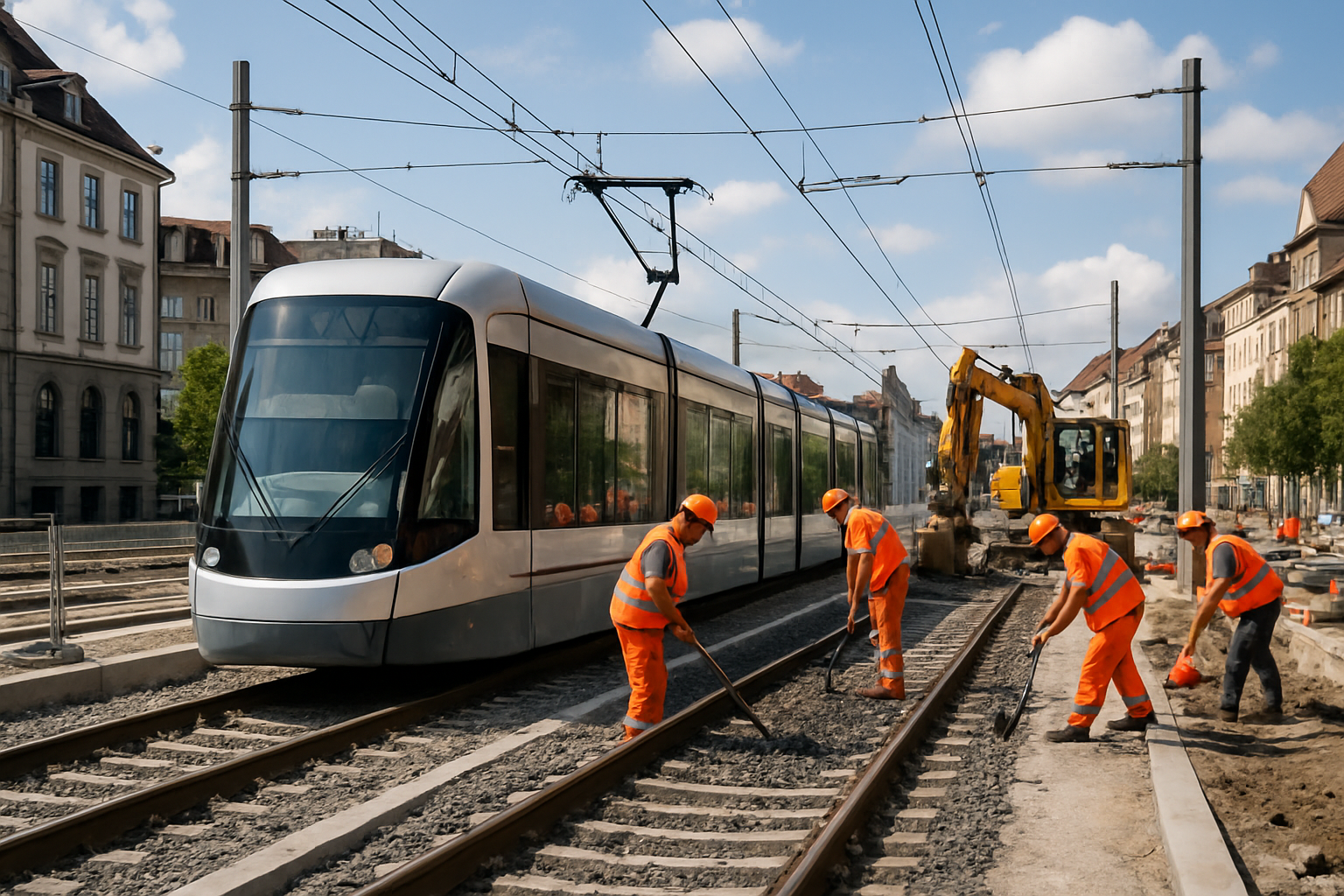
Transportation infrastructure across Europe is undergoing significant modernization as countries implement innovative solutions to address aging networks, reduce noise pollution, and enhance regional connectivity amid growing demands for efficient public transit systems.
Recent developments spanning from Belgium to the Baltic states demonstrate a coordinated approach to transportation improvement, with projects ranging from cutting-edge noise reduction technology to major tramway extensions that promise to transform regional mobility.
Belgium Pioneers Noise Reduction Innovation
In a groundbreaking first for Flanders, Ghent has begun installing manganese strips along its tram tracks to combat the notorious squealing noise that has long plagued urban transit systems. This innovative approach to noise pollution represents a significant advancement in urban transportation technology, addressing one of the most persistent complaints about tram operations in dense city environments.
The manganese strip installation marks Flanders' first implementation of this noise-reduction technology, positioning Belgium at the forefront of sustainable urban transportation solutions. The project demonstrates how targeted engineering solutions can dramatically improve the quality of life for residents living near transit corridors while maintaining efficient public transportation operations.
Bosnia Herzegovina Achieves Historic Tramway Milestone
After decades of planning and six decades of unfulfilled promises, Bosnia Herzegovina has reached a pivotal moment in its transportation infrastructure development. The final welding connection was completed on the tramway line to Hrasnica, creating a continuous 12.4-kilometer track that will revolutionize public transportation in the Sarajevo Canton.
Minister of Transport Adnan Šteta emphasized the historical significance of this achievement, noting that "for the first time after 60 years of numerous announcements, stories, and unfulfilled promises, the tram line to Hrasnica becomes a reality." The project has installed 1,500 tons of rails connected through 1,503 welds, representing one of the most substantial infrastructure undertakings in the canton's recent history.
The completion of the track laying sets the stage for tramway service to begin operating to Hrasnica by summer 2026, pending final safety certifications and the completion of the turning loop at Ilidža station. This development will provide crucial connectivity for residents and workers in the expanding suburban areas around Sarajevo.
Baltic States Face Transportation Disruptions
The Baltic region is experiencing planned transportation improvements that require temporary service adjustments. International rail service between Tallinn, Tartu, Riga, and Vilnius will be suspended from Monday, April 13, through Friday, April 17, to accommodate essential infrastructure upgrade work.
Estonia's state passenger train operator "Elron" confirmed that the suspension affects the critical Tallinn-Tartu-Riga-Vilnius international route, necessitating alternative transportation arrangements for cross-border travelers. The infrastructure improvements are part of the broader Rail Baltica project, which aims to create a modern, high-speed rail connection linking the Baltic states with the rest of Europe by 2030.
These planned disruptions reflect the complex logistics involved in upgrading aging Soviet-era infrastructure while maintaining essential connectivity between the three Baltic capitals. The improvements are designed to increase train speeds, enhance passenger comfort, and improve reliability for both domestic and international travelers.
Aviation Sector Challenges
The transportation sector has also faced disruptions in air travel, with Lufthansa cabin crew strikes causing the cancellation of five Vilnius-Frankfurt flights. The work action highlights the interconnected nature of European transportation networks, where labor disputes in one country can have cascading effects across the region.
"These infrastructure improvements represent a new value for all citizens of the Sarajevo Canton, creating better connectivity and supporting economic development for generations to come."
— Adnan Šteta, Minister of Transport, Sarajevo Canton
Technology Integration and Climate Adaptation
The current wave of transportation infrastructure improvements reflects broader trends in European development priorities. Projects increasingly incorporate sophisticated technology integration from the design phase, including real-time monitoring systems, predictive maintenance capabilities, and digital payment platforms that enhance passenger experience and operational efficiency.
Climate adaptation has evolved from an optional consideration to a fundamental requirement in modern infrastructure planning. European transportation authorities are implementing enhanced drainage systems, weather-resistant materials, and backup power infrastructure designed for future rather than historical climate conditions.
The ongoing global semiconductor shortage has created challenges for implementing smart infrastructure components, with costs increasing significantly through 2027. However, this constraint has accelerated innovation in alternative approaches, including more efficient algorithms and distributed processing systems that create resilient and adaptable transportation networks.
Economic and Regional Integration Impact
These infrastructure developments generate substantial economic multiplier effects beyond the immediate construction employment. Transportation improvements reduce logistics costs, enhance market access, and increase business productivity while supporting broader European Union objectives for regional integration and single market connectivity.
The projects demonstrate sophisticated financing approaches combining EU structural funds, national investment strategies, and innovative public-private partnerships. This diversified funding model enables previously impossible modernization projects while maintaining fiscal responsibility and ensuring sustained political commitment beyond electoral cycles.
Success factors for these initiatives include comprehensive stakeholder engagement, transparent governance frameworks, and adaptive management systems that can respond effectively to changing conditions while preserving core project objectives.
Future Outlook
The transportation infrastructure developments of April 2026 establish important precedents that will influence European transportation policy for decades to come. These projects represent a fundamental shift toward viewing connectivity as strategic foundations for economic competitiveness, climate adaptation, and international cooperation rather than simple physical assets.
The convergence of technological advancement, environmental awareness, and international cooperation is creating new development models that prioritize sustainability alongside economic growth. Countries are increasingly choosing transformative infrastructure adaptation over reactive crisis management as they prepare for the challenges of an interconnected, climate-affected world.
As Europe continues to modernize its transportation networks, the lessons learned from current projects in noise reduction, tramway extension, and cross-border rail integration will inform future infrastructure strategies across the continent. The success of these initiatives depends on sustained international cooperation, enhanced coordination, and continued commitment to creating transportation systems that serve both immediate mobility needs and long-term sustainability goals.