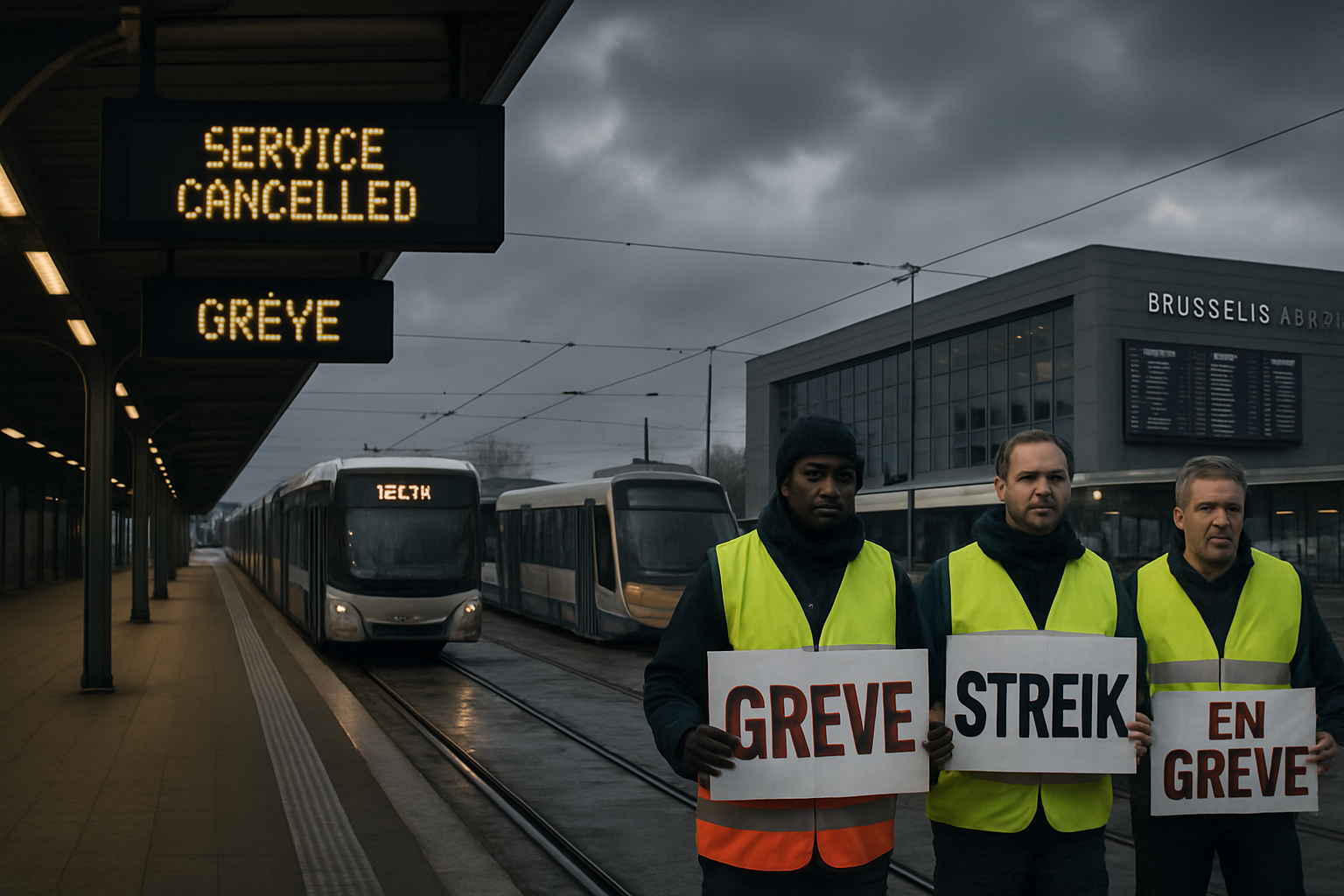
Labor strikes across Belgium and Germany have created significant transportation disruptions, with workers demanding improved working conditions, higher wages, and better compensation packages in what represents an escalation of European labor tensions.
Belgium Faces Multiple Service Disruptions
In Brussels, the Christian trade union ACV has issued a three-day strike notice for staff working for the regional refuse collection agency Net Brussel, running from Wednesday, March 18 through Friday, March 20, 2026. The strike will significantly impact waste collection services across the Belgian capital.
While general waste collection (white bin liners) will continue with non-striking staff, recycling services face complete suspension. Paper and cardboard collection (yellow bin liners) and plastic and metal recycling (blue bin liners) will not be collected during the three-day period, affecting environmental services across Brussels.
German Aviation and Public Transport Under Pressure
Germany is experiencing widespread transportation strikes organized by the ver.di union, affecting multiple critical infrastructure sectors. The union has orchestrated warning strikes that have caused "massive restrictions nationwide," with particular impact at key transportation hubs.
Berlin Brandenburg Airport (BER) has suspended all flight operations due to the strikes, with the disruption extending beyond aviation to affect local public transport systems. In Munich and Cologne, commuter rail and bus services are experiencing significant delays and cancellations, forcing thousands of travelers to seek alternative transportation methods.
"The ver.di warning strikes are causing massive disruptions nationwide. At the capital's BER airport, flight operations have ceased, while local transport in Munich and Cologne is severely affected."
— German Transportation Authority
Munich Implements Emergency Transport Plans
Munich faces particularly severe disruptions with a two-day public transport strike beginning at 11:00 AM on Wednesday. The strike affects the city's comprehensive public transportation network, including buses, trams, and subway services that millions of residents depend on for daily commuting.
Local authorities have developed emergency transportation plans to help passengers navigate the city during the strike period. The disruption comes at a challenging time as Munich prepares for increased travel demands and tourism activities.
Broader European Labor Movement Context
These strikes occur within the broader context of escalating European labor tensions that have characterized early 2026. Historical analysis shows a pattern of coordinated labor actions across multiple countries, representing what experts describe as a departure from traditional European social partnership models toward more confrontational labor relations.
The current wave of strikes builds on previous actions, including significant February 2026 transportation strikes in Germany that affected over 100,000 workers and represented one of the most comprehensive transport disruptions in recent German history. Ver.di union demands consistently include wage increases exceeding 20%, reduced working hours, extended rest periods, and enhanced compensation for night and weekend work.
Economic and Social Impact
The transportation strikes are creating substantial economic disruption, with millions of euros in lost productivity and widespread inconvenience for businesses and travelers. Educational institutions, healthcare facilities, and essential services are all experiencing operational challenges due to transportation limitations.
The refuse collection strike in Brussels adds environmental concerns to the economic impact, as recycling disruptions affect the capital's waste management system during a critical period when environmental sustainability remains a key policy priority.
Aviation Industry Adaptation
Norwegian Airlines has announced 125 additional flights to various European cities in response to SAS (Scandinavian Airlines) flight cancellations, demonstrating how the aviation industry is adapting to strike-related disruptions. This represents a broader pattern where airlines are implementing contingency measures and alternative routing to maintain service levels during labor actions.
Government and Union Negotiations
The strikes reflect fundamental disagreements between workers and employers over compensation, working conditions, and operational demands in a post-pandemic economic environment. Transport companies and unions remain in negotiations, though progress has been limited.
German social partnership traditions, historically characterized by collaborative labor-management relations, appear to be under strain as unions adopt more confrontational tactics to achieve their objectives. This shift reflects broader challenges facing European labor relations as workers adapt to changing industry conditions while maintaining demands for improved workplace standards.
Travel Recommendations and Alternatives
Authorities are advising travelers to monitor official transportation websites for real-time updates and consider alternative routes where possible. The Belgian government has provided guidance for waste disposal during the refuse collection strike, while German transportation authorities have established information centers to assist affected passengers.
For international travelers, airlines and transportation companies are implementing enhanced rebooking policies and alternative routing options to minimize passenger impact. Emergency transportation services remain operational for essential travel needs.
Looking Ahead
The duration and scope of these strikes will depend on the success of ongoing negotiations between unions and employers. Historical patterns suggest that resolution requires innovative approaches to worker compensation and operational arrangements that balance employee demands with service continuity.
As European transportation networks become increasingly interconnected, labor disputes in one country can create cascading effects across international routes and services. This interconnected nature makes resolution of these strikes particularly important for maintaining broader European mobility and economic stability.
The current strikes represent a critical test of European labor relations and transportation resilience, with outcomes potentially influencing future union strategies and government responses across the continent.